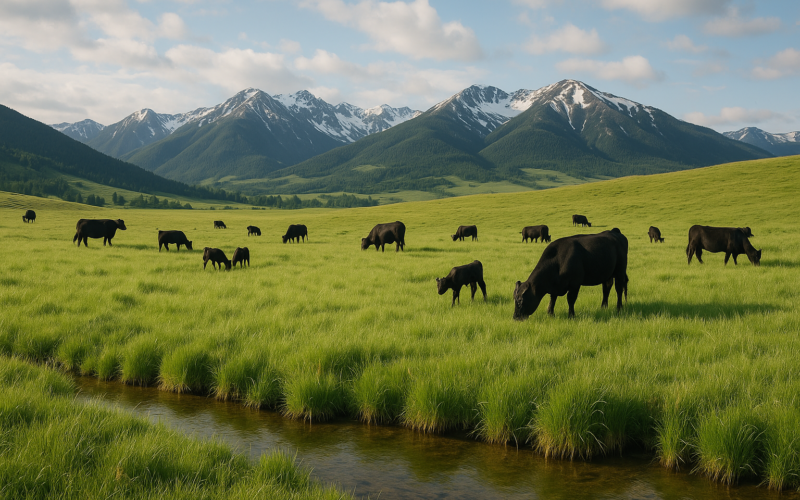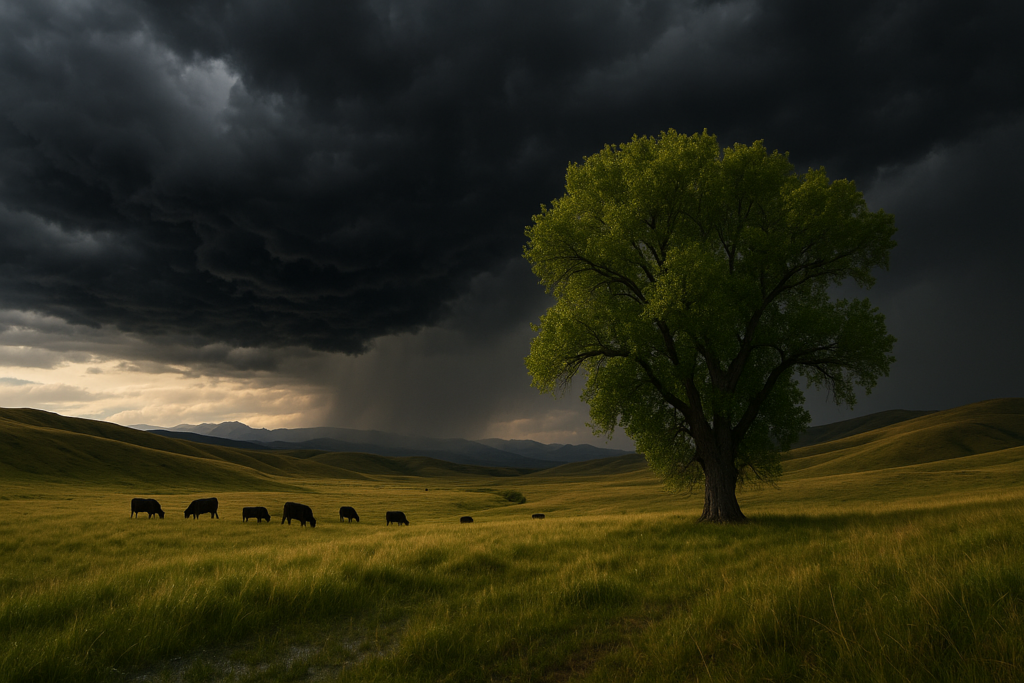
Afternoon storms build over the Montana high country all through June and into July. You watch the anvil clouds stack up over the Bridgers or the Little Belts, hear the first rumble, and think about your own hide before you think about the cows. But the storm that soaks you on the way home is the same one that can leave four or five head dead in a pasture you won’t check until the next morning.
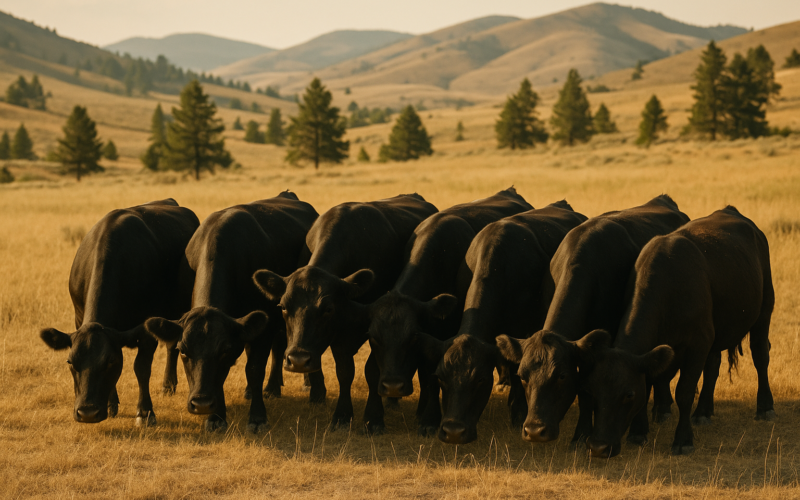
Lightning is a bigger killer of range cattle than most people credit, mostly because it happens out of sight and the losses show up as a mystery. You find them stiff, no marks to speak of, sometimes singed hair along the topline or a split hoof, often piled within a few feet of each other. That last part is the tell. Cattle bunch when the weather turns, and where they choose to stand is the difference between a scare and a wreck.
Why the lone tree is the worst place they can be
Cattle do exactly the wrong thing in a storm. They drift downwind, crowd up, and head for the tallest cover they can find — the single cottonwood in the draw, the lone pine on the ridge, the fence line running along high ground. All of those are the first things lightning goes for. A strike on a tree doesn’t have to hit an animal directly. Ground current spreads out from the base, and a cow standing on wet grass with her front and back feet several feet apart can catch enough of a voltage difference between those feet to drop her. That’s why you’ll find several down in a ring around one tree. They were all standing in the same bad spot at the same bad time.
Wire fences carry current a long way too. A bolt that hits a fence a quarter mile off can travel the wire and jump to stock crowded against it. Metal water tanks, pipelines, and windmills do the same. None of this means you can lightning-proof a pasture, but it should shape how you think about turnout ground.
The pastures that give cattle low, spread-out places to ride out a storm — brushy coulees, timber edges with a lot of trees rather than one, rolling open country without a single high point — are safer than a flat with one tree and a fence on the skyline. If you’ve got a choice about where pairs spend the wettest, stormiest stretch of early summer, that’s worth a thought. So is a lone tree standing in the middle of a pasture. Some outfits drop the isolated ones for exactly this reason, though that’s a bigger decision than most folks want to make.
What to do when you find them
Say you ride out and find dead cattle bunched together with no obvious cause. Before you do anything else, look at the whole scene. Multiple head down in a small area, near a tree, a fence, or a high point, with singe marks or bark blown off the tree, points hard at lightning. A single animal off by herself is more likely something else — bloat, poisoning, a snakebite gone bad — and the difference matters.
If you carry livestock mortality or lightning coverage, most policies want the loss documented before you move or bury anything. Photograph the animals where they lie, get the tree or fence in the frame, and note the date and the storm. A vet or adjuster confirming the cause is worth far more than your word after the fact. Don’t drag them off first and try to explain it later.
Get carcasses handled promptly once you’ve documented them. In June heat they turn fast, and a pile of dead stock draws bears, coyotes, and problems you don’t need on summer range. If you’re in grizzly country, moving carcasses well away from water, trails, and where the rest of the herd grazes keeps a bad day from turning into an ongoing conflict.
The part you can actually control
You can’t schedule the weather, and you can’t herd cows in a lightning storm without putting yourself under the same clouds. What you can do is know which of your pastures are set up to kill and which aren’t, ride them after a hard storm instead of assuming everything’s fine, and keep your documentation straight so a loss doesn’t cost you twice.
Most Junes you’ll never lose one to lightning. But the year you do, it’s usually more than one, and it’s almost always the bunch that crowded under the only shade on the place.