You can do everything else right at summer processing — good crowd, quiet handling, clean needles, the right products off the shelf — and still hand your calves nothing but a sore neck if the vaccine cooked on the way to the chute. It happens more than anybody admits. A modified-live viral vaccine is exactly what the name says: live organisms, weakened but alive, and they die when they get warm. Once they’re dead, that syringe is squirting expensive water into your calf crop, and you won’t find out until something breaks with those cattle down the road.
June is when this bites people. The mixing and the heat land in the same week. You pull a bottle of MLV out of the cooler, reconstitute it, set it on the tailgate in full sun while you sort the next bunch, and by the time you get back to it the product’s been sitting at cab temperature for an hour. That’s long enough to matter.
What actually kills the dose
Three things wreck vaccine, and heat is only one of them. Warmth degrades live product fast, especially once it’s mixed. Direct sunlight does its own damage — ultraviolet light breaks down the organisms even if the bottle still feels cool to the touch, so a syringe lying on the flatbed in the sun is losing potency while you watch. And freezing is just as bad on the other end; a killed product or a bottle shoved against the freezer wall in your fridge can be ruined without any sign it happened.
The trouble is none of it shows. Vaccine that’s been cooked or frozen looks and draws exactly like good vaccine. There’s no cloud, no smell, no warning. You find out at weaning or the following spring when a group that should’ve been covered isn’t, and by then you’re guessing at what went wrong.
Reconstituted MLV is on a clock. Once you add the diluent to the freeze-dried cake, the live organisms start dying, and heat speeds that up. The common rule of thumb is to use it within an hour of mixing — less if it’s hot. So the smart move is to mix small: pull one bottle at a time, only what you’ll draw down before the next one. A hundred-dose bottle sitting half-used in the sun for two hours is money poured out.
Running a cold chain at the chute
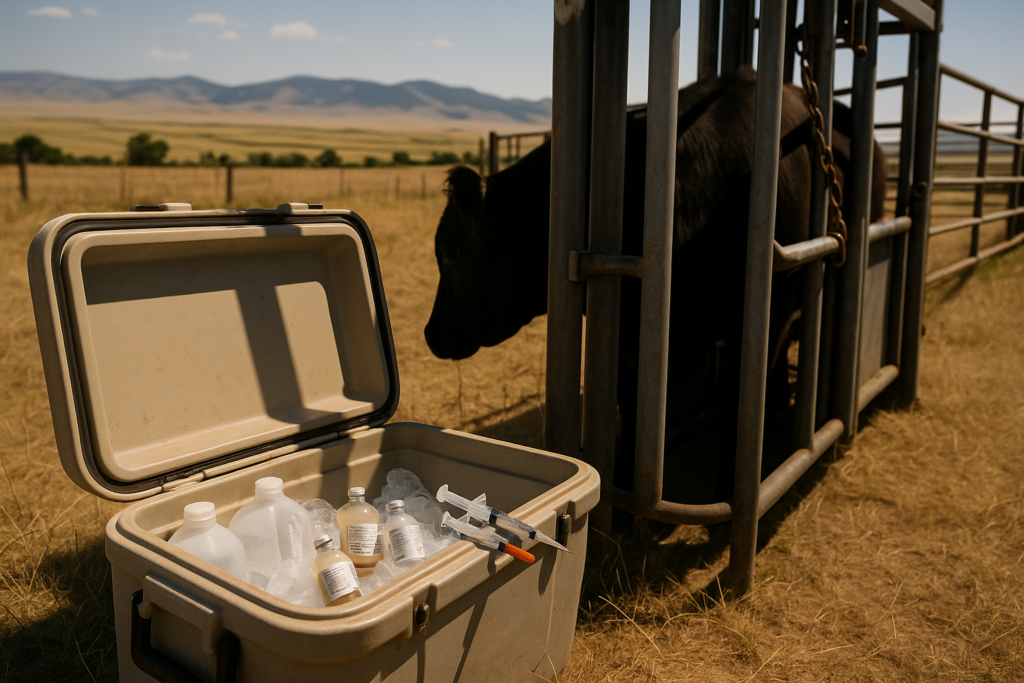
You don’t need anything fancy, just a system that keeps product cold and shaded from the fridge to the needle. A good cooler with ice or frozen jugs, kept in the shade and out of the wind, holds fine. Keep the vaccine in the cooler and only pull what’s going in the gun right now.
- Put a cheap thermometer in the cooler and actually look at it. Refrigerator range is the target — cold, not frozen. Ice sitting directly against bottles can freeze them, so keep a towel or divider between the ice and the product.
- Shade the syringes. A second small cooler for loaded guns, or even a damp towel over them between bunches, keeps sunlight off. Never leave a loaded syringe baking on the tailgate or the panel.
- Mix as you go. Reconstitute one bottle at a time and note when you mixed it. When the hour’s up on a bottle that isn’t empty, dump it rather than pushing dead product.
- Draw clean. Use a fresh transfer needle for mixing, and don’t stick a used needle back into the bottle — that’s how you contaminate a whole bottle and, with reused needles, how blood-borne trouble moves through the herd.
- Check your fridge at home before the day starts. The back and the freezer side run coldest. A dial-thermometer left in there for a few days tells you whether your storage is even in range.
Heat management goes for the cattle too, but that’s a separate fight. The point here is narrower and easier to fix: the biology in that bottle is fragile, and Montana sun on a flatbed in June is hard on it.
The part nobody sees until fall
The reason this gets skipped is that the cost is invisible on the day. The calves get worked, they walk off, everybody goes to dinner, and it looks like a job done. The bill comes later — respiratory wrecks in the fall run, a group that breaks when the weather turns, replacements that didn’t build the immunity you paid for. You can’t tell cooked vaccine from good vaccine by looking, so the only insurance is handling every dose like it’s still alive, because when it’s working, it is.
Keep it cold, keep it shaded, mix it small, and use it fast. It costs you a cooler and a little discipline, and it’s the difference between a vaccine program and an expensive habit.