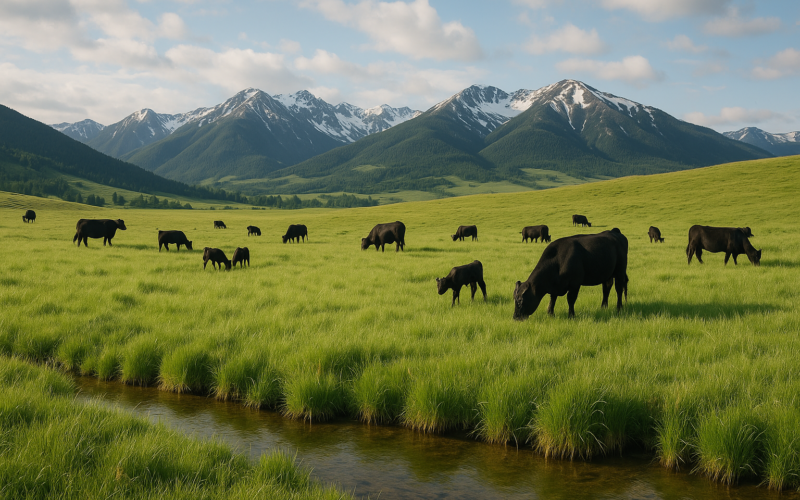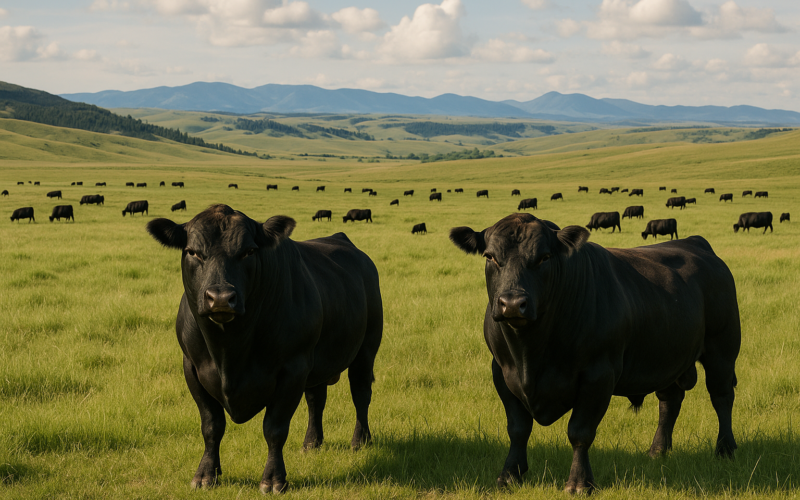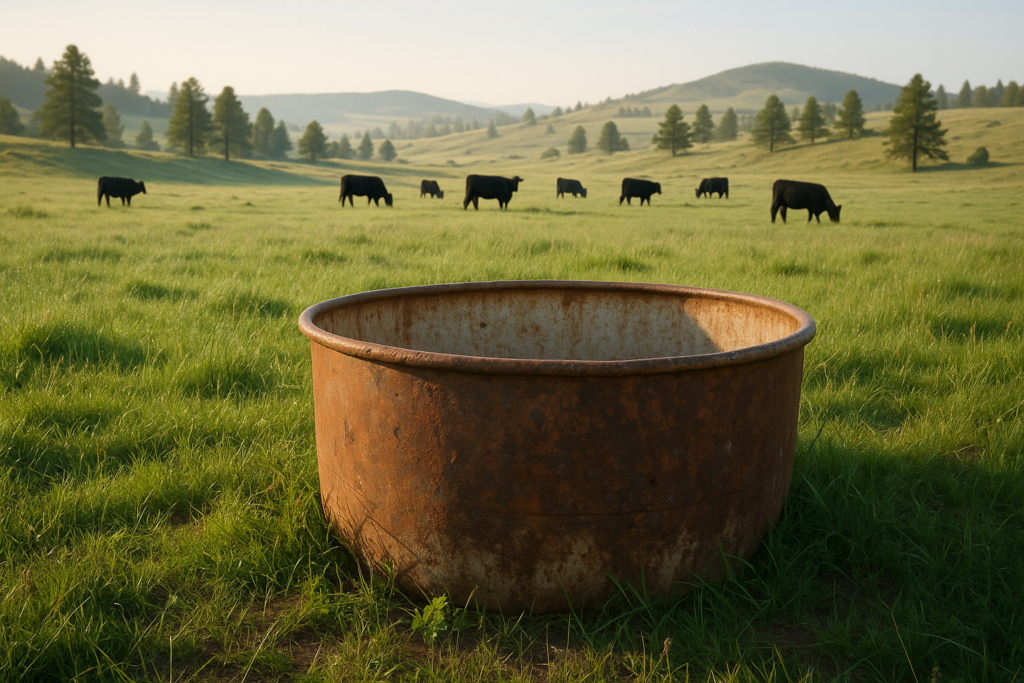
There’s a stretch every June when the mineral feeder goes quiet. The grass greens up, the cows fill out, and consumption drops off to almost nothing. It’s easy to read that as the herd telling you they don’t need it. Most of the time it’s the opposite. Lush forage is high in moisture and palatable, so cattle eat their fill of grass and walk past the mineral. The nutrients they’re short on don’t announce themselves. You find the hole months later, in an open cow or a calf that never quite thrived.
Summer grass is long on energy and, early on, plenty of protein. What it’s often short on is the trace minerals that don’t show up in body condition. A cow can look slick and fat and still be running low on copper or selenium. Those two drive a lot of what happens at breeding, and breeding season lines up almost exactly with the weeks cattle are least interested in the feeder.
What green grass doesn’t hand you
Phosphorus is the one that fades as the season goes. Early growth carries decent phosphorus, but as grass matures and cures out through summer, the level drops. A cow nursing a calf and trying to rebreed has a real phosphorus demand, and pasture alone doesn’t always keep up. Low phosphorus is quiet — you won’t see a downer cow — but it shows up as cows that are slow to cycle back.
Copper and selenium are the ones tied to Montana ground. A lot of the state sits on soils that run low or unpredictable, and molybdenum and sulfur in some forage and water tie up copper before the cow can use it. Copper-short cattle can breed later and hold onto rough, faded hair coats into summer. Selenium is the white muscle disease mineral in calves, but it also plays into fertility and immune function in the cow. These aren’t things you eyeball across a pasture. They’re the kind of shortfall that costs you a percentage of your calf crop without ever putting an animal on the ground.
Salt is a separate matter. Cattle will hunt salt when they need it, which is why salt-only or high-salt blocks get chewed on all summer. That doesn’t mean they’re getting the trace package. A block a cow licks for the salt delivers a trickle of everything else. If your whole mineral program is white blocks in the corner of the pasture, you’re covering sodium and not much else.
Getting mineral into cattle that don’t want it
The trick in June isn’t buying a better tag — it’s getting the stuff eaten at the target consumption. Most loose minerals are formulated for a set intake, often a few ounces a head a day. If cattle are eating a third of that, they’re getting a third of the copper and selenium you paid for.
Placement does more than anything. Cattle won’t travel to a feeder tucked back by the corrals when the good grass is a mile out. Put the mineral where they already spend time — near water, along the trails they use, in the loafing spots. Move it as the herd shifts to new ground. If you’re using salt to pull cattle onto the high country, that same logic works for mineral, and you can double up on the job.
- Keep it dry and fresh. A weathered, crusted-over tub in the rain doesn’t get touched, and a hard cake reads to a cow as something to avoid.
- Watch the actual disappearance. If a bag is lasting three times longer than the label intake suggests, cattle aren’t getting the dose. Sometimes adding a little more salt or switching to a more palatable carrier bumps intake; sometimes you just need more feeders so shy cows get a turn.
- Count feeders for the herd size. One tub for a big bunch means the boss cows clean it up and the young cows and first-calvers — the ones that most need help rebreeding — get shorted.
Some outfits go to an injectable trace mineral at turnout or before breeding to guarantee the cow has copper and selenium on board when it counts, then keep loose mineral out for maintenance. That’s worth a conversation with your vet if you’ve had breed-up problems you couldn’t pin on the bull or on trich.
The reason mineral is easy to shortchange is that nothing bad happens fast. A cow doesn’t go down from a summer of light copper the way she does from bloat or larkspur. She just settles a cycle or two late, or comes up open, and by then the grass is gone and the feeder’s been empty for weeks. If you’re going to spend money on the herd in June, the mineral tub is cheap insurance against a problem you can’t fix in the fall.