You bought the vaccine, you ran the calves, you gave every one a dose. On paper the herd is covered. But a vaccine is live biology or fragile protein, and half the ways we handle it on branding day quietly ruin it before it ever reaches the calf. The syringe still squirts. The bottle still empties. Nothing tells you the product went dead on the tailgate at eleven o’clock while you drank coffee and reset the propane.
Late-spring processing in Montana runs the gamut — a shirtsleeve morning that hits 80 by noon, wind, dust, and a chute in full sun. That’s a hard environment for something that has to stay between roughly refrigerator-cold and not-too-warm to keep working. The label temperature range on most cattle vaccines is narrow for a reason. Push past it and you don’t get a warning light. You get a calf that looks vaccinated and isn’t.
Modified-live products are the ones that punish you
Killed vaccines are more forgiving of a rough day. Modified-live viral products are the ones that make you pay for sloppy handling. They come freeze-dried in one bottle with a liquid diluent in another, and once you mix them the clock starts. That reconstituted vaccine is living, weakened virus, and heat and sunlight kill it fast — ultraviolet light especially. A mixed bottle sitting on the working table in direct sun can lose potency in the time it takes to run a couple dozen head.
So mix only what you’ll use in an hour or less. Don’t reconstitute the whole box at daybreak to save trips to the cooler. Draw down one bottle, run it out, mix the next. It feels slower. It isn’t, once you count the calves that actually seroconvert instead of the ones you’ll be re-treating for respiratory trouble come weaning.
Keep the diluent cold too, not just the freeze-dried cake. Warm diluent hitting the cake starts working against you the second they meet.
The cooler is a tool, not a decoration
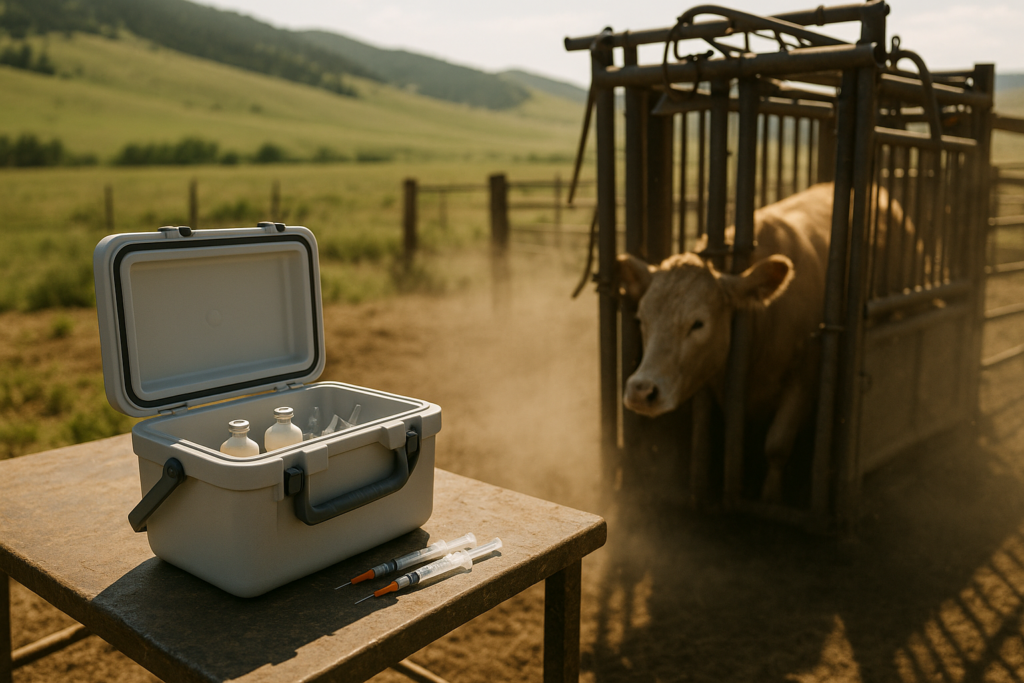
A cheap hard-sided cooler with ice or frozen jugs, parked in the shade, is the single best thing on the processing table. Vaccine bottles ride inside it between uses. The loaded syringes ride inside it too, or in a smaller insulated pouch — a syringe full of mixed product laid on a sun-warmed panel is no better off than the bottle was.
A few things that ride along with a good cooler:
- Keep bottles out of the meltwater. A bottle swimming in a slush of ice water gets its label soaked off and can chill past the range on a cold morning. Set them in a rack or a dry tray inside the cooler, not loose in the puddle.
- Guard against freezing as hard as you guard against heat. On a raw June morning, a bottle pressed against a frozen jug can freeze, and a frozen killed or adjuvanted vaccine is ruined just as surely as a cooked one.
- Watch the transport home from the vet or supply store. An hour on a hot truck seat in the sun undoes the store’s refrigerator. Bring your cooler to town.
Clean fill, sharp needles, and no shortcuts on transfer
Cold isn’t the whole job. How you get the product from bottle to calf matters just as much. Use a clean transfer needle to draw up, and don’t stick a used, manure-crusted needle back into the bottle to refill — that’s how you seed a whole bottle with contamination and, with the wrong disease in the herd, how you move something like anaplasmosis from one animal to the next.
Change needles often. A bent or burred needle tears tissue, backs product out of the hole, and hurts your placement. Give the shots where the label says — most everything modern goes under the hide in the neck, subcutaneous, so you’re not putting a lesion in a high-dollar cut. Tent the skin, angle in, and don’t bury a sub-Q dose deep into muscle because it’s faster in the chute.
And respect the empty bottle’s story. If you mixed more than you used and it’s been sitting an hour, dump it. That leftover isn’t the same product you paid for anymore. Nobody likes pouring vaccine on the ground, but a partial bottle of dead virus given to the last ten calves is worse than no shot at all, because now you think they’re protected.
None of this is exotic. It’s a shaded cooler, a little discipline on mixing, and needles you actually change. Do it and the vaccine you bought does the work it’s supposed to. Skip it and you find out at weaning, in a pen of coughing calves, that the branding-day shots were a very expensive squirt of nothing.