Most poison-plant losses give you a little warning. A cow off by herself, a droopy ear, something that lets you get her caught before it goes too far. Water hemlock doesn’t. A cow eats the root, and inside of fifteen or twenty minutes she’s down and convulsing. By the time you find her she’s usually dead at the edge of the water, sometimes with mud still on her muzzle. There’s rarely anything a vet can do, and rarely enough time to call one.
It’s the same plant every summer, in the same wet corners, and it comes on right now — the tail of a wet spring, when ditch banks and slough edges are soft and green and the cows are nosing around for the first tender growth.
Where it grows and how to know it
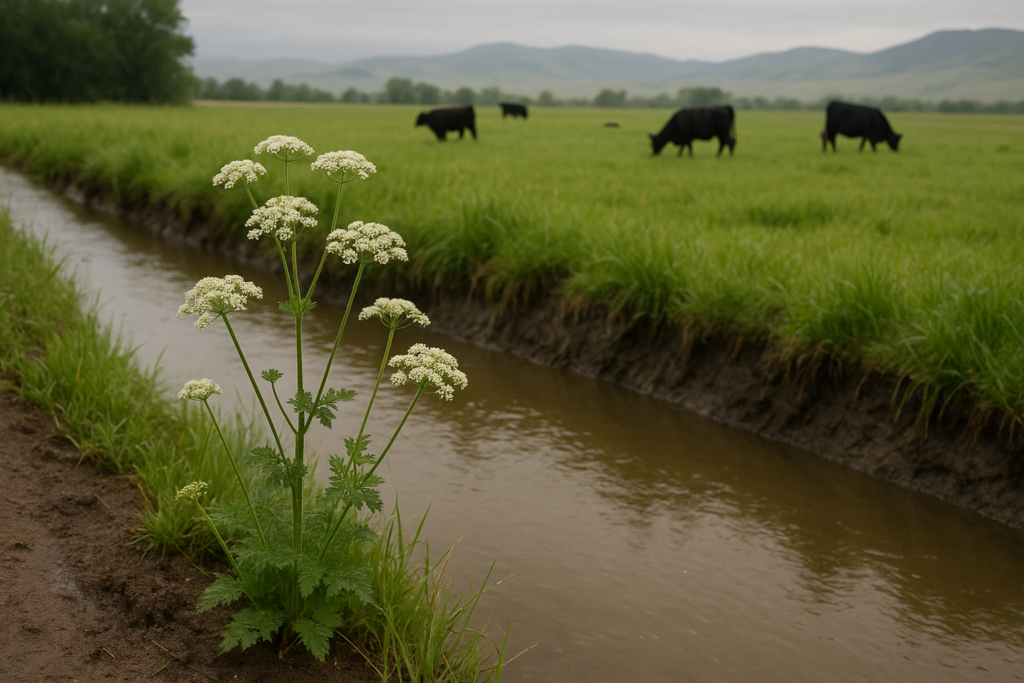
Water hemlock likes its feet wet. Look for it along irrigation ditches, in seep spots and sloughs, on creek and river bottoms, at the muddy edge of a stock dam, anywhere the ground stays saturated into summer. It’s common across Montana wherever there’s standing or slow water, and it can stand a foot or two right in the shallows.
It grows two to six feet tall on a stout, hollow, often purple-streaked stem. The flowers are small and white, carried in flat-topped umbrella clusters — the same general look as a lot of harmless plants in the carrot and parsley family, which is exactly the problem. The leaves are divided, and here’s a detail worth learning: the veins on the leaflets run to the notches between the teeth, not to the tips. But the sure sign is at the base. Slice the rootstock lengthwise and you’ll find it chambered, like a stack of little rooms, with a yellowish oily juice that smells rank, something like raw parsnip. Nothing else in that family has that hollow, partitioned root.
People confuse it with water parsnip and with poison hemlock. Water parsnip has a solid root. Poison hemlock is a different poison and usually grows in drier disturbed ground. If you’re not certain, treat any white-flowered plant in a wet ditch as suspect and keep cattle off it.
Why the root is the killer
The toxin is cicutoxin, and it’s concentrated in the root and the base of the stem. A piece of root the size of a walnut can kill a mature cow. That’s what makes June and a wet spring the dangerous stretch. When the ground is soft, a cow grazing the tender tops can pull the whole plant, root and all, and swallow the part that does the killing. Let that same ground dry and set up, and the root stays anchored — the cow eats the top and often gets away with it. Freshly disturbed ground makes it worse. If you’ve cleaned a ditch, blown out a plug, or run equipment through a wet meadow, you may have pulled roots loose and left them lying where a cow will find them.
The signs, if you happen to catch them, come fast: nervousness, drooling, teeth grinding, then hard convulsions with the head thrown back. Death comes from the seizures, usually within an hour and often much less. Cattle, sheep, and horses are all susceptible. There’s no practical treatment on the ranch once she’s showing signs.
What to do about it
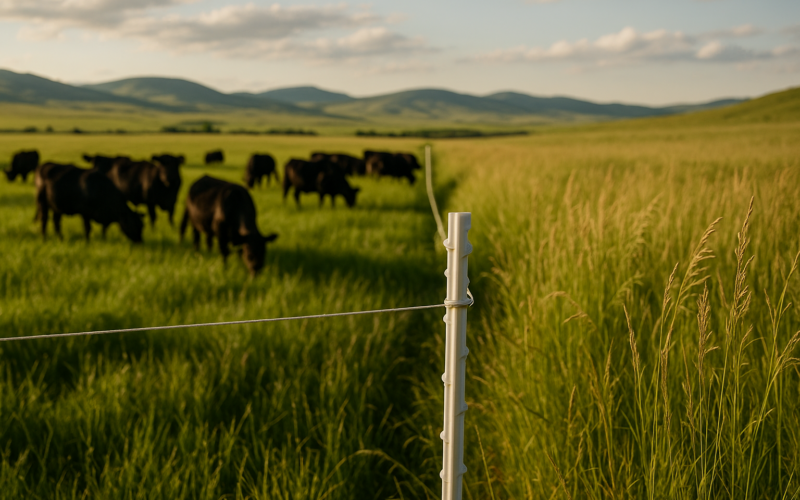
The cheap fix is fencing. If you’ve got a ditch bank or slough where it grows every year, keep the pairs off it during the green, soft stretch in early summer — a hot wire strung back from the water’s edge is a lot cheaper than a dead cow. Dry range doesn’t need the same caution, but wet bottoms in June do.
Where you can get at it, dig or grub the plants out, root and all, and haul them off. Don’t leave grubbed plants lying in the pasture; the pulled root is still deadly and now it’s loose on the ground where a cow can pick it up. Gloves aren’t a bad idea, since the juice is toxic. On bigger infestations, herbicide will kill it, but the dead and dying plants stay poisonous for a while, so keep stock off until they’ve broken down.
Walk your wet corners before you turn out. It takes twenty minutes to ride a ditch and flag what needs pulling, and it beats finding a good cow stretched out in the mud on a June morning with no idea what got her.