Montana’s winter wheat picture this spring is shaping up as a tale of different neighborhoods. Reports from around the state suggest some fields are coming out of dormancy with decent stand and color, while others are thin, stressed, or simply waiting on a soaking rain that hasn’t arrived. The split isn’t surprising: moisture has been uneven, winds have been persistent, and the timing of spring precipitation matters as much as the total.
Across Montana, winter wheat is often the first major crop to show what the year might bring—good or bad. It also sets the tone for local feed supplies and cash flow on mixed operations that run cattle alongside small grains. What’s happening now will influence not only grain yield potential, but also whether growers can justify additional inputs and whether ranchers will be shopping for feed earlier than normal.
What Happened: A Patchwork Start for Winter Wheat
Early-season field checks and conversations with growers indicate winter wheat conditions are uneven across the state, with three main factors driving the variability:
- Moisture timing: Some areas caught late-winter snow and early spring showers that helped recharge the topsoil. Other areas missed those events and are relying on subsoil reserves that may already be depleted.
- Wind and evaporation: Dry winds can pull moisture out of the top few inches fast, especially on lighter soils and exposed slopes.
- Freeze-thaw stress: Where snow cover was limited, winter wheat can come through with more leaf burn and weaker crowns, raising the stakes for timely spring moisture.
Region by region, the story looks different:
- Hi-Line: The Hi-Line is often where winter wheat acreage and yield expectations draw the most attention. Reports indicate conditions range from fair to concerning depending on how much snow stuck and whether fields had decent residue cover. Where moisture is short, thin stands and slow green-up are being noted.
- Yellowstone Valley: In the Yellowstone Valley, winter wheat tied to irrigation districts or reliable water plans may have a more stable outlook, but non-irrigated ground is still at the mercy of spring storms. Wind can be a major factor here, and topsoil can disappear quickly.
- Gallatin Valley: The Gallatin Valley can look better on years when mountain snowpack and spring showers line up. Still, cold snaps and variable spring weather can slow development. Growers will be watching for stand uniformity and whether the crop can tiller well once temperatures settle.
- Flathead Valley: The Flathead Valley often benefits from different weather patterns than Central and Eastern Montana. Where moisture has been adequate, wheat may be positioned more favorably. Disease pressure can also become a bigger conversation if conditions turn wetter.
- Bitterroot Valley: The Bitterroot Valley is a mixed-bag for small grains, and many operations focus heavily on hay. Where winter wheat is in the rotation, spring moisture and irrigation scheduling will be key, especially with competition for water during peak demand periods.
None of this guarantees a good or bad crop yet. Winter wheat can recover more than people expect if it catches moisture during jointing and heading. But when it starts behind, it needs timely rain to make up ground.
Why It Matters: Inputs, Yields, and the Feed Chain
Winter wheat isn’t just a grain story in Montana—it’s tied into cattle, hay, and local economies. Here’s why this spring’s variability matters:
- Yield potential is being set early: Stand density and tiller count in the next few weeks will play a big role in final head counts. If the crop is thin now, it needs moisture and mild temperatures to compensate.
- Fertilizer decisions get tougher: Many growers have already spent money on nitrogen and herbicides, but top-dress decisions or additional passes hinge on whether the crop has a realistic shot. In dry conditions, extra nitrogen can be a risky bet.
- Weed pressure can spike: Thin wheat can leave room for cheatgrass, kochia, and other problem weeds. That can raise costs and complicate harvest, and it can also influence future rotations.
- Hay and feed markets feel it: When wheat struggles, some acres may be considered for haying, grazing, or silage—where allowed and practical. That can shift local feed availability, but it can also tighten grain supply if fewer acres make it to harvest.
For cattle producers, the wheat outlook matters even if you don’t farm. If dryland wheat is under stress across big stretches of the Hi-Line and Central Montana, it can ripple into feed prices and trucking costs later in the year. Conversely, if the crop catches rain and finishes strong, it can relieve pressure on the local feed picture.
For farmers, the stakes are straightforward: winter wheat is often a cornerstone crop for cash flow and rotation planning. A poor wheat year can force tough choices on fall seeding, equipment purchases, and land rent negotiations.
What This Means for Montana Ranchers and Farmers
Montana producers should treat this as a “manage risk and stay flexible” spring. The crop is not made yet, but the window for improving prospects can be short.
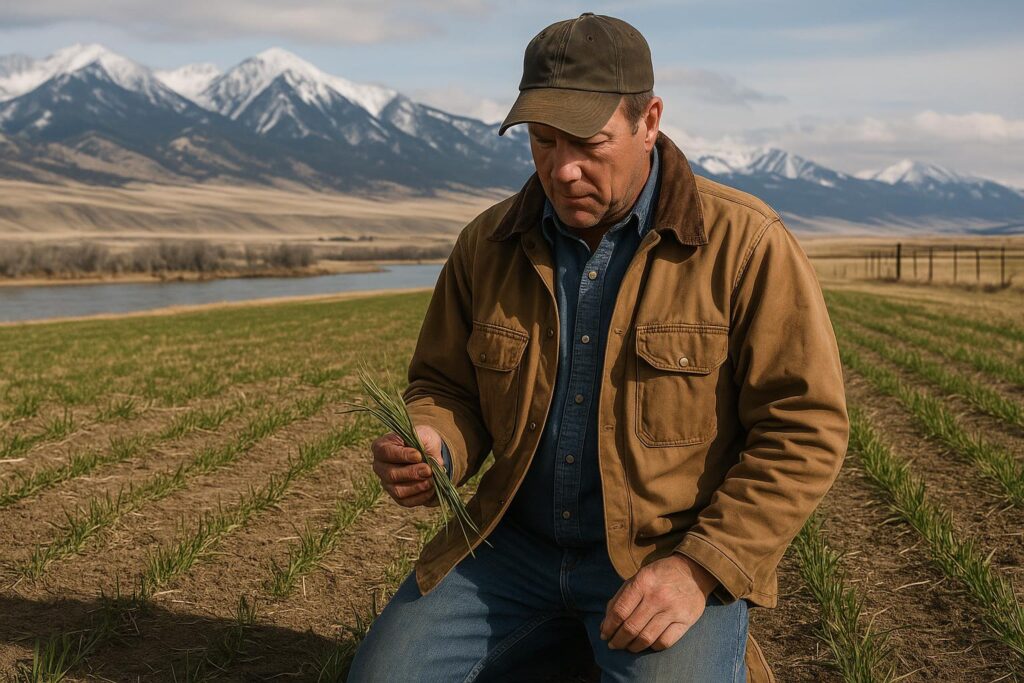
- Scout early and often: Check stand counts, crown health, and tiller development. A field that looks “okay” from the road can be uneven underneath, especially after winter stress.
- Match inputs to realistic yield: If moisture remains limited, talk with your agronomist about whether additional nitrogen or fungicide makes economic sense. Consider variable-rate approaches where feasible.
- Watch water planning if you irrigate: If you’re in an irrigation district or rely on stored water, keep an eye on allocation updates and timing. Even in areas with decent snowpack, delivery schedules and demand can tighten quickly. The U.S. Bureau of Reclamation Great Plains Region and local districts are good places to monitor announcements.
- Ranchers: keep feed options open: If wheat acres in your area are stressed, it may affect local straw availability and grain byproducts later. Start conversations early with neighbors about potential hay, straw, or alternative forage arrangements.
- Consider insurance and marketing timelines: For grain producers, double-check crop insurance dates and documentation. If you’re making marketing decisions, remember that weather-driven rallies can be short-lived. The USDA NASS and market reports can help keep expectations grounded in data.
In practical terms, Montana agriculture is dealing with the same core challenge every spring: moisture and temperature during key growth stages. The difference this year is how sharply conditions can change from one county to the next.
What to Watch Next in Montana Agriculture
The next several weeks will tell the story. Here are the key items Montana farmers and ranchers should track:
- Spring precipitation patterns: A couple of widespread, slow rains can change the outlook fast, especially in the Hi-Line and Central Montana. On the flip side, scattered showers that miss more than they hit won’t do much for subsoil moisture.
- Crop progress and condition reports: Weekly updates can provide a reality check beyond coffee-shop talk. Watch Montana-specific notes in the USDA Crop Progress reports.
- Temperature swings: Late freezes can set back wheat that breaks dormancy early. Heat spikes can shorten the grain-fill period later on, especially if moisture is limited.
- Irrigation supply signals: Pay attention to reservoir levels, streamflow forecasts, and district communications. The NRCS and its snowpack and water supply information can be useful for planning.
- Hay acreage and first-cut expectations: In the Bitterroot, Gallatin, and parts of the Yellowstone Valley, hay decisions and first-cut timing will be influenced by moisture and irrigation. If hay looks short, it can tighten the feed market quickly.
If Montana’s winter wheat finishes better than it starts, it can stabilize local grain movement and keep more feed options in-state. If dryness persists in key dryland areas, expect more talk about alternative forage, tighter straw supplies, and cautious spending on inputs and equipment.
For now, the best read is simple: keep scouting, keep watching the forecast, and be ready to adjust plans by region—because Montana’s wheat year may be decided county by county, not statewide.
Inspiration: www.farmprogress.com