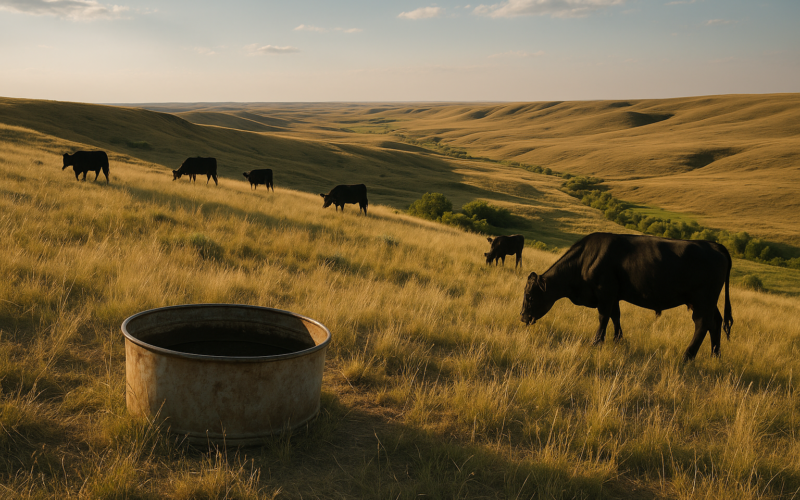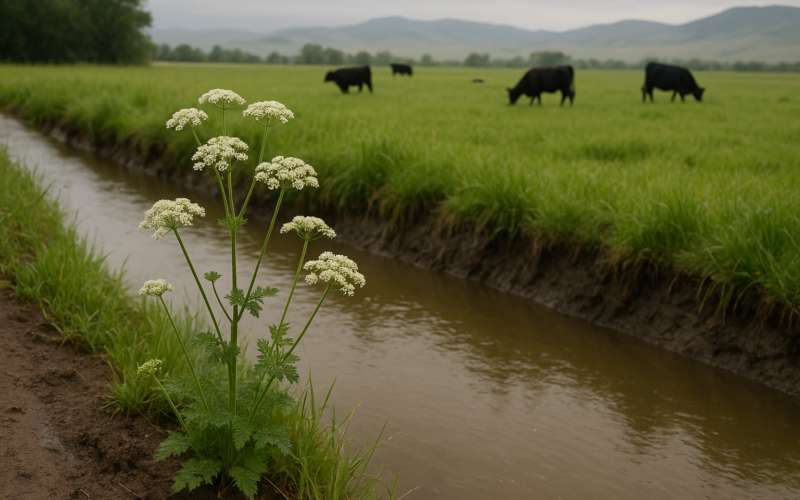
Drive any gravel road from the Bitterroot to the Musselshell this week and you’ll see it: the purple haze of knapweed coming on along the borrow ditches, and the yellow-green crowns of leafy spurge lit up in the draws. Both are getting toward the stage where they’ll start putting energy into seed instead of leaf. That’s the window you don’t want to miss.
Range weeds are easy to ignore in June. You’ve got bulls to turn out, hay to cut, and water to chase. But the spurge patch you walk past now is the one that’s an acre bigger next year, and the knapweed you let go to seed will be coming up in the cake line and the calving lots for a decade. A few hundred dollars of chemical and a Saturday with the sprayer beats fighting a solid stand later.
Read the plant, not the calendar
The right time to spray isn’t a date — it’s a growth stage. Spotted knapweed responds best when it’s in the rosette to early bolt stage, and again you can catch it at full bloom before seed sets, though earlier is generally cheaper and more effective. Once the seed heads turn brown and shatter, you’re just spending money to clean up a mess that’s already reloaded the seed bank.
Leafy spurge is the meaner customer. It runs on a deep, branching root system that can go down farther than you’d believe, and a single plant can hold a lot of stored energy underground. The two windows worth targeting are the true-flower stage in late spring and early summer, when the plant is moving sugars down to the roots, and again in fall regrowth. Spraying spurge when it’s actively translocating gets chemical into the roots, which is the only way you ever get ahead of it. A top-kill in midsummer heat looks good for two weeks and then it’s back.
If you’re not sure what stage you’re looking at, pull a few plants and look. Bud and early bloom is your signal on most of these broadleaf invaders. Rosettes spray well too if you catch them, but by mid-June a lot of the knapweed has already bolted.
Get the basics right or don’t bother
Spraying weeds is one of those jobs where doing it halfway is close to doing nothing. A few things that actually move the needle:
- Read the label and match the chemical to the weed. The products that work on knapweed and spurge aren’t always the same ones, and rates differ. The label is the law, and it’s also the cheapest agronomist you’ll ever hire.
- Watch the wind and the heat. Spray early in the morning when it’s calm. Drift onto a neighbor’s alfalfa or your own shelterbelt is a conversation nobody wants. Spraying in the heat of a 90-degree afternoon can also burn the leaf too fast to get good uptake on something like spurge.
- Use enough water and a surfactant if the label calls for it. Skimping on carrier volume means spotty coverage, and on a waxy-leafed plant the surfactant is what gets the chemical to stick and move.
- Mind grazing and haying restrictions. Some range herbicides have intervals before you can graze, hay, or move treated forage. If you’ve got cattle on that pasture or you’re cutting it, know the number before you fill the tank.
Spot spraying beats broadcast on most ranches. You’re after the patches, not the whole pasture, and a backpack or an ATV boom on the draws and roadsides puts chemical where the weeds are without sterilizing your good forage. Knapweed especially loves disturbed ground — old corral sites, road cuts, overgrazed knobs — so that’s where to look first.
One pass isn’t the whole job
Nobody sprays leafy spurge once and wins. The realistic goal in year one is to knock the top growth back, stop seed production, and start drawing down those roots. Plan on coming back — fall regrowth is a legitimate second shot at spurge, and the patches you treated this June will tell you next spring how much you actually got.
It helps to think of weed control the way you think of mineral or vaccinations: a standing line item, not a crisis response. The ranches that keep knapweed and spurge in check are the ones that walk the same problem ground every year and hit it small. Grazing management does some of the work too — healthy, vigorous grass crowds out invaders better than bare, beat-up ground ever will — but on an established stand of spurge, grass alone won’t dig you out.
Mark your worst patches now while you can see the color. Get the sprayer out before the seed heads brown up. The weeds you stop this month are the ones you won’t be cussing next June.