Every June somebody around here gets the call — pairs on the highway, or worse, mixed in with the neighbor’s cows a mile the wrong way. Nine times out of ten it traces back to a stretch of fence nobody looked at since fall. Frost heaved the posts, the creek came up and took the water gap, and a cow found the hole before you did.
The work is dull and it never makes a good story. But an afternoon riding fence before you turn out onto summer range saves you a week of gathering cattle that scattered because one wire was down.
Start where the water runs
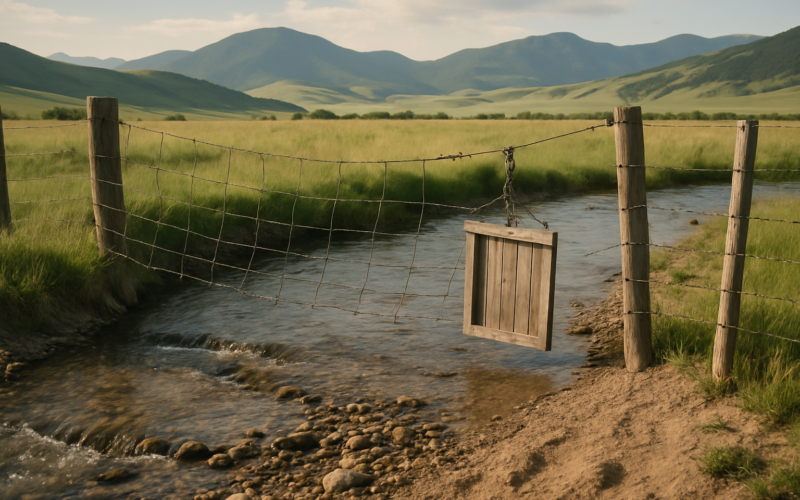
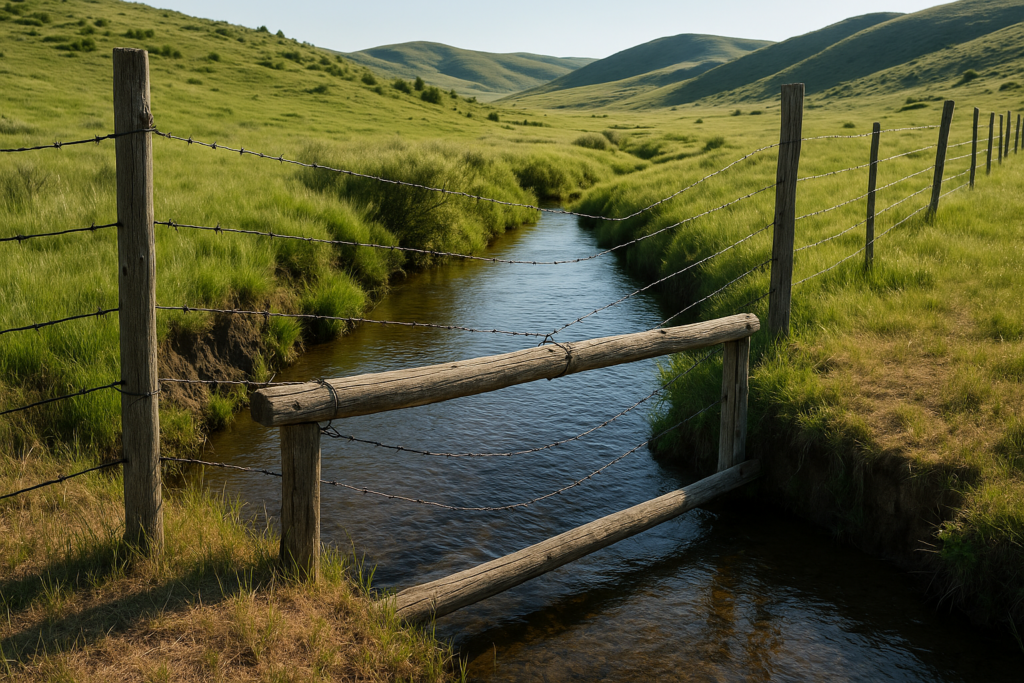
The trouble spots are predictable. Anywhere a fence crosses a coulee, a creek, or a low draw, that’s where spring melt does its damage. Water gaps — the sections rigged to swing or wash out when the creek comes up — are supposed to give way and then be reset. Trouble is, they don’t reset themselves. After a big runoff you’ll find the whole gap hanging downstream, wrapped around a cottonwood, with a wide-open hole where the fence used to be.
Rebuild those before the cattle find them. A water gap that hangs loose from the top and can swing with the current beats one strung tight that just tears out every year. Some outfits run a section of woven panel or a pole gap they can lift out ahead of high water and hang back after. Whatever you use, the point is that it comes back easy, because you’ll be doing it again next spring.
While you’re down in the low ground, check the posts on the banks. Cut banks slough off over winter and leave a corner post standing in air, or leaning out over the water with nothing behind it. That corner is holding your whole stretch of tension. If it’s loose, the fence a quarter mile in either direction is loose too.
Frost heave and rotten wood
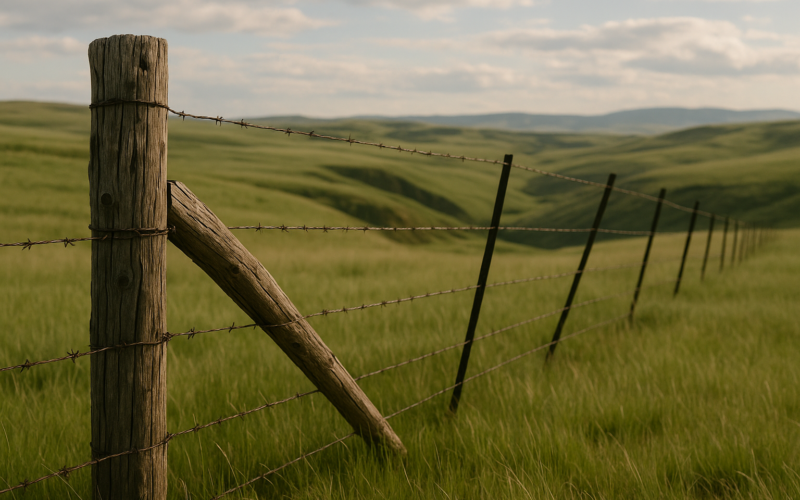
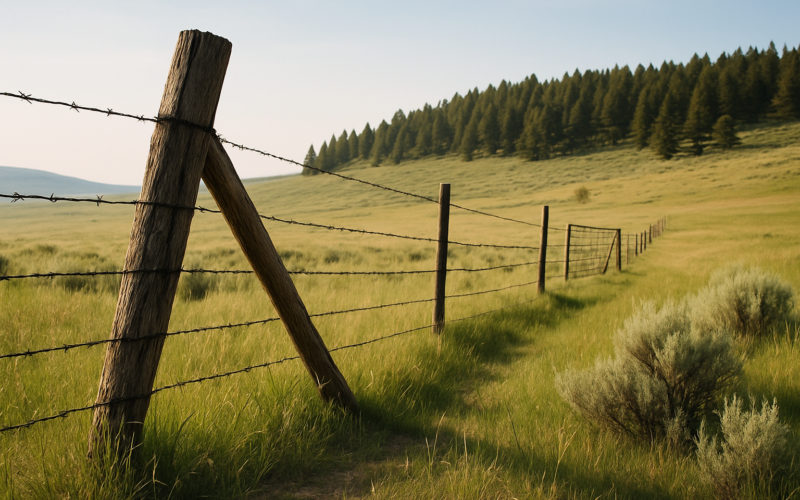
Up on the flats and the hillsides, the enemy is frost. A hard winter pushes steel posts and wood alike straight up out of the ground — you’ll ride a fence line where every third post is standing two inches proud and the wire’s gone slack. Drive them back down while the ground’s still soft from spring moisture. Wait until July and the ground’s like concrete and you’ll fight every post.
Wood posts rot at the ground line, not up top, so a post can look fine and snap off when you lean on it. Grab the questionable ones and give them a shove. Corner and brace posts matter most. A brace assembly that’s gone soft lets the whole run sag, and a sagging fence is a fence cattle learn to walk through. Carry a few steel posts and a driver on the four-wheeler or in the saddlebags so you can splice in a replacement without a second trip.
Check your gates too. Wire gates loosen over winter and a loose gate is just a suggestion to a cow. Tighten the loop so it takes some muscle to close, and hang a stay in the middle if it’s a long one so it can’t belly out.
Carry what you need and mark what you can’t fix
The mistake is riding fence with nothing but good intentions. You’ll find five things wrong and remember none of them by supper. Take fencing pliers, a roll of wire, a splicer or a handful of crimp sleeves, a few clips, and staples if you’re on wood. Fix the small stuff on the spot — a broken wire, a popped staple, a clip that let go. Splice with a proper Western Union wrap or a crimp; a wire just twisted together will pull loose the first time a cow scratches on it.
For the jobs you can’t handle horseback — a washed-out gap, a corner that needs digging — flag it and write it down. Drop a pin on your phone if you’ve got service, or tie a piece of surveyor’s tape on the top wire so you can find it again with the tractor and the post pounder.
The fences that hold cattle on summer range are the ones somebody looked at in June. Turn out onto a line you haven’t ridden and you’re trusting last fall’s fence to hold through the whole grazing season. It won’t, and the hole always shows up on a Sunday when you’re already behind on haying.