By the middle of June the roadsides have started to cure, the cheatgrass is going brown along the fence lines, and every piece of iron you run gets hot enough to matter. Fire season in Montana doesn’t wait for August anymore. The first real hot, windy stretch after the grass dries is when things get away from people, and more often than not it isn’t a lightning strike that starts it. It’s a baler bearing, a dragging chain throwing sparks, or a truck parked over dry grass with a hot exhaust.
You can’t do much about a dry lightning storm rolling off the Rockies. You can do a lot about the fires you’d otherwise start yourself, and about being ready when a neighbor’s smoke shows up on the ridge.
The equipment you’re already running is the biggest risk
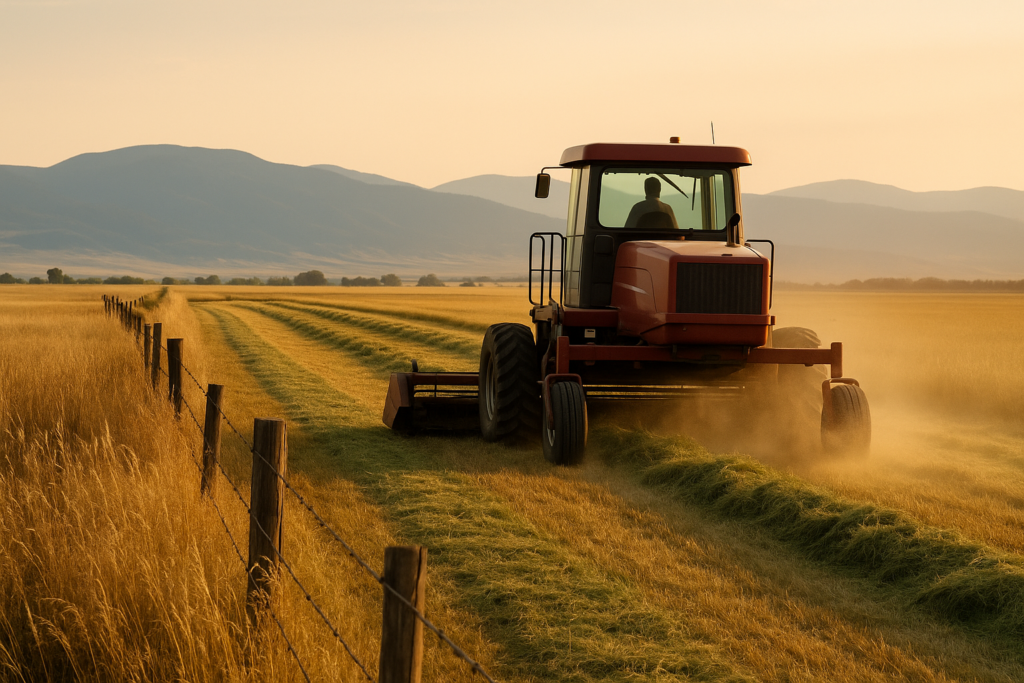
Haying is where a surprising number of range fires begin. A swather or baler running through dry windrows collects chaff and dust on the engine, around the exhaust, in the belt housings — and that stuff smolders. Wrap a bearing that’s been screaming at you all afternoon, and you’ve got an ignition source sitting in the driest fuel on the place.
A few habits cut the odds way down:
- Blow the chaff off the engine, exhaust, and any hot surfaces at least once a day, more when it’s dusty. Carry a leaf blower or an air line in the pickup.
- Chase down the bearing that’s been running hot instead of nursing it through one more field. That’s the one that starts fires.
- Don’t drag chains, and check that nothing metal is bouncing on the ground behind you.
- Watch where you park. A hot exhaust or catalytic converter over tall dry grass will light it. Pull off onto bare dirt, gravel, or a grazed spot.
Every rig that goes to the field — swather, baler, tractor, and the pickup that hauls parts and lunch — ought to carry a fire extinguisher you can actually reach without climbing off, plus a shovel. A charged ABC extinguisher on the cab and a round-point shovel behind the seat have knocked out more grass fires than any fire truck ever will, because they’re right there in the first two minutes when it’s still the size of a saddle blanket.
Water where you’re working, not back at the house
If you’re going to be cutting or baling in a dry field, having water close by changes everything. A stock tank, a spray rig, or even a 100- or 200-gallon poly tank with a small pump in the bed of a pickup means you can hit a start before it runs. Keep it full and keep the pump primed and tested — a pump that won’t catch when you’re standing over a spreading fire is worse than no plan at all.
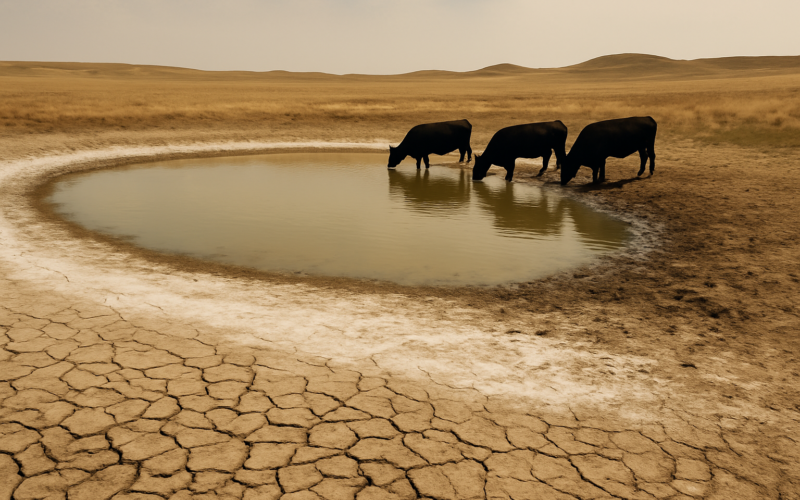
The same thinking applies to the whole outfit. Know where your reliable water is: which stock tanks are full, which ponds still have water in them in a dry June, where the nearest hydrant or fill site sits. If a fire crew shows up, the first thing they’ll ask is where they can draft. Being able to answer that fast is worth real time.
Grazing and mowing are your firebreaks
The grass you leave standing tall and cured next to buildings, corrals, and hay stacks is fuel. A grazed or mowed strip around the yard, the equipment shed, and especially the haystack gives a fire somewhere to lay down and gives you somewhere to stop it. You don’t need a bulldozed line — a well-grazed buffer or a mowed 30- to 50-foot strip does a lot.
Think hard about where your hay is stacked, too. A season’s worth of feed in one pile next to a dry draw is a bad bet. If you can split the stack or set it on ground you’ve grazed down or disked around, you’re not risking the whole winter’s feed on one spark.
Keep the two-way radio or a charged cell phone on you, know your legal land description or the nearest mile marker so you can tell dispatch where you are, and make sure whoever’s in the other tractor knows the plan if smoke shows up. Most of this costs nothing but a little forethought in June. The alternative is standing in a black field in July wondering how fast it went, and whether you had that shovel behind the seat.