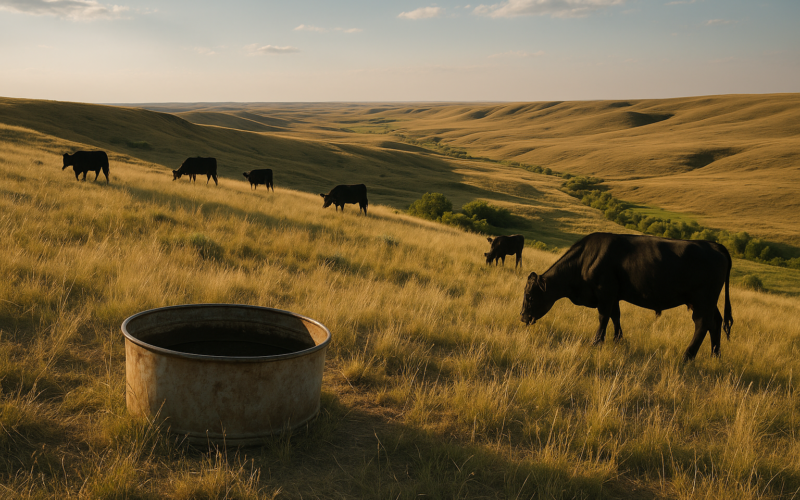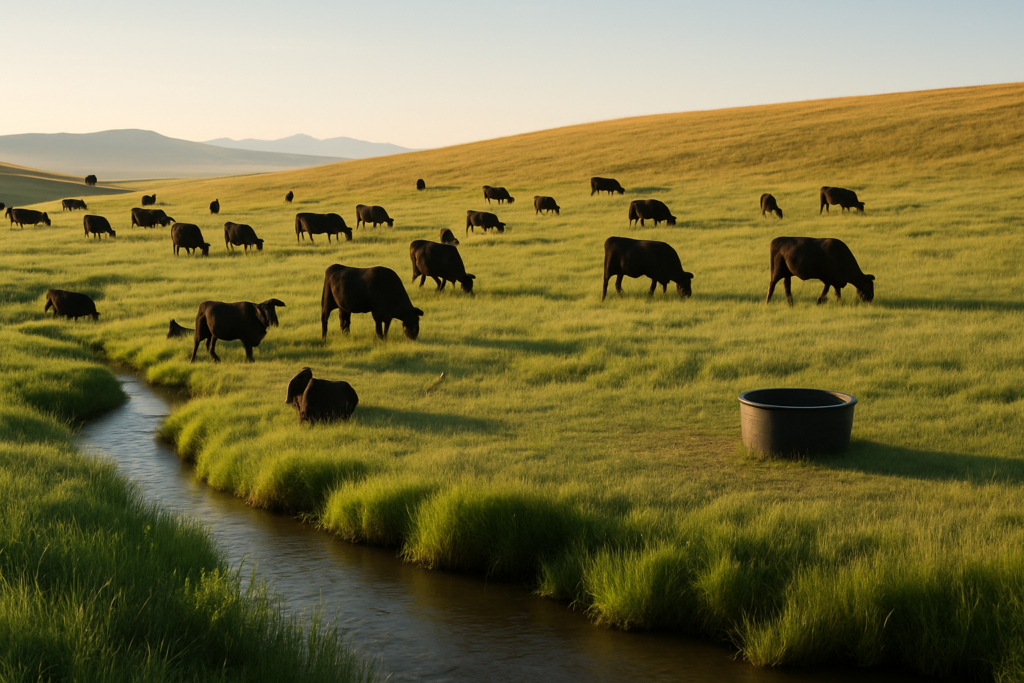
Turn a bunch of pairs into a big pasture and watch where they go. They drift to the creek, string out along the bottom, and set up camp within a quarter mile of water and shade. By the Fourth of July that bottom is grazed into the dirt while the ridge a half mile off still has grass standing to your knee. You didn’t run out of feed. You ran out of the feed the cows were willing to walk to.
On the kind of country most of us run in Montana — foothill pastures, breaks along the Missouri and the Yellowstone, sections with a mile or more between corners — uneven grazing is the quiet leak in your summer feed budget. You paid for the whole pasture. Getting cattle to actually use it is worth as much as any fertilizer or reseeding you’ll ever do.
Why they bunch up in the first place
Cattle are lazy about the same things people are: they’d rather not walk uphill, they’d rather not go far from water, and they like shade in the afternoon. Slope is the big one. Research on cattle distribution has shown for decades that steep ground and distance from water are the two factors that keep cows off the high country. A cow will graze a gentle flat a long way out before she’ll climb a north-facing pitch that’s a quarter of the distance.
Water pulls hardest of all. If there’s one stock tank or one creek in a big pasture, everything revolves around it. The closer you get to that water, the harder the grazing pressure, until you’ve got bare, pugged-up ground for a couple hundred yards out and rank, ungrazed forage past where they care to travel.
You can’t change a cow’s nature. You can change what’s out there for her to find.
Move the salt away from the water
The cheapest tool you’ve got is a salt and mineral tub set in the wrong place on purpose. Put it where the cattle aren’t grazing — up on a bench, out toward a back corner, on a ridge they’re ignoring — and set it well away from the water and the shade. A quarter to a half mile off water is a good starting distance. The cows will make the trip for salt, and while they’re up there they’ll graze what they walk past.
Then keep moving it. Salt in one spot for the whole summer just creates a new bare patch and a new trail. Bump it to a different underused area every couple weeks. You’re using the tub as bait to write the grazing pattern you want. Same idea works with a rub or an oiler if you’re running one for flies — hang it out on the country you’re trying to pull them into rather than down at the gate where they already congregate.
Don’t set salt right next to water expecting it to help distribution. It won’t. It just makes the crowded spot more crowded.
Water, fence, and your own horse
Where you can put in a second water source, do it — a solar well, a spring development, a stock tank on a pipeline. Every new water point resets the whole map, because now there’s a fresh half-mile circle of country the cows will actually use. Even a temporary tank on a hot pasture for a few weeks changes the pattern.
Fence does the same thing by force. You don’t have to build permanent cross-fence to split a big pasture. A single hot wire off a solar charger can hold pairs long enough to graze one piece down and then let them into the next. Move the wire, let the grazed side rest, and you’ve turned one overgrazed bottom and one wasted ridge into two evenly used pastures. It’s more work, but it’s the difference between one grazing period and two on the same ground.
And there’s no shame in the oldest tool there is. Ride out and push the cattle up onto the country they’re neglecting. Do it early, before it’s hot, and leave them a reason to stay — that’s where the moved salt earns its keep. It won’t hold forever, and you’ll have to do it more than once, but a few morning rides spread a hundred head across a lot more grass.
None of this is complicated. It’s just paying attention to where the cows are and where the grass is, and noticing when those two places quit lining up. Walk or ride the far corners of your summer pastures in June and again in July. If there’s grass standing out there that nobody’s touched, that’s feed you already own and aren’t getting paid for. A salt tub and a little sweat is a cheap way to collect it.