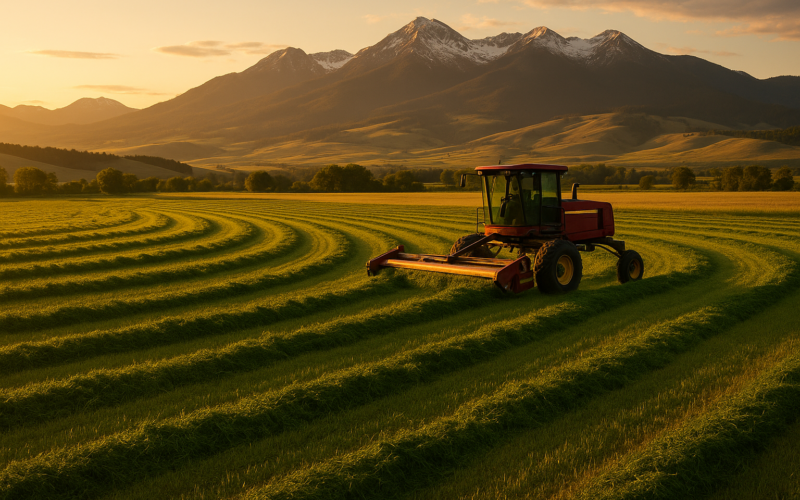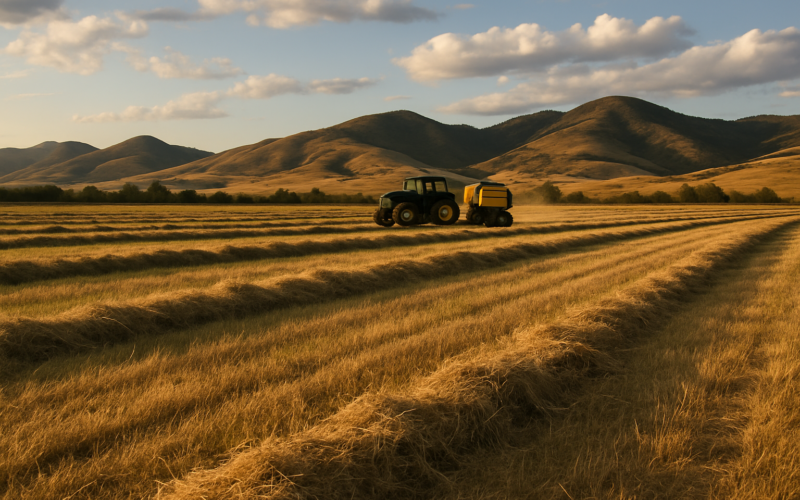
The swather did its job, the windrows look good, and there’s rain in the forecast three days out. That’s the setup that puts wet hay in the stack every June. You bale a day early to beat the weather, the bales go up looking fine, and two weeks later the middle of the stack is brown, sour, and warm enough to steam when you pull a flake. In a bad case it doesn’t just spoil. It catches.
Hay that’s baled too wet keeps living. The plant sugars and the bacteria in the bale burn oxygen and throw off heat, and a tight bale holds that heat instead of letting it out. That’s the whole problem in one sentence. A dry bale can’t do it. A wet one can, and the tighter and bigger the bale, the worse it holds heat.
Know the number before you drop the baler in
Small squares want to be around 18 to 20 percent moisture or drier. Big round and big square bales pack more mass and shed heat slower, so they need to be drier still — mid-teens is the safe country. Those aren’t magic figures, but they’re the range where cured grass and alfalfa will keep without cooking.
Guessing by feel gets you in trouble because the outside of a windrow dries hours ahead of the bottom and the stems. Twist a handful of stems from the shaded underside of the windrow, not the top. If they snap clean, you’re close. If they bend and peel a string of green cambium, or the seed heads still feel damp, you’re not there yet no matter what the top looks like. A hand-held hay moisture probe costs less than one ruined bale and takes the argument out of it. Run it into several bales off the baler, not just one.
The tricky spread in Montana is the wide swing between a dry afternoon and a heavy dew by dark. Grass that tested fine at two o’clock can pick moisture back up after the sun drops. Bale in the window when the dew is off and the stems are cured, and quit before the evening damp comes back into the windrow. Some years that window is only a few hours long.
Stack it so it can breathe, then watch it
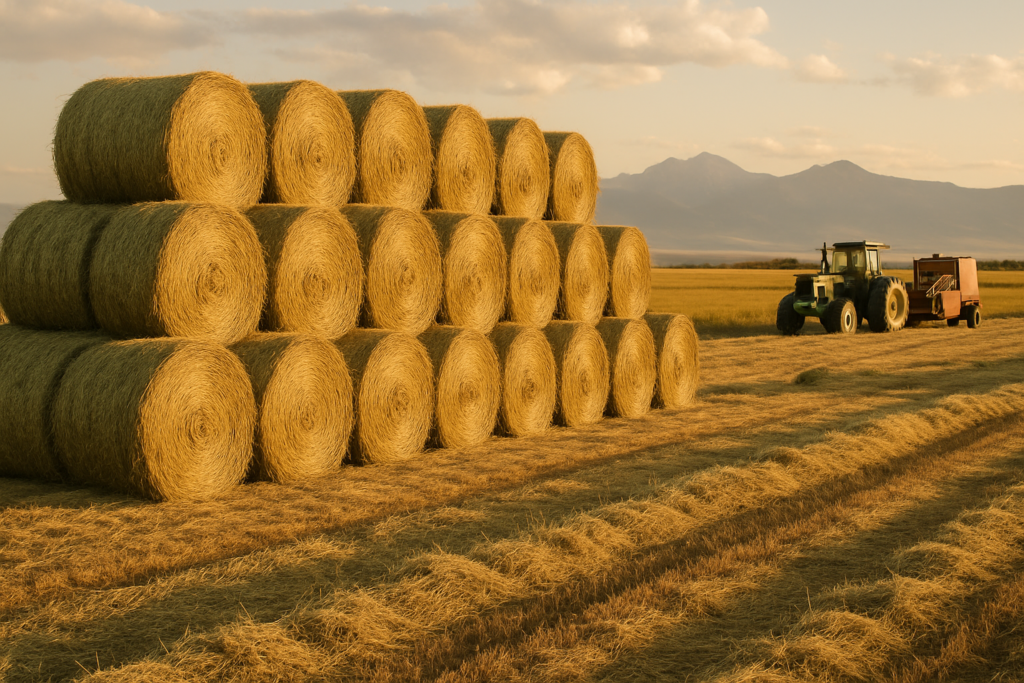
Even hay you’re comfortable with will sweat a little the first few weeks — that’s normal curing, and it’s why you don’t want it jammed wall-to-wall the day it comes off the field. Leave room between rows and rounds so air can move and the heat has somewhere to go. Don’t seal green-ish bales under tarp right away; you’ll trap the very moisture you’re trying to lose.
Then keep an eye on it. Heating follows a curve. Hay that climbs past about 130 degrees is spoiling and losing protein and energy fast — the mold you smell is feed value going out the top. Past roughly 150 it’s headed somewhere bad, and once a stack gets up around 170 or higher you’re into fire territory, sometimes days after baling. A stack that smells like caramel or pipe tobacco, puts off visible steam on a cool morning, or has slumped or settled unevenly is telling you it’s cooking.
Check it with a probe thermometer or a length of pipe you can drop a thermometer down on a string. Do not climb up onto a stack you think is hot. Burned-out cavities form inside and the crust over them will hold a man’s weight right up until it doesn’t. If a stack is genuinely hot, get equipment ready to pull bales apart from the outside and have water on hand — pulling apart a fire-hot stack can hit it with a rush of oxygen and flare it. That’s a fire department problem at that point, not a one-man job.
When you had no choice but to bale it wet
Sometimes the weather wins and you bale tough hay because the alternative is losing the whole cutting to rain. If that’s the call, know you made it and manage accordingly. Bale it looser if the machine lets you, stack it with extra air space, keep the moisture-doubtful bales in their own row where you can watch and feed them first, and check temperatures for the first three weeks. A preservative product rated for the moisture range you’re baling in can buy you a few points, but it’s insurance on marginal hay, not a license to bale slop.
The cheapest fix is still the oldest one: cut on a forecast you trust, let it cure, and put a probe in the windrow before you commit. Hay you baled a half-day too early doesn’t announce itself until the damage is done in the middle of the stack.