The first cutting is the biggest tonnage most Montana outfits will put up all year, and it’s the one people are most tempted to let ride. The grass is still growing, the weather’s iffy, branding just wrapped up, and there’s always a reason to give it one more week. That week costs you more than you think.
Forage quality peaks early and falls off fast. A stand of smooth brome or timothy that tests strong at the boot stage — heads still tucked in the sheath, not yet emerged — can drop several points of crude protein and pick up a lot of indigestible fiber by the time it’s in full bloom. You’ll cut more tons off the late crop, sure. But you’re baling stems. A cow eating that hay in February needs more of it to hold condition, and if she’s heavy bred she may not be able to eat enough of it to get by without supplement.
Read the plant, not the calendar
Dates lie. A cool, wet spring pushes everything back; a warm dry one runs it ahead. Walk the field and look at the crop instead of the date on the wall.
For grass hay, the target is the boot to early-head stage. Split a few tillers with your thumbnail and find the developing seed head still inside the flag leaf. Once heads are out and pollen is flying, quality is already sliding. On an alfalfa or alfalfa-grass mix, the standard is late bud to first flower — a few purple blooms showing across the field means it’s time to think hard about dropping the sickle. Wait for full bloom and you’ve traded protein for coarse stalk.
The trade-off is real and you don’t have to pretend it isn’t. Cutting early gives you better feed and usually a stronger regrowth for second cutting, but fewer tons off the first pass. Cutting late gives you a full stackyard of lower-quality hay. Which way you lean depends on whether you’re feeding your own cows or selling into a market that pays for a good test. If you’re feeding, quality almost always wins, because it’s the difference between hay that carries a cow and hay you have to prop up with cake.
Watch the sky before you drop the header
Cutting grass is the easy part. Getting it dry and baled without rain on it is where Montana earns its reputation. You want a stretch of several dry, breezy days after you lay it down, and in June that’s never guaranteed. A rain on green windrows leaches soluble nutrients and can bleach and mold the crop before it ever gets baled.
Some things that stack the odds in your favor:
- Cut in the late morning after the dew burns off, so the plant has started building sugars for the day.
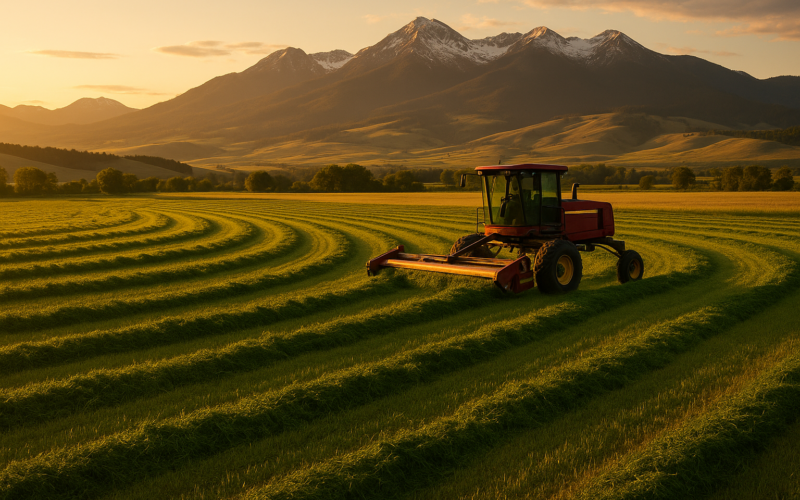
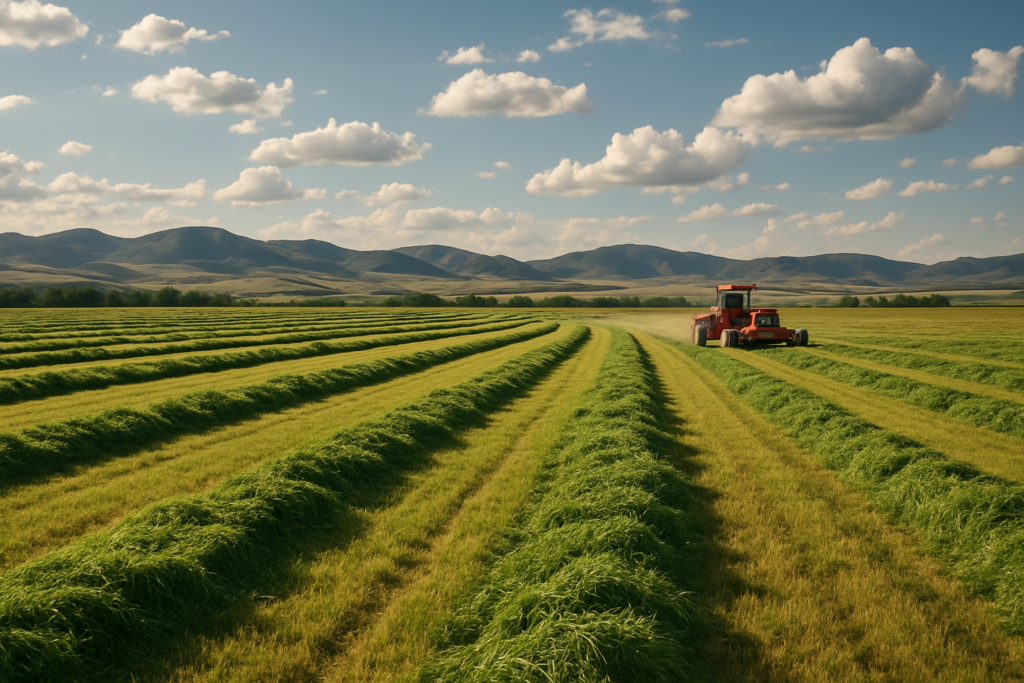
- Lay a wide swath rather than a narrow rope of a windrow — more surface hits the sun and wind, and the crop cures faster and more evenly.
- Use a conditioner set right for the crop so the stems crack and give up moisture close to the same rate as the leaves.
- If you’ve got the ground and the equipment, don’t cut more than you can bale in the dry window you actually trust.
A short forecast you believe beats a long one you don’t. If the only clear stretch you’re going to get is three days, cut what you can bale in three days and leave the rest standing. Standing grass loses quality slowly; rained-on windrows lose it fast.
Bale it dry, but not bone dry
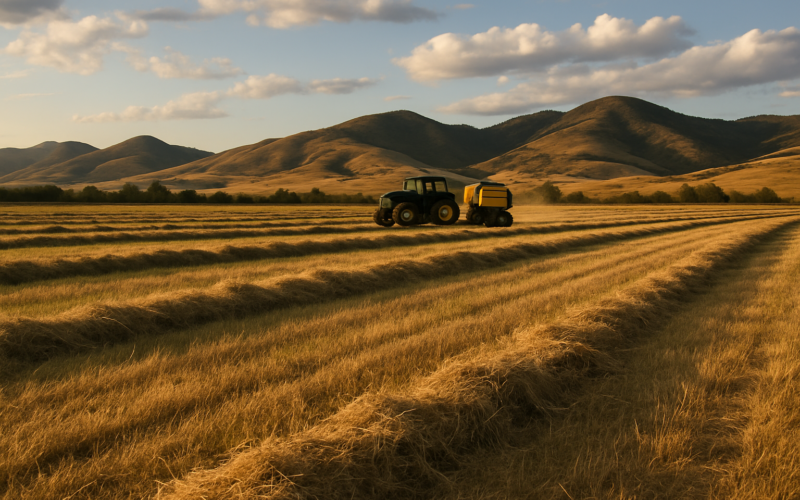
Moisture at baling is where a good crop gets ruined after all the hard work. Small square bales generally need to be under about 18 to 20 percent moisture, big rounds and large squares tighter than that, because the bigger and denser the package the less heat can escape. Bale it wet and it heats. Heating scorches the feed value out of it and, in a bad case, starts the kind of fire that finds a stack weeks after baling.
The flip side is baling in the heat of the afternoon when the crop is cracker-dry — you shatter the leaves, and the leaves are where most of the protein lives. That’s why a lot of hands bale in the cool of the morning or evening when a little dew has come back and toughened the leaf enough to hold together. A moisture tester or a hand probe in a few finished bales tells you more than a guess. Stick your arm into a bale a couple days later; if it’s warm, you baled it too wet.
Nobody hits it perfect every year. But if you cut close to the boot, lay it wide, and bale it at the right moisture, you’ll have hay next winter that does the work — instead of a big pile that just takes up room in the yard.