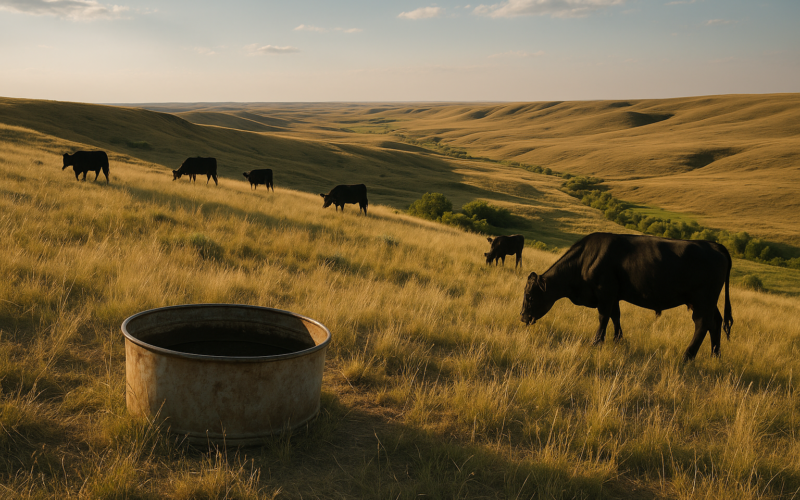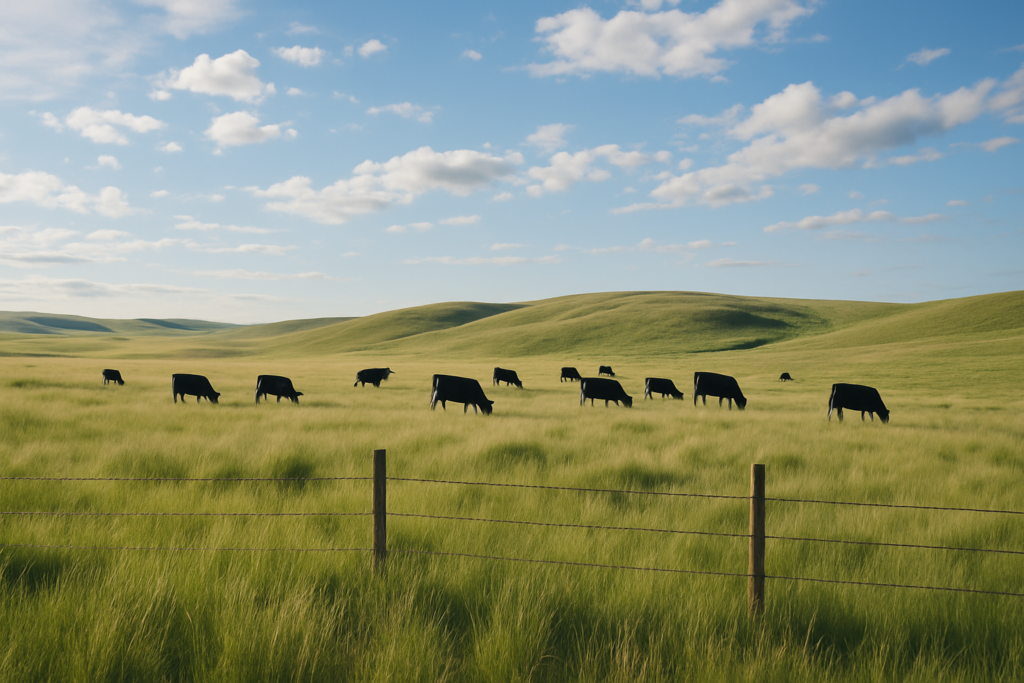
June grass looks like it’ll go forever. The pastures are green, the cows are slick, and it’s easy to leave them on the first field until it’s chewed to the crown because the next one looks just as good. That’s the mistake that shows up in August, when the country that should have carried you into fall is short and hard and the cows are drifting the fences looking for something better.
What you take off a plant in June determines how fast it grows back, or whether it grows back at all. A grass plant runs on the leaf area it has left. Graze off the top third and it barely notices. Graze it to the dirt and you’ve taken the factory along with the product. The plant then has to pull from root reserves to push new leaf, and every time it does that in a single season it comes back weaker. Do it a couple years running and you’ve traded your good bunchgrasses for cheatgrass and bare ground.
Take half, leave half — and mean it
The old rule still holds up better than most of the fancier systems people sell: take about half the growth and leave the other half. On most Montana native range that means moving cattle when the plants are grazed down to somewhere around three or four inches of stubble on the bunchgrasses, more on the taller stuff. Leave that much and the plant keeps enough leaf to photosynthesize, shade its own crown, and hold moisture in the soil around the roots. That residual is also what catches the next rain instead of letting it run off bare dirt.
The hard part isn’t knowing the rule. It’s pulling cattle off a pasture that still has feed in it. Feels wasteful. It isn’t. The four inches you leave in June is what turns into eight inches by the time you circle back, and it’s what keeps the plant alive to do it again next year.
Turnout timing matters as much as stocking
Going out too early is its own kind of damage. When you turn onto a pasture before the grass has enough leaf and root behind it — chasing that first green flush — the plants are still living off reserves. Grazing them then sets the whole season back. On a lot of Montana range, waiting until the key grasses have three to four leaves before you graze pays for itself in total production. It’s tempting to jump the gun after a hard winter on hay, but a week or two of patience early buys you a lot of grass later.
The same logic runs through the rest of the summer. If you can split the country and rotate — even roughly, even with the pasture divisions you already have — you give each piece a chance to rest and regrow. Grass that gets bitten, rested, and bitten again grows more over a season than grass that’s under a cow’s mouth all summer. A plant grazed continuously never gets its leaf back, so it never gets going.
Rest doesn’t have to mean an elaborate grazing plan on a whiteboard. It can be as simple as: this field in June, that one in July, come back to the first one in late summer after it’s had time to recover. Move water and mineral to pull cattle into the parts of a big pasture they’d otherwise ignore, so you’re not hammering the creek bottoms and flats while the ridges never get touched.
Read the plants, not the calendar
Every year is different. A wet spring gives you slack; a dry one tightens everything up and means you may need to pull cattle sooner or cut numbers. Watch the plants themselves. If the bunchgrasses are grazed down and the cows are starting to bite into last year’s gray growth or graze the same spots over and over, you’ve stayed too long. If the pasture’s getting away from you and heading out before they touch it, they’ve got room to work.
Keep an eye on the ground too, not just the tops. Bare soil showing up between plants, hoof-pounded trails widening, the good grasses giving way to weeds and annuals — those are the pasture telling you it’s carrying more than it should.
None of this asks for new equipment or a big check. It asks you to look at what you’re leaving behind when you move cattle, and to move them while there’s still something worth leaving. The grass you protect in June is the grass you’ll be grateful for when the country’s tinder-dry and the calves still need to gain. Overgraze it now and you’re feeding hay in September to make up for a mistake you made in the first warm week of summer.