The snow up high finally lets go all at once, and for a few weeks in late May and June the creeks and ditches run full. That’s your window. By mid-July a lot of Montana headwater streams are already dropping, and the flood water you didn’t spread on the hay meadow is gone downstream for good. If you irrigate native meadow or grass hay off ditch water, the difference between a full second look at the stack and a light cutting often comes down to whether you had your water moving while the runoff was still there.
This isn’t the pressurized-pivot game. Wild flood irrigation on a foothill meadow is old, simple, and forgiving, but it rewards the outfit that’s ready when the water shows up.
Have the ditch clean before you need it
Ditches silt in, sod in, and grow willows every year. If you’re out there with a shovel the day the water comes down, you’re already behind. Walk the main ditch and the laterals before green-up, pull the trash out of the headgate, and burn or clean the check dams so they hold. Muskrats and pocket gophers will have put holes in your banks over the winter, and a ditch that blows out below the head gate dumps your whole set into one low spot and drowns it while the rest of the meadow stays dry.
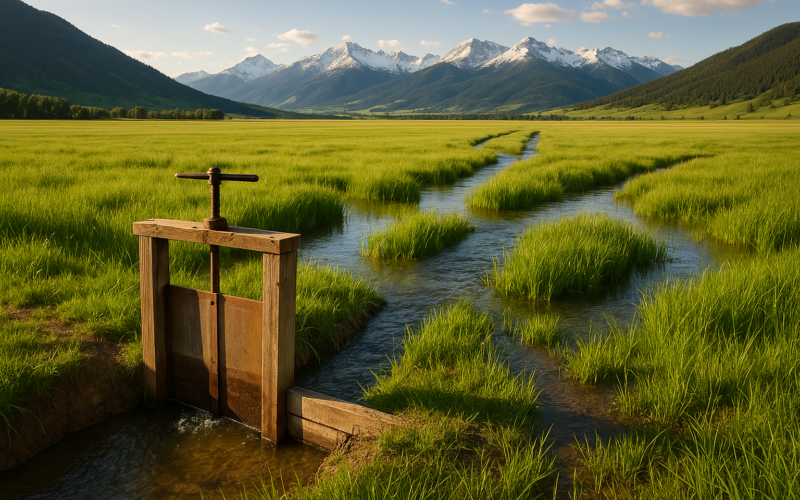
Look at your headgate itself. A gate that won’t seat, a broken lift stem, or a washed-out apron all cost you water and cost you control. It’s a cheap fix in April and a miserable one in June with the creek up.
Spread it, don’t pond it
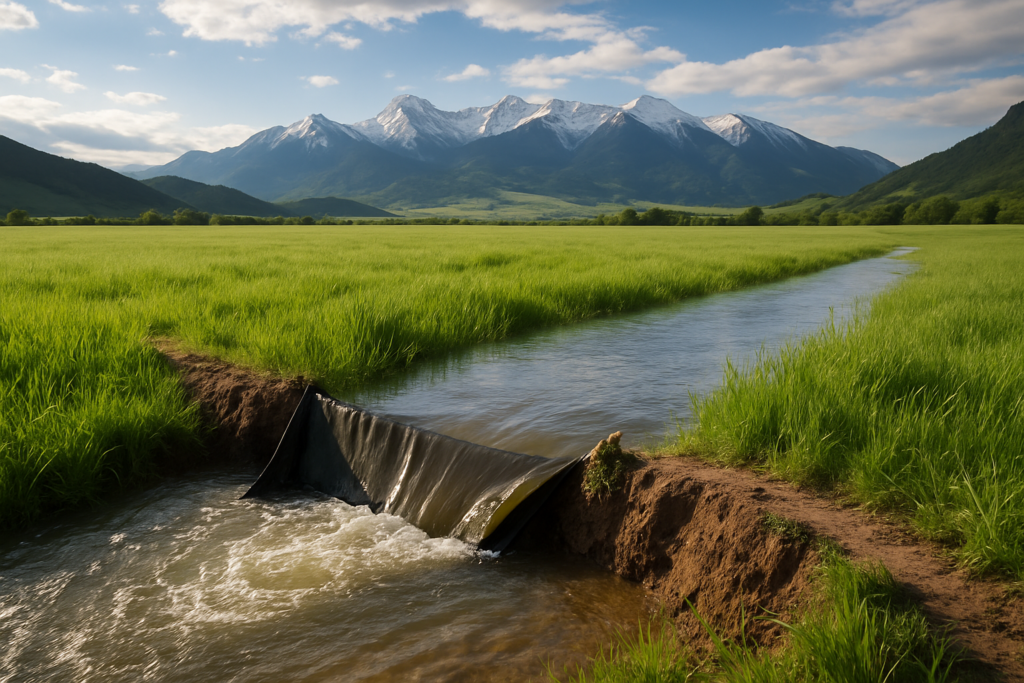
The point of wild flooding is to run a thin sheet of water across the whole meadow, not to fill low ground and leave it standing. Standing water for days at a time kills good meadow grass and sets up the ground for foxtail, cheatgrass, and other junk that moves in on drowned-out spots. Use your check dams, canvas or poly dams, and shovel work to push water out of the ditch and let it walk down the natural slope. On a meadow with any fall to it, you keep bumping the dams down the ditch so the water spreads a strip at a time rather than blowing out one gate and running for the low corner.
Get after the ridges and the high shoulders early, because those dry out first and they’re the ground that decides your yield. The swales along the creek will subirrigate themselves and green up whether you touch them or not.
Water rights and your neighbors
Runoff time is also when everybody on the ditch wants water at once. Know where you sit in the priority list. In a good snow year there’s plenty to go around and it doesn’t much matter, but a dry spring turns a shared ditch into a sore subject fast. If you’re junior on the system, a senior right upstream can call the water and you’re done, so it pays to get your ground watered up early while the flow is high enough that nobody’s fighting over it. Keep your diversions where they’re supposed to be and don’t take more than your share when the ditch is short. A good relationship with the folks above and below you on the ditch is worth more than any single set.
Stop in time to make hay
Meadow you’re going to cut has to dry down enough to get equipment on it. Plan your last set so the ground firms up before you want to swath. Water a meadow late and you’ll be sinking a tractor in soft ground in July, or worse, cutting around wet spots and leaving grass standing. On native meadow, one good soaking through the growing part of the season usually does more than repeated light sets that never really wet the root zone.
If you’re running cattle back on the aftermath, the same rule holds. A meadow that’s still saturated when you turn out gets pugged into a mess of hoof holes that won’t heal until the next year. Let it firm up.
None of this is complicated, and that’s the trap. It’s easy to figure the water will be there next week, and next week the creek is down a foot and pulling back into its banks. The meadow doesn’t care how busy branding and turnout kept you. Get out there while it’s high.