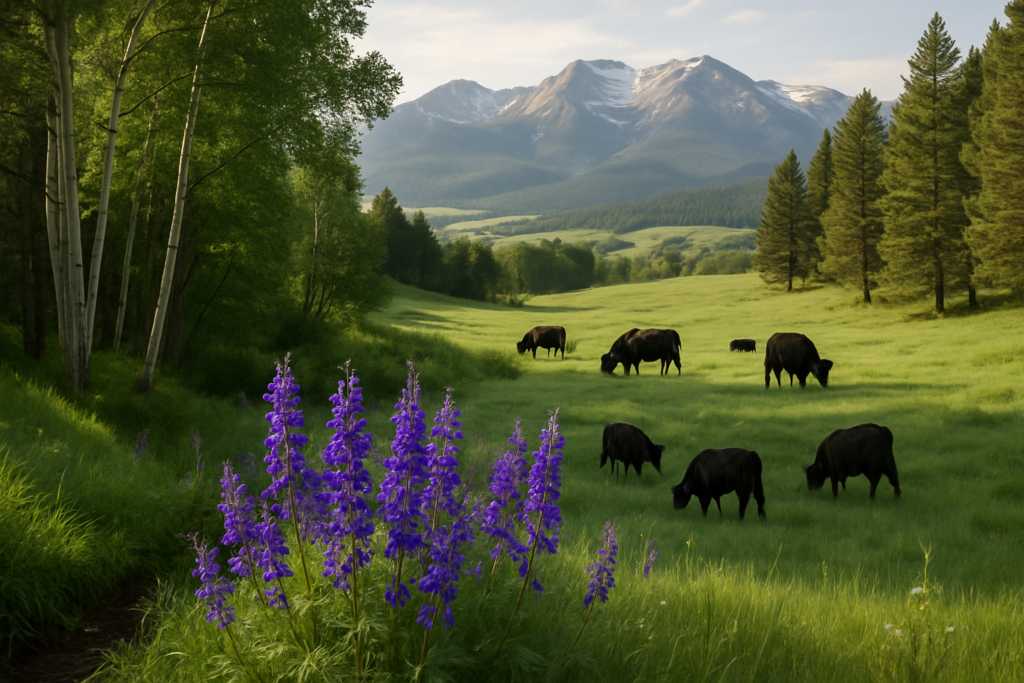
Every June a few Montana outfits find a dead cow or two in the brushy draws and timber edges above the home place, no sign of a fight, no bloat, just down and gone. More often than folks admit, the culprit is larkspur. It grows thick in the foothill and mountain country from the Rocky Mountain Front through the island ranges, and it kills more cattle on western summer range than most other plants combined.
The frustrating part is that cattle die on ground you were counting on for good early-summer grazing. Larkspur comes up in the same moist, timbered pockets and north slopes that hold feed when the flats are drying out. You turn out expecting to bank some cheap gain, and instead you’re dragging a carcass out of a coulee.
Why It Kills When It Does
Larkspur carries alkaloids that block the signal between nerve and muscle. A poisoned animal gets weak, wobbly in the hindquarters, goes down, and eventually can’t hold its chest up to breathe. Bloat often follows because the rumen quits working while the cow is on her side. If you find one alive, she may be trembling, staggering, or collapsing and getting back up. Many are just found dead.
Toxicity isn’t the same all season. Tall larkspur is generally most dangerous from the time it starts growing through the flowering stage, and the alkaloid load runs highest in the young, fast-growing plant. The catch is that cattle don’t want much to do with it early, when it’s most toxic. They start eating it in real quantity later, around bloom and into the pod stage, after the plant has grown tall and leafy and the surrounding grass has started to coarsen. By then the toxin per pound has dropped, but a cow can put away enough plant material to poison herself anyway. That overlap of decent palatability and still-dangerous plant is the killing window, and in a lot of Montana country it lands from mid-June into July.
Low larkspur behaves a little differently and greens up earlier at lower elevation, but the same rule holds: the risk is worst while the plant is growing and blooming, and it eases off as it dries and goes to seed.
Managing Turnout Around It
You can’t spray your way out of larkspur across a whole allotment, so the practical control is grazing timing and how you handle cattle. A few things that actually move the needle:
- Know where it is before you turn out. Ride the larkspur patches and mark them in your head. It’s rarely spread evenly; it clusters in the moist draws, aspen edges, and north-facing benches. If you know the bad pockets, you can plan around them.
- Graze the larkspur country early or late, not at bloom. One approach is to put cattle on those pastures before larkspur is much of a draw, while they’ll pick grass over it. The higher-risk stretch is when the plant is flowering and cattle start hitting it hard. If you can be moving through and out of those pastures during peak bloom, you cut the exposure.
- Don’t turn hungry cattle straight onto it. Cattle that come off a hard haul or a chewed-down trap will eat first and sort later. Let them fill on grass before they hit larkspur country.
- Keep them settled. Poisoned cattle die faster when they’re pushed. Working, gathering, or trailing animals that have eaten larkspur can turn a mild case into a dead one because exertion overwhelms the weakened muscles. If you know cattle have been grazing it heavy, leave them alone and don’t move them until they’ve cleared it.
When You Find a Sick One
There’s no field antidote you’re going to have in the pickup. The best you can do for a down animal is keep her calm and, if she’s on her side, roll her up onto her brisket to relieve the bloat and let her breathe. Don’t chase her, don’t try to drive her out. Any exertion works against you. Some animals recover on their own if they quit eating the plant and aren’t stressed; plenty don’t. A vet can talk you through supportive options, but honestly the game is played before the animal goes down, in how you time the grazing.
Keep track of where and when you lose cattle. A pasture that took one this year around the same date will do it again, and that record is worth more than any general rule about elevation or bloom stage. Larkspur is a known problem on a lot of Montana summer ground. It’s survivable if you respect the calendar and don’t ask cattle to work while they’re full of it.