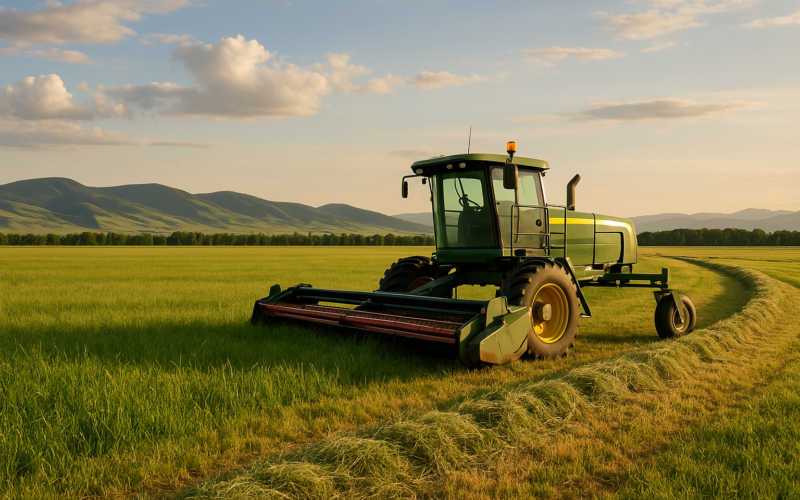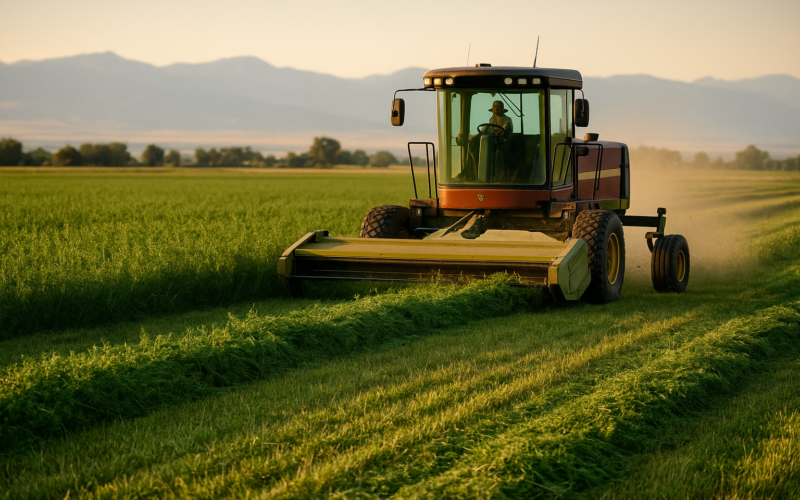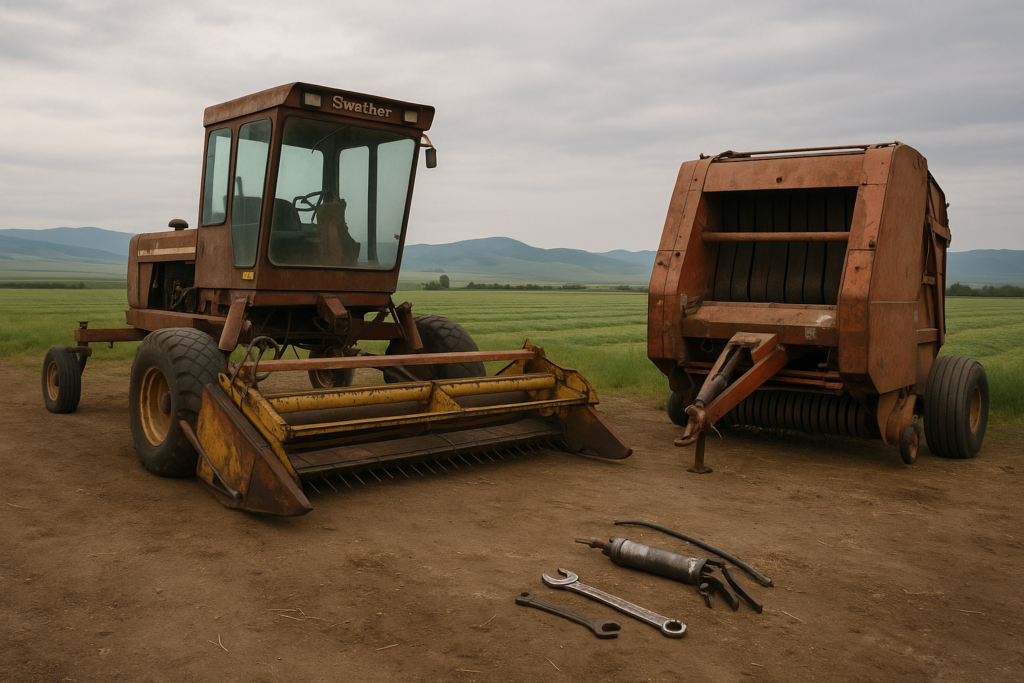
The first stretch of dry, warm weather in June is the one you’ve been waiting on since the snow left. Grass is heading out, the alfalfa’s at bud, and the forecast finally gives you four or five clear days. That’s the worst possible time to find out the swather won’t start, the baler’s shear bolt sheared on the first round, or the conditioner rolls are chewing instead of crimping.
Equipment breaks in the middle of the job because that’s when it’s under load. The fix is boring and it works: go through everything on a rainy afternoon in early June, before the window opens, when a part on back-order is an inconvenience instead of a lost cutting.
Start with the machine that cuts
Whether you run a sickle-bar swather or a disc mower, the cutting components are where most field trouble starts. Pull the guards on a sickle head and look at the sections. Rounded, chipped, or missing sections tear grass instead of shearing it, and a dull knife drags the stand down and leaves stubble uneven. Have a spare full knife ready, or at least a handful of sections and rivets and the tool to set them. Check the wear plates and hold-down clips while you’re in there. A knife that’s loose in the guards pounds itself apart in a hurry.
Disc mowers are a different animal. Check the oil in the cutterbar, because a leaking seal that runs dry will cost you a whole bar. Look at the blades and the blade bolts or pins, and swap anything cracked or worn thin. A blade that lets go at operating speed is dangerous and expensive.
On the conditioner, look at the roll clearance and the condition of the rolls themselves. Rolls set too far apart don’t crack the stems, and hay that isn’t conditioned dries slow and uneven. That’s how you end up baling one windrow too wet while the next one over is ready.
Grease, belts, and bearings before they cook
Every haying machine has a grease chart, and by June most of us have forgotten half the zerks on it. Hit all of them. Pay attention to the ones that are easy to miss because they’re behind a shield or up under the deck. Wobble the pulleys and idlers by hand and listen for a bearing that’s gone dry or rough. A five-dollar bearing you catch now is a lot cheaper than the one that seizes, throws a belt, and takes the pulley with it in the field.
Look at every belt for cracks and glazing, and check the tension. Bring the spares out and set them somewhere you can find them at ten at night, because that’s when you’ll need them. Same goes for hydraulic hoses. A hose that’s been rubbing on a frame member all season will pick the hottest, driest afternoon to blow, and then you’re cleaning fluid off a windrow and waiting on a new one.
The baler is where the day gets long
A round baler that won’t tie is the classic June headache. Check the net wrap or twine system carefully. Run the arm through by hand, look at the knives that cut the net, and make sure the twine tubes and disc aren’t gummed up from last fall. Load fresh net or twine and confirm you’ve got enough to finish the field, plus more.
Check the pickup teeth for missing or bent ones, because a ragged pickup leaves hay on the ground and rakes dirt into the bale. Look at the belts on a belt baler for tears and lacing that’s pulling loose. Chains want the right tension and a shot of oil. And go through your shear bolts, because you’ll break them, and you always break the last one you had in the toolbox.
Don’t forget the rake and the tractors that pull all of this. Rake wheels with bent or missing teeth stripe the field and leave hay to bleach. Check tire pressures, top off fuel and DEF, and change filters and fluids that are due now rather than in the middle of the run. A plugged fuel filter that starves the swather at noon feels a lot like a bigger problem than it is.
None of this is complicated. It’s a day, maybe two, of dirty hands and a grease gun. But the difference between a clean first cutting and a wrecked one usually isn’t the weather or the stand. It’s whether the machinery held together long enough to get the hay off while it was ready.