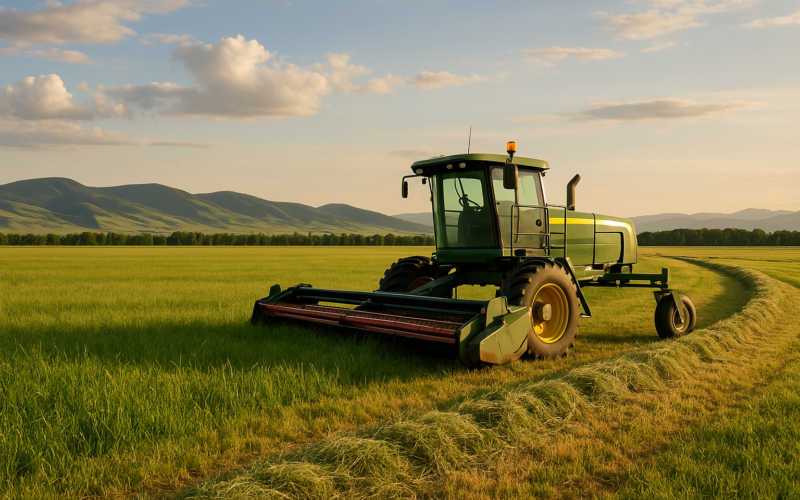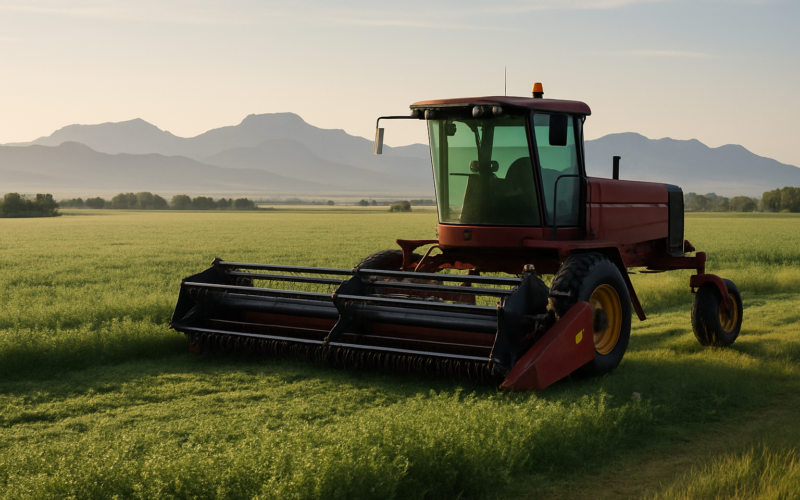
By mid-June most of the calving and branding work is behind you, and the alfalfa on the irrigated ground is getting close. First cutting is the one that matters most for tonnage, and it’s also the one where the machine has been sitting all winter waiting to disappoint you. A swather that quit clean last August does not always start clean in June. Mice get into the wobble box wiring, a bearing that was just starting to talk finally lets go, and the sickle you never pulled last fall is carrying half a dozen broken sections you forgot about.
The weather is the reason to fix all of that before you’re in the field. Montana hay weather comes in three- and four-day windows, and when the forecast finally lines up, everybody in the valley is cutting at once. A day lost to a breakdown isn’t just a day. It can be the difference between baling dry and watching a rain move through on a windrow that was ready to rake.
Start at the sickle, because that’s where the trouble lives
Pull the head off, or at least walk the length of the sickle bar with the shields off and look at every section. Cracked and chipped sections don’t cut, they tear, and a tearing sickle plugs in heavy first-cutting alfalfa faster than anything. Replace the bad ones now. Sections are cheap and you can change them at the shop bench with a rivet gun or bolt-on kit in a lot less time and a lot better temper than you can in a field with the sun going down.
While the sickle’s exposed, check the guards. Bent or worn guards let the sickle ride high and shear poorly, and a guard that’s spread open won’t hold the section against the ledger plate to make a clean scissor cut. Straighten what you can, replace what you can’t. Look at the hold-down clips and the wear plates behind the sickle bar too. If the back of the sickle is flopping, the sections aren’t registering over the guards and you’ll leave a ragged, stringy stubble that dries slow and cuts your regrowth back.
Then check sickle timing. The section should center over the guard at each end of the stroke. If it’s off, the wobble box or the drive linkage is worn, and that gets worse under load, not better.
Grease, bearings, and the wobble box
Hit every zerk. It sounds obvious, and it’s the thing people skip because they’re in a hurry to get rolling. A dry conditioner-roll bearing or a dry header-drive bearing will pick the worst possible afternoon to seize. Spin the reel and the rolls by hand and listen. A bearing that grinds or has play in it is telling you exactly what it’s going to do to your first good cutting window.
The wobble box or pitman drive is the heart of the thing. Check the oil level in a wobble box and look for the milky color that means water got in over the winter. On a pitman-style machine, check the bushings and the arm for slop. This is the part that turns rotary motion into the back-and-forth of the sickle thousands of times a minute, and when it fails it usually fails all the way.
Look at the conditioner rolls while you’re at it. First-cutting alfalfa is stemmy, and rolls that are worn smooth or set too loose won’t crimp the stems enough to dry evenly. You’ll get leaves bone-dry and stems still tough, which is how you end up baling tough or waiting an extra day you didn’t have.
Carry the spares, and cut for the crop you’ve got
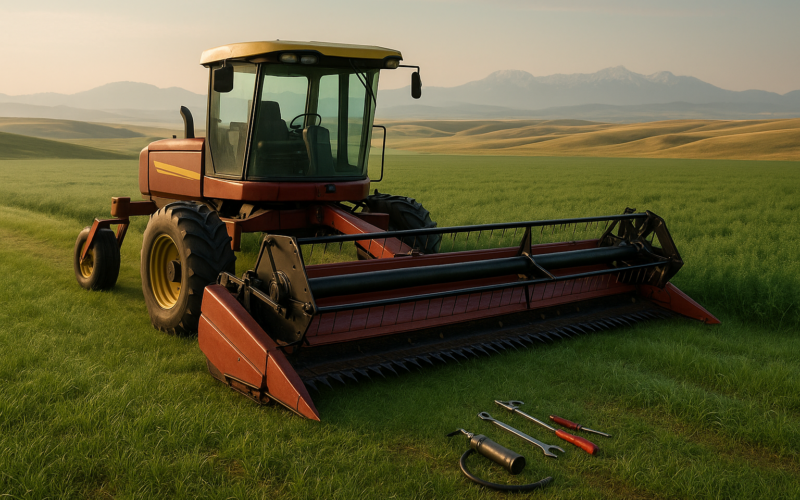
Before you leave the yard, throw a box of sections, a handful of guards, a couple of rivets or section bolts, and the tools to change them behind the seat. The breakdown you can fix in the field in twenty minutes is the one that doesn’t cost you the window.
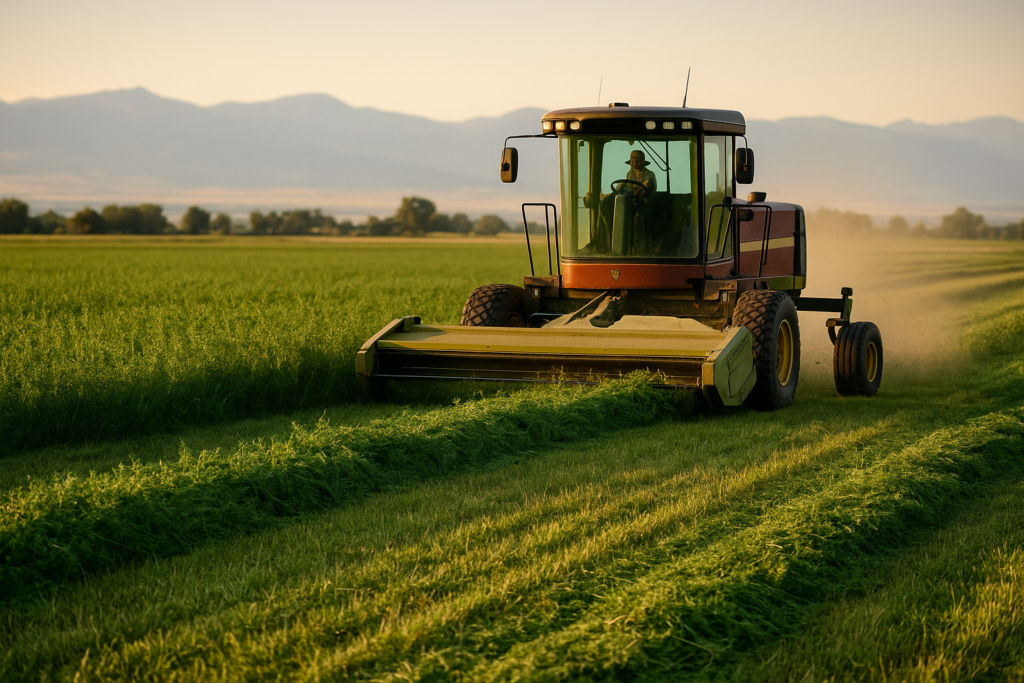
Then match your ground speed to the stand. First-cutting alfalfa is often the heaviest of the year, and pushing a swather too fast through a thick, lodged stand is how you plug and how you break sections. Slow down, keep the header height set to leave enough stubble to hold the windrow up off the ground for air, and let the machine do the work it’s set up to do. A clean, even windrow dries faster and rakes cleaner than one thrown by a machine that was fighting itself the whole pass.