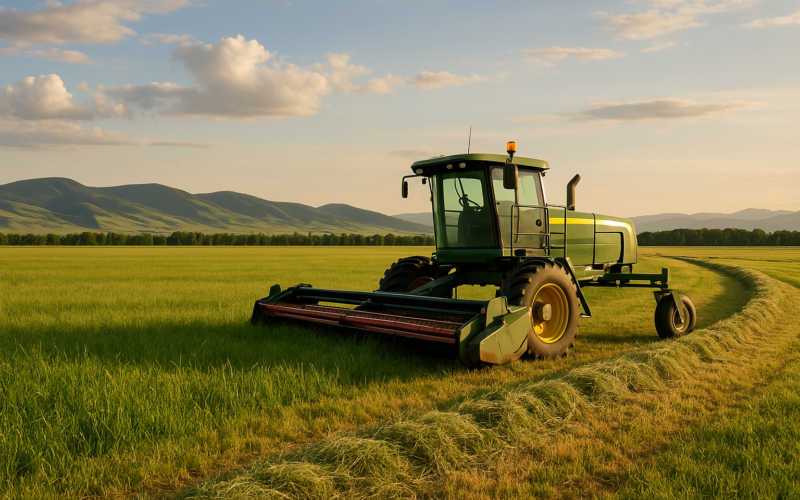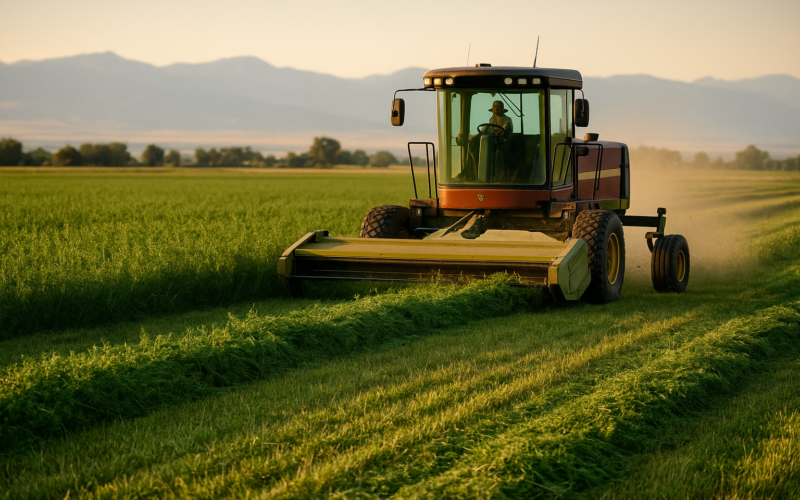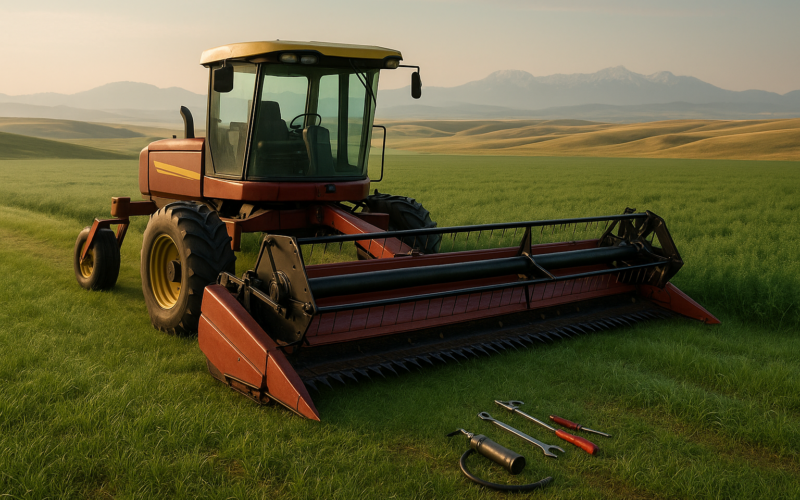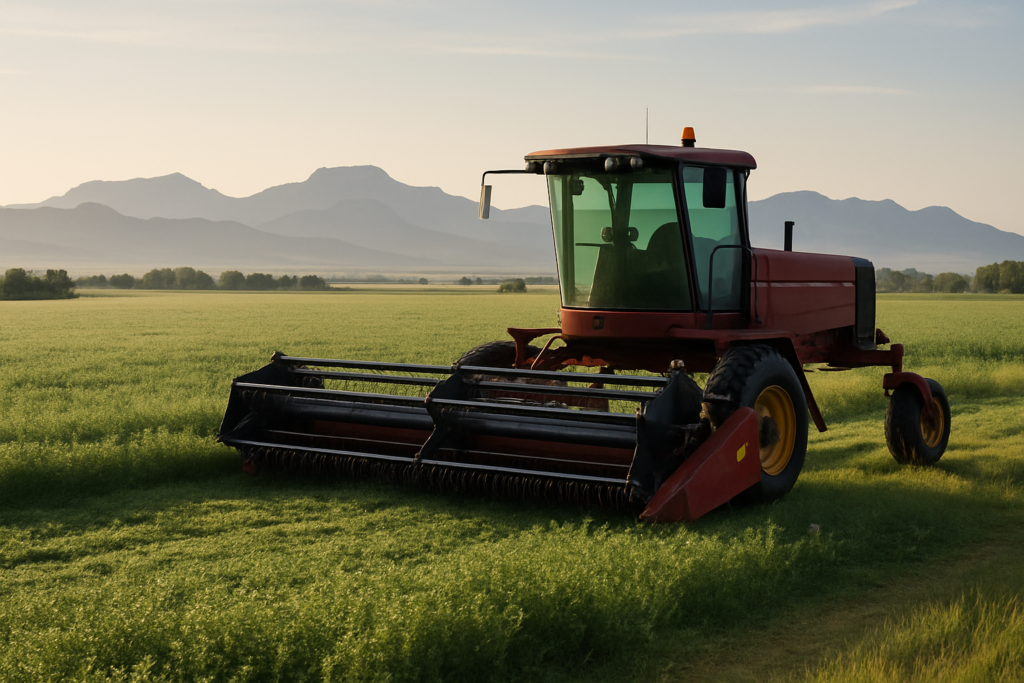
First cutting comes on fast. One week the alfalfa is short and the nights are cold, the next it’s heading out and the neighbor’s already got a field down. When the window opens you want to cut, not stand in the shop hunting a bearing. Most of the machine trouble that stops a swather mid-field is stuff you could have caught with a grease gun and an hour of looking. Do that looking before the crop is ready, because once it’s ready you won’t want to.
Start with the cutterbar, since that’s where a mower-conditioner does its actual work and where most of the aggravation lives.
Knives, guards, and the parts that dull without you noticing
A sickle section wears from the underside, so it can look fine from the seat and still be sawing instead of cutting. Run your thumb along the edges. Rounded, shiny, or chipped sections tear stems and leave a ragged stubble that dries slow and heals slow. Carry a full spare section holder’s worth of sections and rivets, or a whole spare knife if you run a sickle machine, because you will break some.
Guards matter as much as the sections. If the ledger plates in the guards are worn or the guards are bent up out of line, the sections have nothing to shear against and the bar plugs in heavy alfalfa. Sight down the bar. Tap crooked guards back level and replace the ones that are worn thin. Check the hold-down clips so each section rides tight against its guard with no daylight underneath. A knife that’s set right cuts clean with the engine loafing; one that’s set wrong lugs the machine down and throws sections.
If you run a disc mower instead, the concerns shift but don’t go away. Look at the blades for cracks around the bolt hole, keep spares turned or replaced, and check the oil in the cutterbar. Those bars run hot and low oil ends a mowing season in a hurry.
Bearings, belts, and the fire you can smell before you see it
Dry hay and a hot bearing is how machines burn in a field, and it happens more in June and July than people like to admit. Go through every grease zerk on the machine with the manual open if you have to, because there are always a few tucked where you’d never look. Spin the conditioner rolls and the pickup by hand and feel for roughness or play. A bearing that’s just starting to go will have a little grind to it now and a lot of smoke by August.
Belts stretch and glaze. A slipping belt won’t throw a code, it’ll just quietly let the conditioner rolls slow down until the hay comes through half-crimped and dries uneven. Check the tension and look for cracks on the backside where you can’t see them from the top. Keep a spare belt for anything that would strand you.
On the conditioner itself, set the roll gap and roll tension for the crop you’re cutting. Alfalfa wants a firmer crimp than grass hay so the stems dry down with the leaves instead of a week behind them. Even crimping across the whole width is what keeps you from baling half-tough, half-brittle hay off the same field.
The little stuff that saves the afternoon
Carry what you’ll actually need in the field. A grease gun, a knife or a box of sections and a rivet tool, a spare belt, common wrenches, and enough spare guards to limp home. Check the tires, including the caster wheels that nobody looks at until one’s flat in the far corner. Top off hydraulic fluid and look for weeping fittings, because a header that won’t lift is a bad way to end a good cutting day.
None of this is complicated. It’s the kind of work that feels like a waste of a nice day right up until the day it isn’t. First cutting sets the tone for the whole hay season, and the ground you get cut and baled while the weather holds is the feed you’re not buying next winter. Spend the half day in the shop while the crop’s still coming on. The machine that’s ready when the hay is ready is the one that pays for itself.