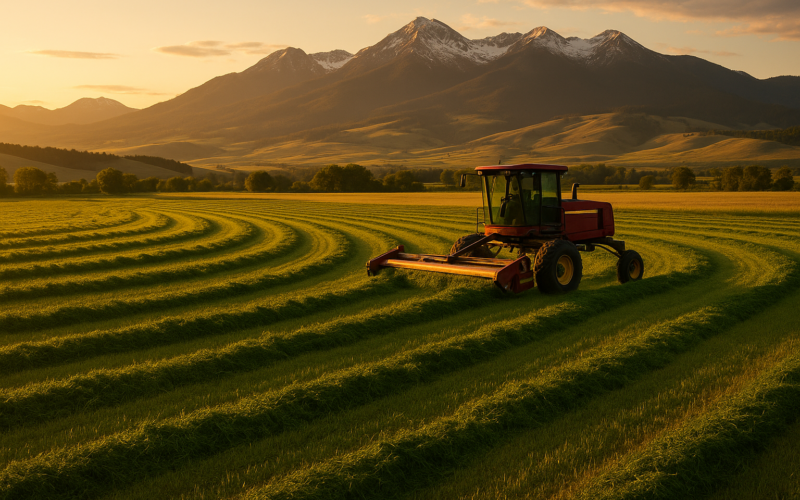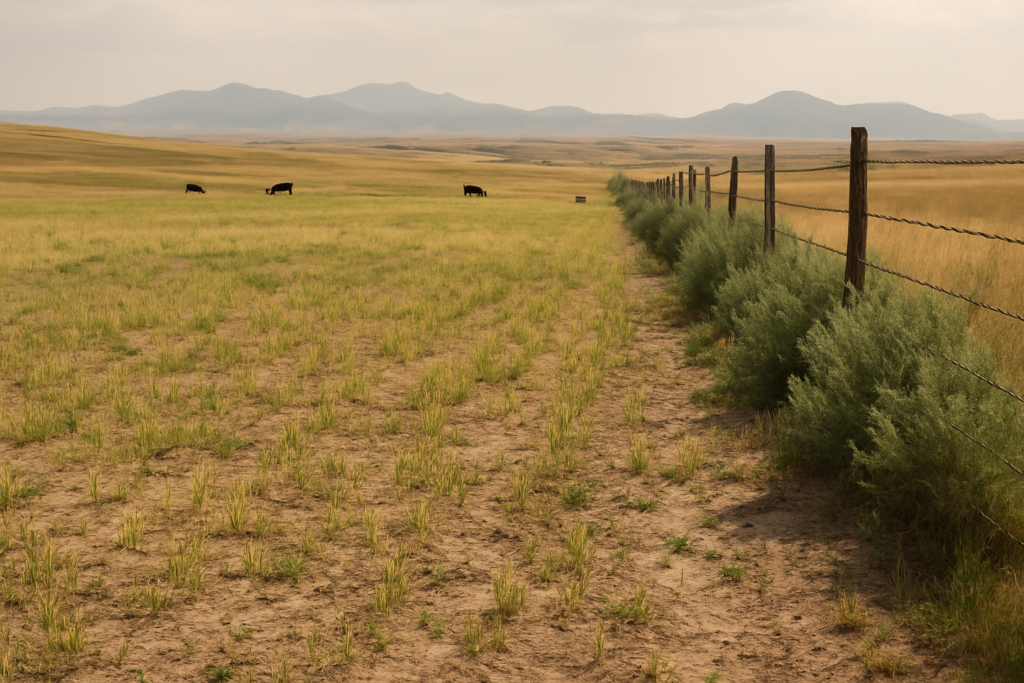
Every few summers Montana strings together a run of dry weeks right when the annual forage should be taking off. The oats you drilled for greenfeed sit there stunted, the cane pasture never gets ahead of itself, and the fence lines fill in with kochia and pigweed. Grass is short, so you turn cattle onto what you’ve got. That’s the setup where nitrate poisoning quietly kills a cow or two before anybody figures out what happened.
Nitrate isn’t a poison plant problem exactly. It’s a plant-and-weather problem. A drought-stressed plant keeps pulling nitrate up out of the soil through its roots, but without enough moisture and sunlight it can’t convert that nitrate into protein the way a healthy plant does. So it stockpiles in the lower stem. The plant looks fine. It might even look like a good bite of feed. The nitrate is in there whether you can see it or not.
Where the trouble hides
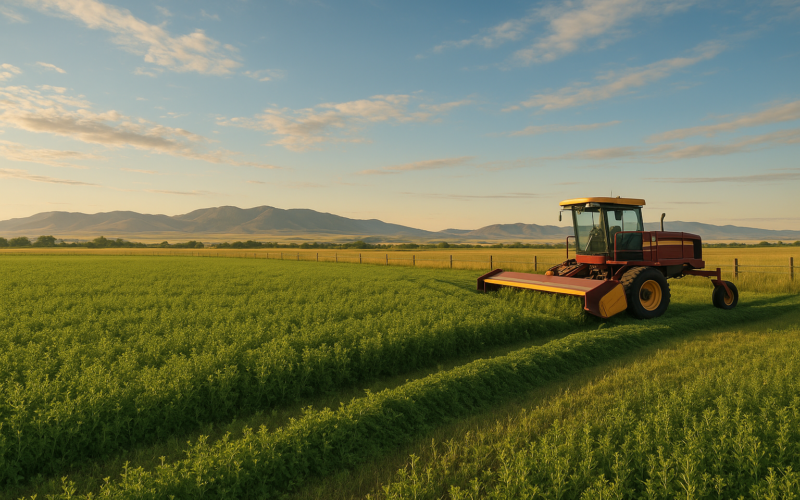
The usual suspects on a Montana place are the annuals: oats, barley, and wheat put up for green feed, plus cane, sorghum-sudan, and millet. Weeds pile it on too. Kochia is a notorious accumulator, and so are pigweed, lambsquarter, and Russian thistle when they’re growing on rich, disturbed ground like an old corral or a fertilized field edge. A drought-stunted stand of any of those can carry a load worth worrying about.
A few things push levels higher. Heavy manure or commercial nitrogen on the ground gives the plant more to pull up. A cloudy stretch keeps the plant from working the nitrate off. And the worst timing of all is the first day or two after a rain finally breaks a dry spell — the roots grab a flush of nitrate before the top can use it. Plenty of producers have gotten comfortable grazing a field for weeks, then lost cattle right after a shower.
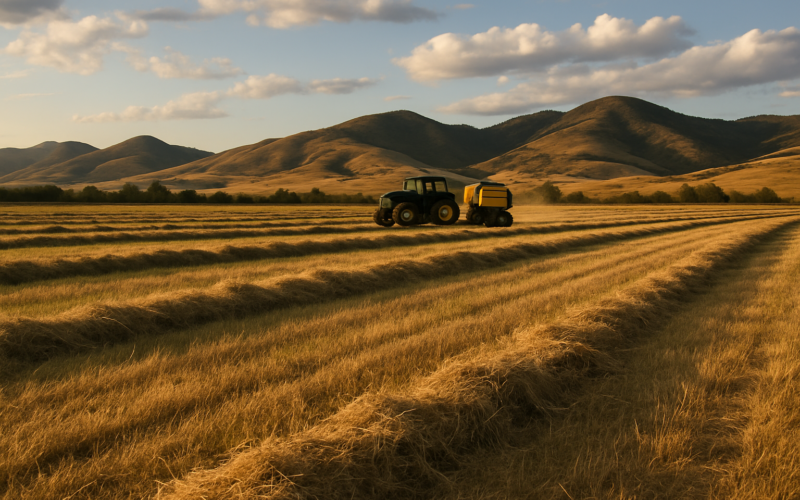
Nitrate concentrates in the lower third of the stem. It does not break down when you cut and bale, which trips people up. Hay put up from a stressed stand stays just as dangerous in the stack as it was standing in the field. Ensiling, on the other hand, will knock a good share of it down over a few weeks of fermentation.
What it looks like in a cow
Nitrate poisoning works by keeping the blood from carrying oxygen. The classic tell is dark, muddy or chocolate-brown blood instead of bright red. A cow that’s been hit will breathe hard and fast, stagger, and go down. Bred cows can abort even after they’ve come through the acute stage. It moves quick — an animal can be dead within a few hours of eating a big meal of high-nitrate feed, and often the first sign you get is finding one already down or dead near the feed.
Speed is the whole story with treatment. A vet can give methylene blue if you catch it early, but you rarely catch it early on summer range. That’s why this is a problem you prevent rather than treat.
Test before you turn out
You cannot eyeball nitrate. A stand that looks like decent feed can be loaded, and a rougher-looking one can be fine. The only way to know is to test. Pull a representative sample — clip stems the way a cow would graze, and if you’re baling, sample the finished bales. Your Extension office or a feed lab can run it, and quick-check strips exist if you want a rough field read. Sample the lower stem, since that’s where it sits.
If you’ve got feed that tests high, you’ve still got options short of dumping it:
- Don’t turn hungry cattle onto a suspect field. Fill them on grass or hay first so they don’t gorge on the bottom of the stems.
- Raise the cut. Grazing or haying higher leaves the worst of the nitrate behind in the stubble.
- Blend it. Feeding a high-nitrate hay along with clean feed dilutes the dose the cow actually gets.
- Bring cattle onto it gradually. Rumen microbes adjust over a week or two and handle more nitrate than they can on day one.
- Wait out a rain. Give a stressed stand several days of good growing weather after moisture before you graze it hard.
The mistake that costs cattle is treating a short, dry annual field like free feed just because grass is tight everywhere else. That’s exactly when the temptation runs highest and the risk does too. A twenty-dollar test on a load of hay or a stand of greenfeed is cheap next to a dead cow, and cheaper still than a string of summer abortions you don’t sort out until preg-check.
If it’s been a dry spring on your end of the state and you’re leaning on annuals or weedy ground to fill the gap, pull samples before the cattle do the sampling for you.