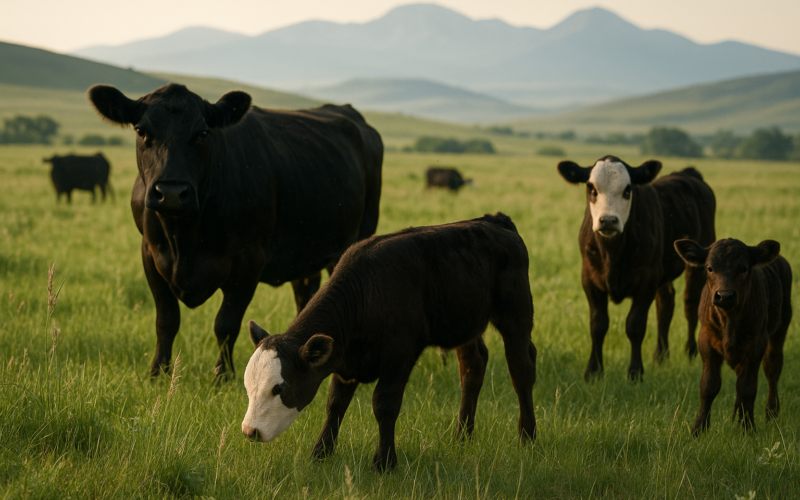
Stand at the fence on a warm June morning and watch the cows come off the water. If you see a dark, shifting mat across their backs and along the top of the ribs, you’ve got horn flies, and probably more than you think. A cow can carry a couple hundred without much fuss. Once the count runs into the thousands—which it does fast this time of year—she spends her day bunched up, tail going, standing in the wind instead of grazing. That’s the part that costs you. Not the bites you can see, the grazing time you can’t.
Horn flies live on the animal, feeding a couple dozen times a day, and the females only leave to lay eggs in fresh manure pats. That’s why they explode on summer range: warm ground, green grass moving through the cattle, and manure everywhere they need it. The population builds through June and peaks in the heat of summer. Left alone, they pull weight off calves and condition off cows, and heavy fly loads are one more thing that helps spread pinkeye and other trouble around a bunch.
Know when it’s worth spending money
You don’t need to spray at the sight of the first fly. The rough working threshold most people use is around 200 flies per animal—about the point where the cost of doing something is paid back by the gain you protect. Two hundred flies is a patch on the shoulders and topline roughly the size of both your hands. Below that, the cattle handle it fine. Well above it, they quit grazing to fight them, and that’s when you’re losing pounds.
Get in the habit of glassing a few cows every time you check water or salt. Numbers can double in a week when it turns hot, so a bunch that looked clean at the first of the month can be crawling by the middle of it.
The tools, and where each one falls down
There’s no single fix, and most of the failures come from using one method too long or setting it up wrong.
- Fly tags. Easy to put in at turnout and they work well early. The catch is resistance—if you run the same class of chemical in the same tags year after year, the flies quit dying. Rotate the active ingredient between years, tag both cows and calves when numbers justify it, and pull the tags in the fall so a low dose doesn’t hang on all winter breeding resistant flies.
- Pour-ons and sprays. Knock numbers down quick, which is handy when you’re behind. The downside is they don’t last long, so on big country where you only gather every few weeks, you’re often re-treating cattle that have already climbed back up.
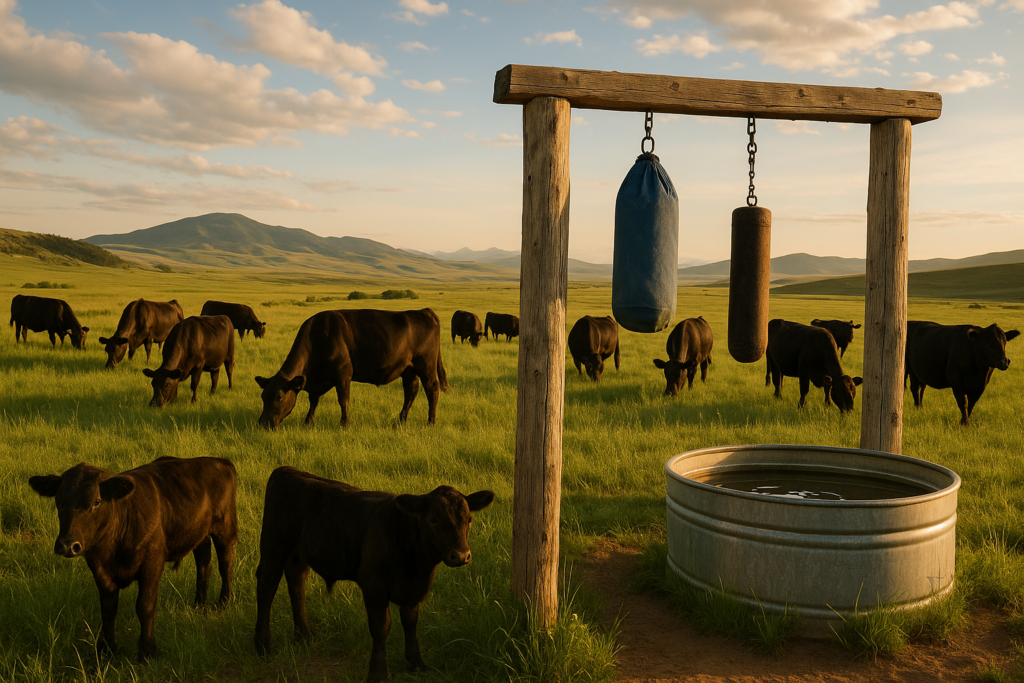
- Dust bags and back rubbers. These earn their keep on summer range because the cattle treat themselves every day. The trick is forcing use—hang them where the herd has to walk under to reach water, mineral, or the gate. A rubber the cows can walk around does nothing. Charge the rubbers and check them; an empty dust bag in July is just a decoration.
- Feed-through. Mineral with an insect growth regulator keeps fly larvae from developing in the manure. It only works on flies that hatch out of your pats, not the ones drifting in from the neighbor’s, and it only works if the cows actually eat the mineral at the right rate all summer. Skips and empty tubs let the flies right back in.
Set it up so summer runs itself
The producers who stay ahead of horn flies aren’t doing anything fancy. They combine a couple of methods—say, tags at turnout backed up by rubbers at the water gaps—so there’s no window where the cattle are unprotected. They rotate chemistries year to year instead of running the same tag until it stops working. And they watch the numbers instead of the calendar, because the flies don’t read the calendar either.
The reason this is worth your attention in June rather than August is simple. Fly pressure starts light and builds. If you break the cycle early—hit them before they peak, and cut down the larvae coming out of the manure—you spend the rest of the summer holding a low number instead of fighting a high one. Wait until the cattle are miserable and bunched in the corner of the pasture, and you’re chasing a problem that’s already taken its pounds. Those pounds show up missing in the fall, and by then there’s nothing to do about it.