Every June a few outfits along the Rocky Mountain Front and up in the mountain pastures find a cow dead with no sign of a struggle—no bloat, no predator, no lightning burn. She was fine that morning. By the time somebody rides through, she’s stiff on her side near a patch of tall larkspur, and there’s a good chance she took a big meal of it the evening before.
Larkspur doesn’t get talked about as much as bloat or nitrate, partly because it hits the high country instead of the hay meadow. But on foothill and mountain range across western and central Montana, it’s one of the surest ways to lose a mature cow, and it tends to take the ones you’d least like to lose.
Know the plant and when it’s loaded
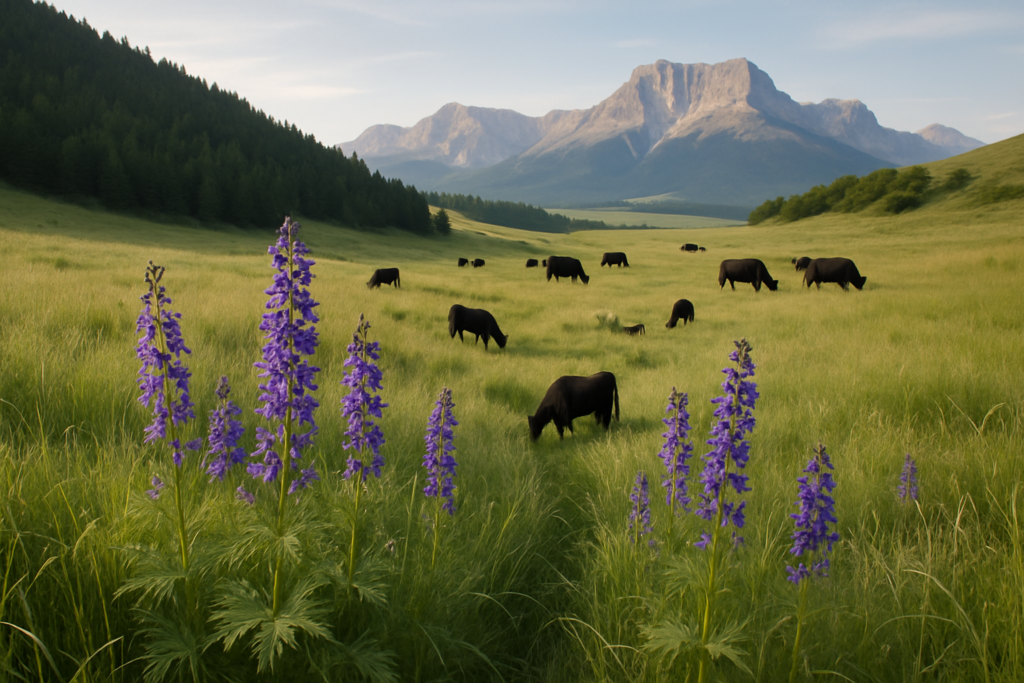
There are two kinds worth knowing. Tall larkspur grows waist-high or better in the moist draws and on north slopes of mountain pastures—the kind of ground you turn out on in June and July. Low larkspur is a shorter early plant that shows up on drier foothill range in spring and dries up fast. Both carry the same alkaloids that shut down the muscles a cow needs to breathe and stand.
The trouble with larkspur is that the poison load and the palatability don’t line up with common sense. The plant is most toxic when it’s young and growing, but cattle usually won’t touch it then. As it heads out and moves toward flower and pod, toxicity per pound drops some—but that’s exactly when cattle start eating it in quantity. The pod stage, roughly early to midsummer up high, is often when the most cattle die, because they’re finally eating a plant that’s still plenty poisonous.
Learn to recognize it before turnout. Deeply cut, palmate leaves, then a tall spike of blue-to-purple flowers with that little spur off the back of each bloom. Once you’ve keyed on it, you’ll see the same patches in the same draws year after year.
Why it takes the big cows
A cow that eats a heavy dose gets muscle weakness—she’ll stagger, stand with her feet spread, maybe go down and struggle to get up, and in a bad case she bloats and can’t breathe because the muscles quit. Stress makes it worse. Chasing a wobbly bunch, working them hard, or pushing them across rough country can turn a sublethal dose into a dead cow. If you find cattle showing early signs, the worst thing you can do is gather and trail them fast.
Older, bigger cows tend to eat more total forage and often graze the larkspur draws harder, so they’re overrepresented in the wrecks. Those are your proven producers. Losing three or four of them in a week off one pasture is real money and real genetics gone.
How to keep them off it
The most reliable tool is timing. Larkspur has a window each year when it’s both toxic and attractive—generally from about the time it heads out through the pod stage. If you can keep cattle out of the heavy larkspur pastures during that window and graze them there earlier or later, you dodge most of the risk. Earlier, cattle avoid the plant; after the pods drop and the plant dries, toxicity falls off. Watch your own patches instead of the calendar, because elevation and a wet or dry spring move the dates around.
- Graze larkspur ground before the plant heads out, or hold off until it’s well past pod and drying down.
- Turn out with cattle that are full. Hungry cattle coming off a trail or a hard gather will graze less selectively and hit the larkspur harder.
- Keep good forage available. When the rest of the pasture is grazed short, larkspur looks a lot better to a cow.
- Don’t push or stress cattle in larkspur pastures during the danger window, and go easy gathering if any animal looks weak.
Spot-spraying dense patches can help over time, but it’s a multi-year job and won’t clean up a mountain pasture before this turnout. Herbicide timing matters, and hitting the plant at bud stage generally works better than after it flowers—but treat that as a longer-term project, not a fix for the cattle you’re turning out next week.
If you run mountain country, walk or ride the draws before the cattle go up and mark where the heavy stands are. Knowing which two or three pastures carry the risk, and staying off them during the wrong three or four weeks, is cheaper than any autopsy. A cow that’s dead from larkspur looks like a lot of other dead cows—but the pattern of good, mature cattle dying one at a time near blue-flowered draws in early summer is usually the answer, and it’s one you can plan around next year even if it caught you this one.