Water quits at the worst possible time. Not in April when a cow drinks a few gallons and the days are cool, but in the middle of July when a lactating cow on dry grass is pulling twenty-odd gallons and the whole herd hits the tank in the same two hours. A system that looked fine all spring can come up short the first afternoon it’s asked to do real work. By the time you notice cattle standing at a dry rim or drifting back toward the last good water, you’ve already lost gains and maybe stressed some old cows or heavy heifers.
Mid-June is the window to run every water point on the ranch before the heat sets the terms. The cattle are out, the ground’s dried enough to get a truck around, and you still have slack in the day to fix what you find. Wait until a tank’s dry on a hot Sunday and you’re doing the same repair with cows bawling at you and the parts store closed.
Walk the whole system, not just the tank
A dry tank is a symptom. The cause is usually somewhere upstream, so check the line from the source down. Start at the well or the pump and work toward the trough.
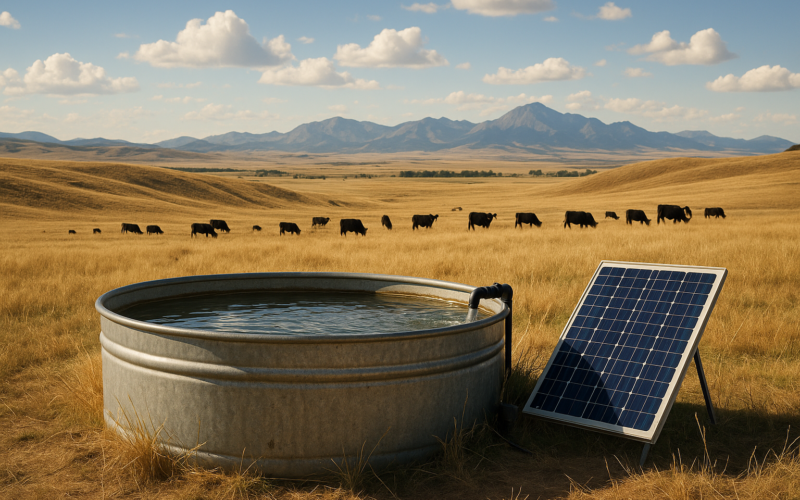
- Wells and pumps. Prime the pump, listen to it run, and watch how fast it recovers. A well that kept up with light spring demand can draw down when several tanks call at once. Solar setups deserve a hard look now — wipe the panels, check the battery bank if there is one, and confirm the pump actually kicks on under a full midday load, not just at the low draw you tested it at in May.
- Buried and surface line. Walk the pipeline route where you can. Green streaks, soft wet ground, or a spot where the grass is suddenly lush over a buried line all point to a leak. A pinhole that weeps a few gallons an hour in June becomes a pressure problem by August when everything downstream is trying to draw at once.
- Floats and valves. The float valve is the part that fails quietly. It sticks, the trough overflows and turns the ground to gumbo, or it hangs partway and the tank never fills fast enough to keep up with a thirsty bunch. Work each one by hand, watch it seat, and carry a couple of spare valves and floats in the truck. They’re cheap and they’re always the thing that’s broken.
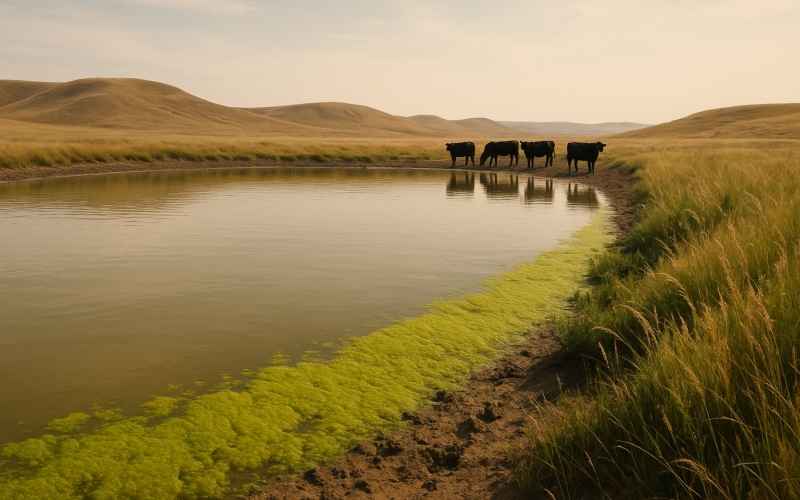
- Tanks and troughs. Scrub out the algae and sediment that built up over spring. A fouled tank cuts intake, and cattle that don’t like the water will travel for it or drink less than they should. Check the overflow so a full tank drains away from the drinking area instead of making a bog cows have to wade through.
Match delivery to the day it’s hardest
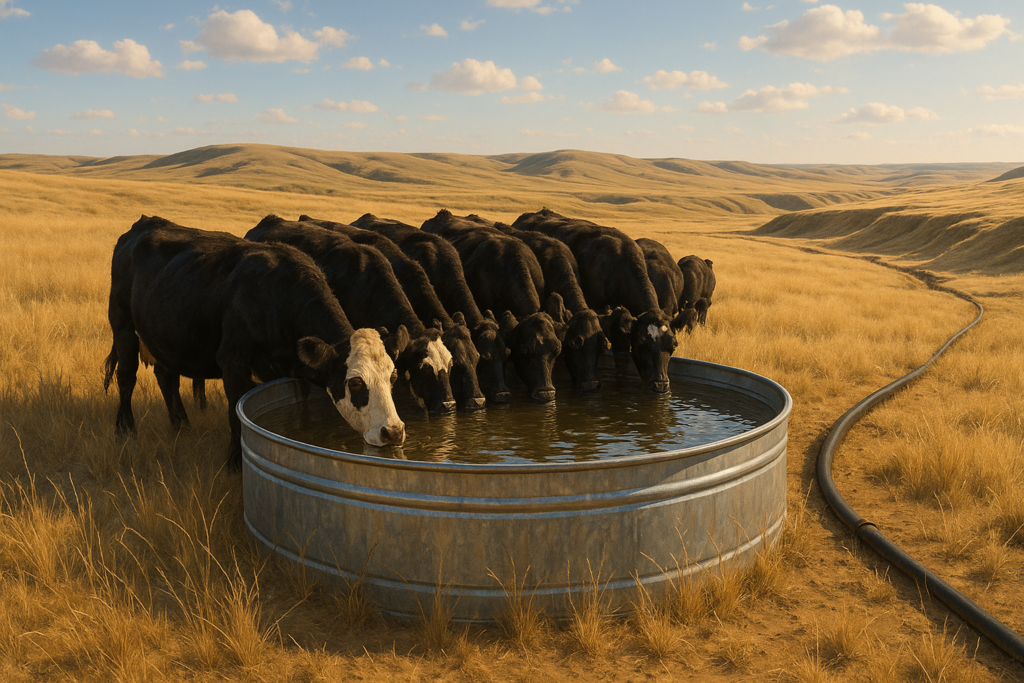
The number that matters isn’t how much water the system moves on an average day — it’s whether it keeps up on the worst one. Cattle don’t sip steadily around the clock. They come to water in waves, often after the heat of the afternoon, and they’ll crowd a trough for an hour. If the tank can’t refill fast enough to serve the whole bunch in that window, the timid cows and the ones at the back of the line come up short even though the system technically ran all day.
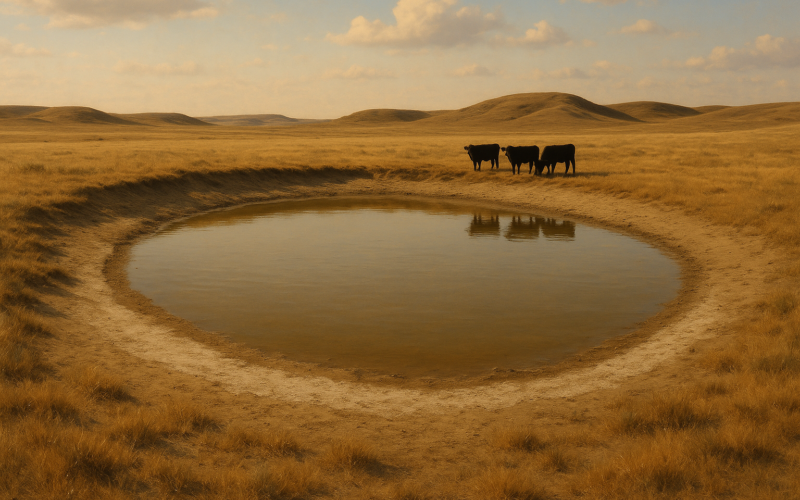
Storage buys you room. A big tank or a small reservoir that holds a day’s worth of water covers you through a pump hiccup, a cloudy stretch on a solar unit, or a demand spike. If your recovery is marginal, adding storage is usually cheaper and more reliable than chasing more pump. And spread the water out — one tank a mile from where cattle want to graze means they’ll bunch on the near water, hammer that ground, and leave the far end alone. Reliable water in the right spot does as much for grazing distribution as any fence.
Have a plan for the day it fails anyway
Something will break. Know before it does how you’ll haul emergency water, which neighbor has a spare pump or the same fittings you run, and where the shutoffs are so a blown line doesn’t drain a whole reservoir into a coulee overnight. Keep the common repair parts on hand — valves, floats, couplers, a roll of the right pipe, hose clamps. A repair that takes twenty minutes with the right part in the truck takes a lost afternoon and a trip to town without it.
Cattle can go a long way on decent grass. What they can’t do is go without water in July heat and hold condition, breed back, and put weaning weight on a calf. Every other input on the ranch depends on the animal drinking enough. The hour you spend now walking wet lines and working stiff float valves is the difference between a system you trust and one you find out about the hard way, standing at a dry tank while the cows tell you what you missed.