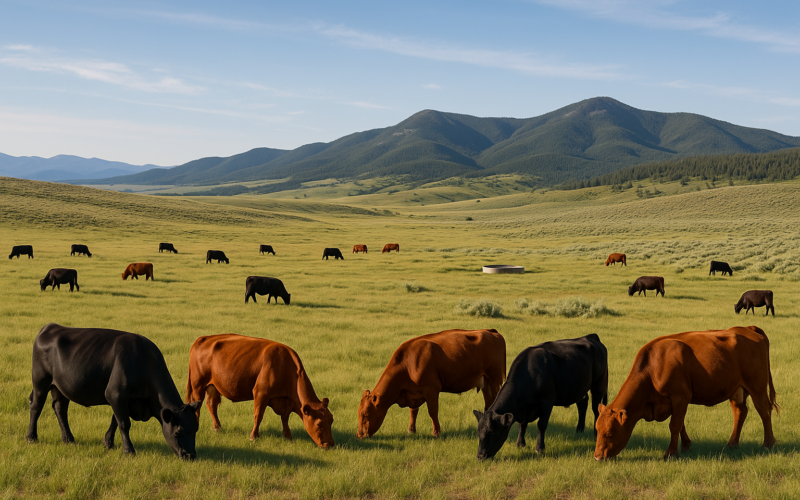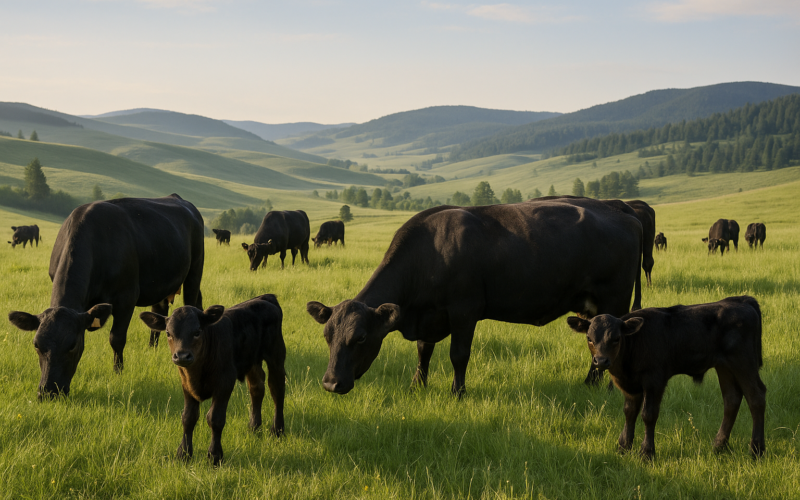
The grass is tall, the calves are stretching out, and the cows look fat and slick. That’s exactly when a lot of us quit paying attention to the mineral feeder. It gets shoved off in a corner of the pasture, the lid blows off in a thunderstorm, the mix cakes up into a brick, and nobody checks it again until we’re moving cattle in July. Meanwhile the cows are trying to milk hard and settle to the bull at the same time, and they’re doing it on grass that doesn’t carry everything they need.
You won’t see the shortfall on a summer cow. She’s carrying condition off spring green-up. The bill comes due in the fall, when a handful of good cows turn up open and you can’t figure out why. Mineral is one of the pieces that quietly decides breed-back, and it’s about the cheapest input on the place.
What summer grass doesn’t hand you
Green Montana range is strong on a lot of things and thin on a few that matter. Phosphorus tends to drop as forage matures through the summer, and phosphorus ties directly to reproduction. Cows short on it cycle later and hold condition harder. Copper, zinc, and selenium run low in a lot of this country too, and those are the trace minerals that back up the immune system and hoof and hide health. A cow fighting a copper or selenium shortage is a cow more likely to give you a sick calf on grass or a foot problem in the wet corners.
Salt is the one mineral a cow will actively hunt for. Everything else, she eats mostly because it’s mixed with the salt. That’s the whole reason loose mineral works: you’re using her salt appetite to get the phosphorus and trace minerals into her. Which also means if you’re putting out plain white salt blocks and calling it good, you’re feeding salt and skipping the part that actually moves the needle.
Consumption is the number to watch
A good loose mineral is built to be eaten at a target rate, usually a few ounces a head per day. If your cows are cleaning up way more than that, they may be chasing the salt and running your cost up for nothing. If they’re barely touching it, they’re not getting the phosphorus and trace load you’re paying for. Both problems are common and both are fixable.
- Cows overeating mineral often have too little plain salt available elsewhere, or the mineral is too palatable. Setting out white salt separately can pull consumption back to target.
- Cows undereating are usually finding the feeder empty, wet, or too far from where they graze and water. A caked, rain-soaked mineral is a feeder they’ll walk past.
Keep rough track of how fast the feeder goes down against how many cows are in the pasture. It doesn’t take a spreadsheet—just knowing whether a bag lasts about as long as it should tells you if the program is working.
Where you set it matters as much as what’s in it
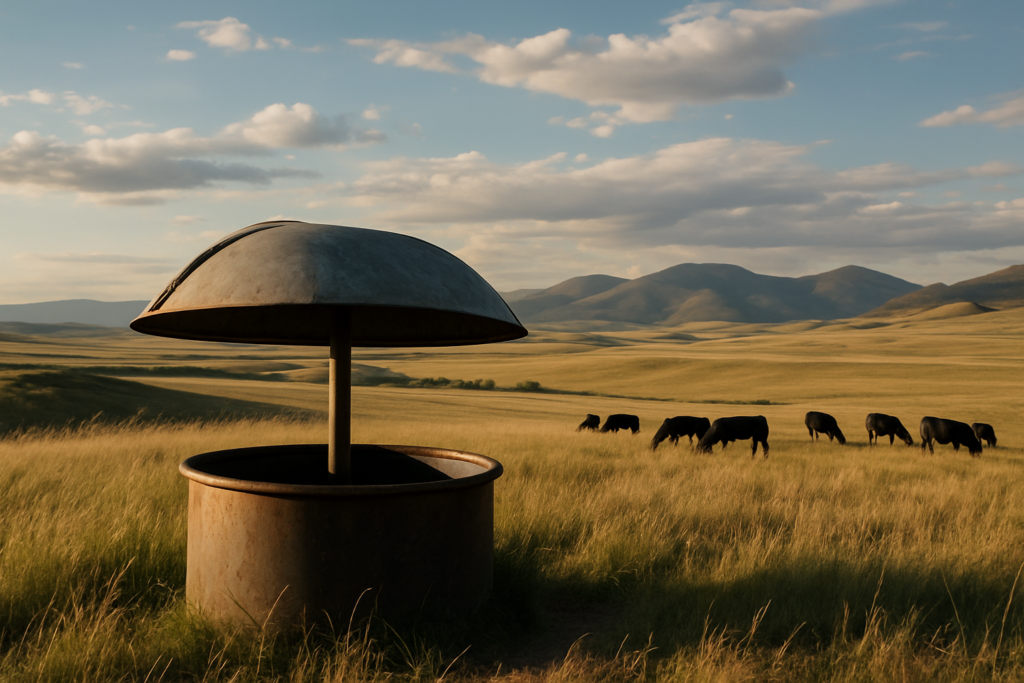
A mineral feeder is also a tool for spreading cattle out. Put it near the water and the creek bottom and you’ve just given the cows one more reason to camp in the low ground and hammer it. Set it up on a ridge or a bench, back off the water, out on the grass you want them to use, and they’ll travel to it. That pulls grazing pressure off the wet ground and onto the high stuff that otherwise gets wasted. Move it as the season goes and you keep nudging them into fresh feed.
Use a covered feeder that sheds rain, or a tire feeder you can tip out when the mix packs up. Wet mineral turns to concrete and the cows quit on it. Check it when you’re already out riding water or fence—it costs you nothing to swing by and look.
The mineral program is one of those jobs that never feels urgent in June because nothing’s visibly wrong. But the cow you’re relying on to raise a big calf and settle back inside a tight breeding window is running a tight margin whether she looks like it or not. A full, fresh feeder in the right spot is a small chore that pays off in a paper you don’t get to see until fall.