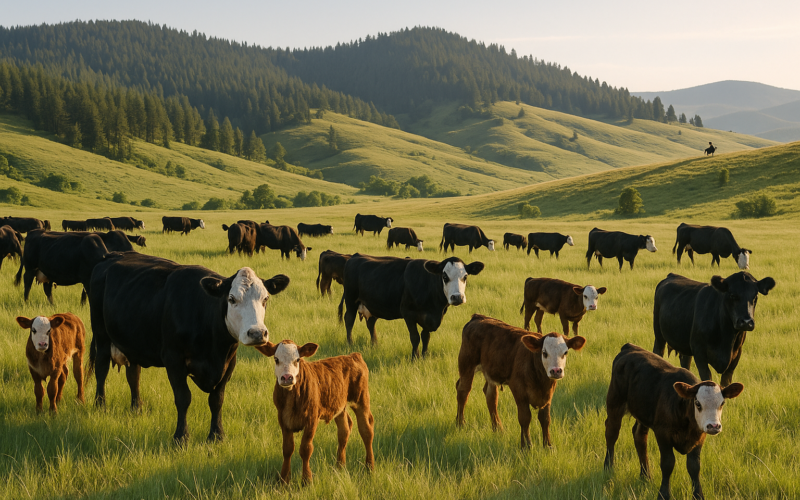
Heat doesn’t kill cattle the way a lightning strike or a bloat does. It works slower and quieter. A cow carries a hide and a rumen that runs like a furnace, and on a still 95-degree afternoon with the humidity up after a thunderstorm, she can’t dump that heat fast enough. She quits eating. She stands instead of grazing. She bunches with the rest of the herd on the one patch of bare ground where nobody can catch a breeze, and the pile of bodies makes it worse. You won’t see it on a scale until you weigh calves in the fall and the gain isn’t there.
Most of the loss on a Montana outfit isn’t dead cattle. It’s the gain that never happened and the breed-up that slipped because a bull spent the hot part of every day standing in the creek instead of covering cows. But the wreck that does happen usually happens in a corral, when somebody decided to work a bunch in the middle of a hot afternoon.
The heat a cow feels lags behind the thermometer
The number on the truck dash is the air temperature. The load a cow carries is that plus the sun on her back, the humidity, and how much of the previous night stayed warm. A cow sheds most of her heat overnight. On a night that drops into the 50s she starts the next day with a full tank of relief. On a muggy night that never gets below 70 — the kind you get after an evening storm rolls through the Hi-Line or the Judith Basin — she wakes up already behind and never catches up.
That’s why the dangerous days aren’t always the hottest ones. Three or four warm days stacked back to back, with warm nights between them, do more damage than one 100-degree afternoon followed by a cool night. The cattle never get to unload.
Watch for the order it shows up. First they stand and quit grazing. Then they crowd water and shade. Then comes open-mouth breathing with the head down, drool, and a tongue that starts to hang. A cow slobbering with her neck stretched out is a cow in real trouble, and pushing her at that point can put her down.
Work early or don’t work
The core body heat a cow builds during the day peaks a couple of hours after the air temperature does — late afternoon, even toward evening. So the cow you rounded up at seven in the morning is carrying yesterday’s heat load if you worked her at four the day before. She needs the cool night to recover before you handle her again.
The practical rule is simple and it costs you nothing but an early alarm. Get your gathering and processing done in the first two or three hours after sunup. Have them turned back out before the day builds. On a real hot stretch, if you can’t finish by mid-morning, wait for the next day. Working cattle in the evening feels cooler to you, standing there in a t-shirt, but the cattle are at their daily peak and you’re stacking your handling on top of it.
- Gather slow. Cattle generate a lot of heat just walking, and a hard push in the heat is what tips a borderline cow over.
- Keep bunches small in the crowd pen so they’re not piling body heat onto each other while they wait.
- Make sure there’s water in the corral. Cattle held off water for a couple of hours in the heat come out worse than they went in.
- If one goes down, get her wet from the ground up — feet and legs and belly first, not a cold dump over the back that can shock her.
Out on grass, give them what they need to cope
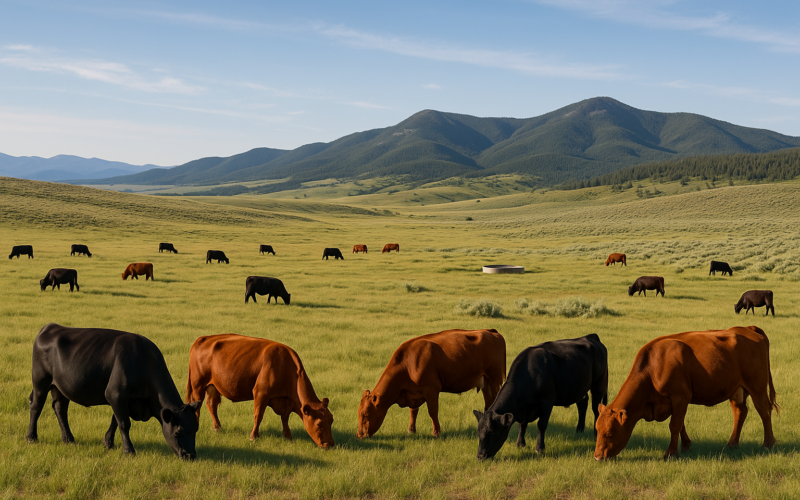
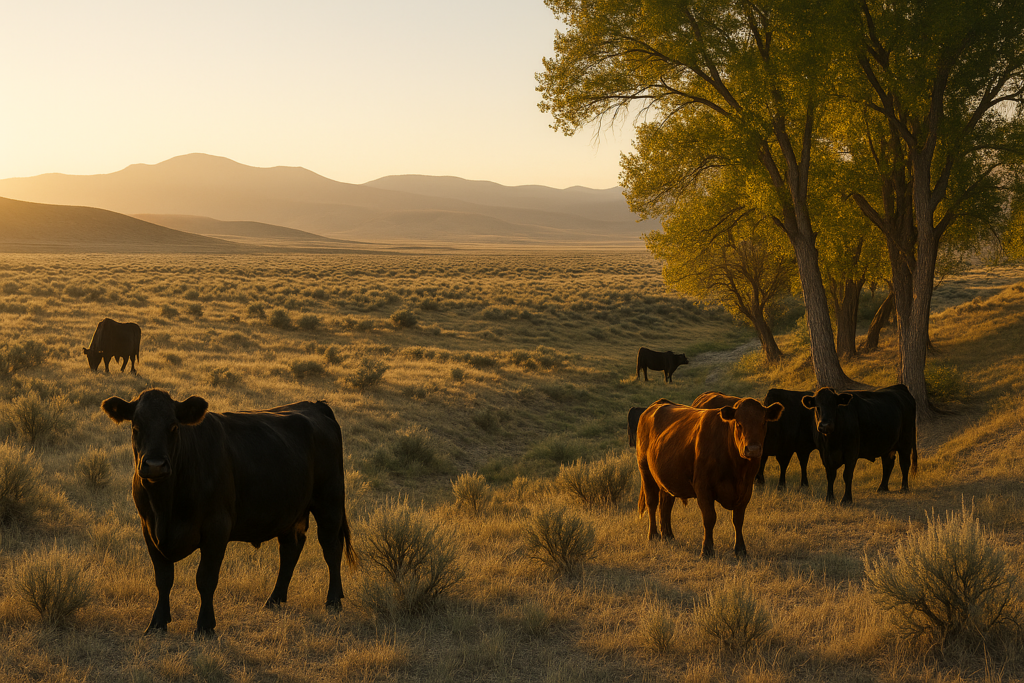
Cattle handle heat on their own when the country lets them. Shade helps, and a lot of Montana range doesn’t have any — a summer pasture that’s all open sagebrush flat leaves them nothing but each other to hide behind. Where you’ve got a coulee with a few cottonwoods or a north-facing draw, that’s where they’ll spend the afternoon, and it’s worth knowing that before you plan your grazing.
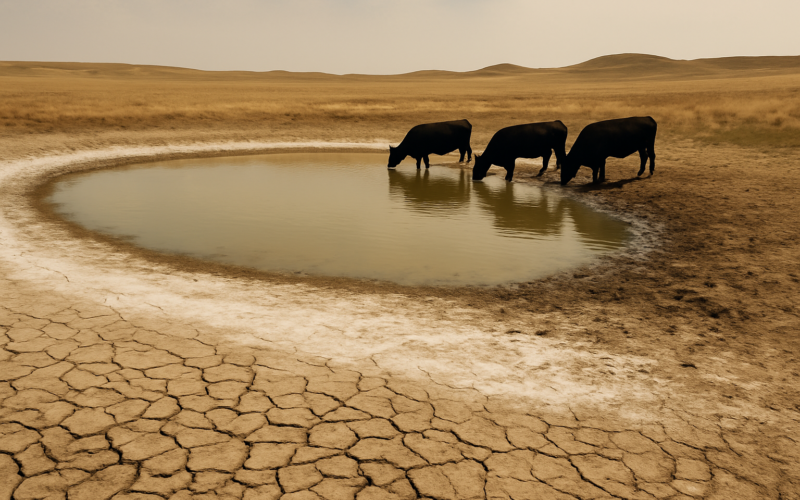
Water matters more than shade. A cow’s demand jumps in the heat, and a marginal stock tank that kept up in May won’t keep up on a string of 90-degree days. If the float can’t refill as fast as a thirsty bunch draws it down, the tail end of the herd drinks warm, muddy dregs or waits. Check your delivery on the hottest afternoons, not the cool mornings when everything looks fine.
Flies stack on top of heat. Cattle fighting horn flies bunch tighter and move more, generating heat they don’t need. Anything that keeps them calm and spread out — fly control, decent water, a little shade — buys you gain you’ll never see credited but is real all the same.
None of this is complicated. Watch the nights as much as the days, do your handling before the sun gets up on the work, and don’t ask a hot cow to move faster than she can shed the heat she’s already carrying.