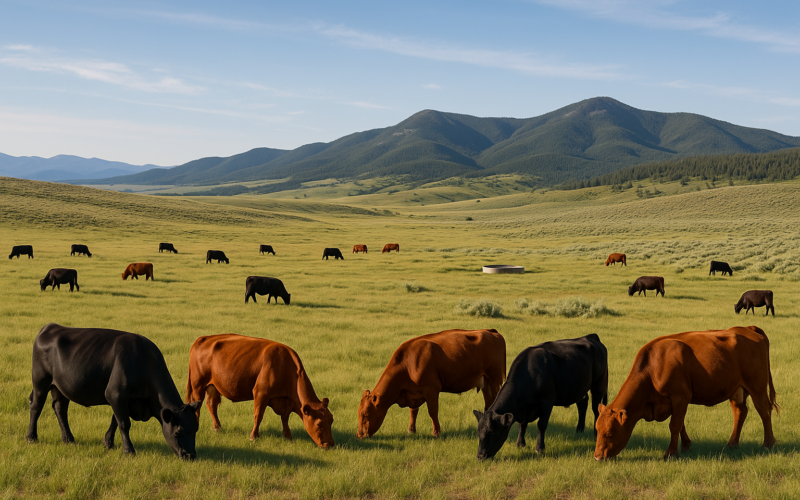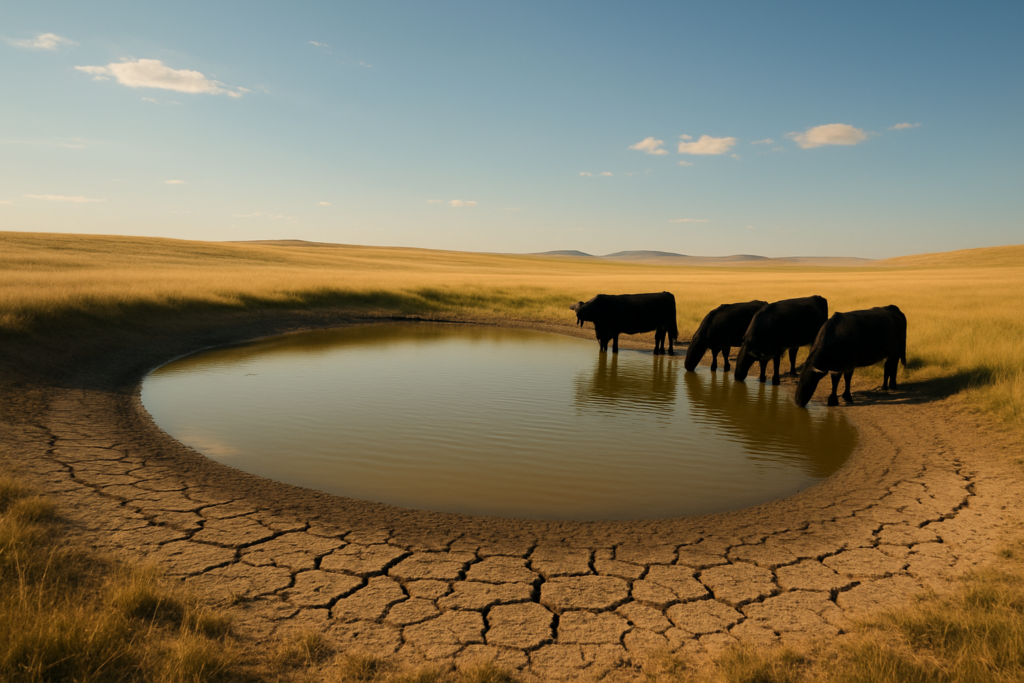
Most of the water worries a Montana rancher chews on in summer are the ones you can see—a dry tank, a stuck float, a green scum on the pond. The one that gets overlooked is the water that looks perfectly fine. Clear, cool, cattle drinking it every day, and it’s quietly holding them back or worse. High-sulfate and high-salt stock water is a real problem across a lot of the state’s drier country, and it gets meaner every week the ponds shrink.
Here’s the mechanism. A reservoir or dugout holds a certain load of dissolved minerals—sulfates, chlorides, sodium, magnesium, the whole soup. When runoff stops and evaporation takes over, the water leaves and the minerals stay. A pond that tested reasonable in May can turn into something cattle don’t want to drink by late July, and the concentration keeps climbing right up until the thing goes dry. Same story with shallow wells in some drainages, especially where the aquifer runs through marine shale or gumbo ground.
What it does to a cow
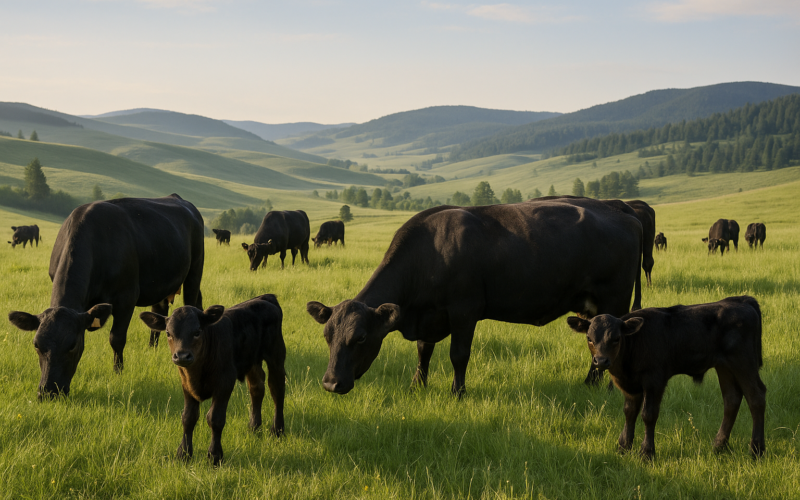
The first thing that happens is the least dramatic and the most expensive: cattle back off the water. If it tastes bad, they drink less, and a cow that drinks less eats less. On summer grass you won’t see it on any scale until the calves come off in the fall lighter than they should be. Pairs strung out on a big pasture, walking a long way to a bad tank, will take that hit and you’ll never connect the dots.
The sharper end of the problem is sulfur. When cattle take in too much sulfate, the rumen converts a share of it to hydrogen sulfide gas, and that gas can knock out the part of the brain that runs coordination. The result is polioencephalomalacia—polio—and it looks like a wreck. An animal off by itself, blind, pressing its head into a fence or a bank, staggering, sometimes down and paddling. It can hit calves and yearlings hardest because they’re pulling water and feed hard to grow. Some pull through if you catch them early and get thiamine into them; some don’t. Either way, a case of sulfur polio is telling you the whole herd is drinking water that’s over the line.
Straight salinity—total dissolved solids—works a slower angle. Very salty water cuts intake and can cause scours and general poor-doing before it ever kills anything. Cattle can adapt to moderately salty water if they’re eased onto it, but they can’t adapt to water that’s flat toxic, and they can’t tell you where the line is.
Test before you trust it
You can’t eyeball dissolved sulfate or TDS. The only way to know is a water test, and it’s cheap insurance compared to a dead yearling. Pull samples from the ponds and wells the cattle will actually drink from this summer—not the good spring tank, the marginal reservoir at the far end. A clean jar, filled full, capped tight, kept cool, and run for sulfate and total dissolved solids will tell you what you’re dealing with. Your county Extension office or a livestock vet can point you to a lab and help you read the numbers.
Timing matters. A test in June tells you where you’re starting; the water only gets more concentrated as the summer dries down. If a source is already marginal in early summer, plan on it going bad, not staying put. Retest a questionable source later in the season before you turn cattle onto it hard.
Managing around a bad source
If a test comes back high, you’ve got a few moves, and none of them require gambling with the herd. The cleanest fix is a better source—haul water, pipe from a good well, or fence the bad pond off and set a tank. If you can’t do that, at least give cattle a choice. When they have access to both good and marginal water, they’ll sort it out themselves and dilute their intake.
Watch the ration side too. Sulfur doesn’t just come from water—it rides in on some feeds, some byproducts, and even some mineral supplements. If your water is already loaded, don’t stack more sulfur on top of it through feed. And when you’re moving cattle onto saltier water, do it gradually rather than dumping thirsty animals onto it after a long trail.
Keep an eye on the individuals. One yearling off by itself, walking into things, is worth a hard look and a call to your vet before you assume it’s an isolated case. On summer range, the water’s the common denominator, and the animal you find down is usually the one that got to the pond first and drank the most.