You feed and check the cows in the morning and everything looks right. By the time you swing back through after dinner, one’s dead on her side, belly swelled up tight as a drum, and two more are standing off by themselves stretching their necks. That’s frothy bloat, and on the wrong pasture in June it can go from nothing to a dead cow in an hour or two.
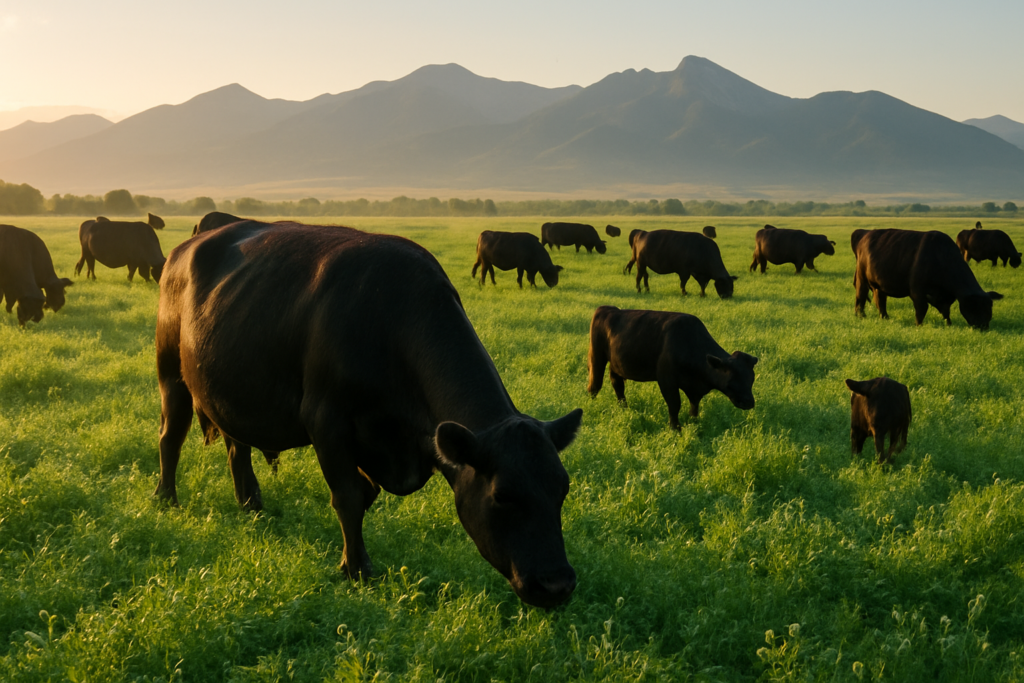
The setup is almost always the same: lush, fast-growing forage heavy in legumes. Alfalfa regrowth after a first cutting, an irrigated pasture with a lot of clover in it, a wet spring that pushed everything up thick and green. The plants are loaded with soluble protein and moisture, and when a cow packs her rumen full of that, the fermentation produces a stable foam. The gas can’t come up in one big belch the way it normally would, so it builds and builds until the rumen presses on the lungs and the animal suffocates.
Know the pastures that set it up
Not every green pasture is a bloat pasture. The trouble ground is the stuff with a real percentage of legumes — alfalfa, red or white clover, sweet clover — especially when it’s growing hard and hasn’t started to bloom or head out. Immature, vegetative growth is the most dangerous. A cool, wet stretch that keeps the plants soft and juicy makes it worse.
Frost changes the picture too. If you get a late frost on alfalfa and then turn cattle onto it, the damaged plant cells break down and can spike the bloat risk for a few days. Same story with a heavy dew on legume pasture first thing in the morning — hungry cattle turned out onto wet, lush alfalfa will fill up fast on exactly the wrong stuff.
Grass pastures don’t cause frothy bloat the way legumes do. If your summer country is native range or grass-dominant, this mostly isn’t your fight. It’s the irrigated meadows, the tame-grass-and-clover pivots, and the alfalfa aftermath where people get burned.
What actually keeps it from happening
The single biggest thing is filling cattle up before they hit the risky pasture. Turn hungry cows onto lush alfalfa in the morning and they’ll gorge. Feed hay first, or turn them out in the afternoon after the dew is off and they’ve already grazed something else, and they eat slower and take in less of the froth-forming stuff at once.
Poloxalene — the bloat blocks and the additives you can put in supplement — works. It breaks up the foam so the gas can escape. If you’re grazing high-bloat pasture on purpose, get the product in front of the cattle a couple of days before you turn them onto it, not the morning of. And it only works if they’re actually eating it. A block nobody’s licking isn’t protecting anything, same as an empty mineral feeder. Watch consumption.
A few more things that pay:
- Don’t turn out onto wet, lush legume in the early morning. Wait until the dew burns off.
- Once cattle are on a bloat pasture and adjusted, keep them on it. Pulling them off and putting them back a few days later resets the risk, because a hungry, unadapted rumen is the dangerous one.
- Let alfalfa mature a little before grazing it hard. Once it’s blooming, the risk drops off compared to the soft vegetative stage.
- Grazing a mix — a stand that’s part grass, part legume — is a lot safer than turning cattle loose on straight, thick alfalfa.
When you’ve got one bloating
A cow in early bloat stands off by herself, quits eating, and stomps or looks at her side. The left flank swells first and highest. She’ll drool and breathe hard. If she goes down and can’t get up, you’re running out of time.
A commercial anti-foaming drench — poloxalene given as a drench — is the practical first move if you can get it into her and she’s still standing. In a true emergency with an animal going down, passing a stomach tube can relieve gas, though with frothy bloat the foam doesn’t always come up a tube the way free gas does. The trocar is a last resort for an animal that’s about to die, and it’s a mess and an infection risk. Honestly, by the time you’re reaching for a trocar you’ve usually lost the management fight already.
The thing to sit with is how quiet it is. There’s no bawling, no wreck, no sign anything’s wrong until you find her. That’s why the pasture decision you make at turnout matters more than anything you can do standing over a bloated cow. Fill them up first, get the poloxalene in them ahead of time, and keep an eye on the lush stuff until you know how those cattle are handling it.