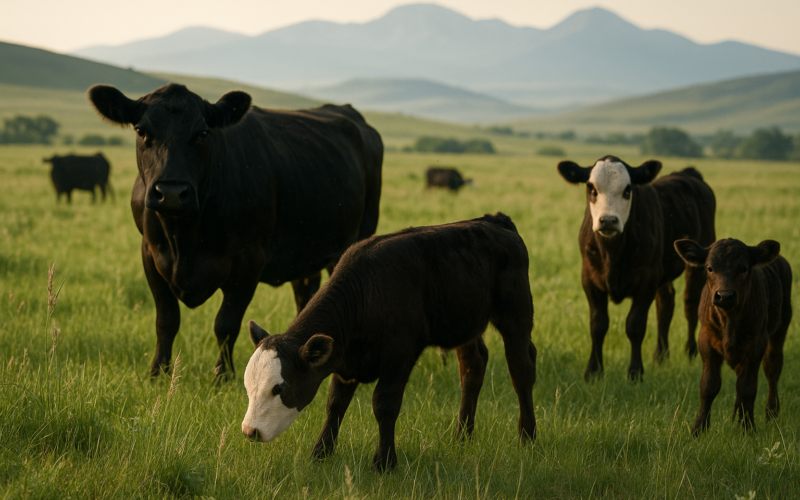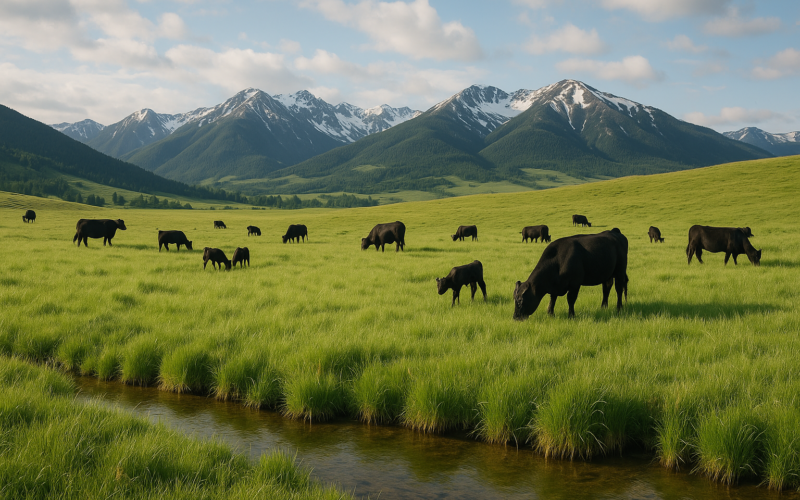
We don’t think of Montana as a heat-stress state. Most summers the air is dry, the humidity’s low, and even a 95-degree afternoon backs off to something cool by dark. That’s exactly why heat load sneaks up on people here. It isn’t the single hot afternoon that puts cattle in trouble. It’s a run of warm days with muggy air, no wind, and nights that never drop below the high 60s so the animals can’t shed the heat they built up during the day.
Cattle handle heat differently than we do. A cow’s core temperature peaks a couple of hours after the air does, and it takes her most of the night to unload it. When the night stays warm, she starts the next morning already behind. Stack three or four of those days together and you’ve got animals running near their limit before noon.
What it’s actually costing you
Heat stress rarely kills healthy cattle outright in this country, but it bleeds performance in ways you pay for later. A cow standing in the heat, panting, drooling, and hunting shade is not grazing. Feed intake drops right when she needs groceries to keep milking and breed back. Bulls run into it too — high heat during breeding can knock a bull’s fertility down for weeks, because sperm being produced now shows up in the semen a month and a half later. A bull that spends July panting in the shade may test fine in the fall and still have left cows open in the middle of the season.
Watch for the signs. Cattle bunching up, crowding shade or water, breathing hard with their heads down, drooling, standing instead of lying in the heat of the day. Open-mouth panting is a serious signal. Black-hided cattle, fat cattle, and anything that’s had pneumonia or is fighting foot rot or pinkeye run hotter than the rest. Those are the ones that go down first.
Water and shade do most of the work
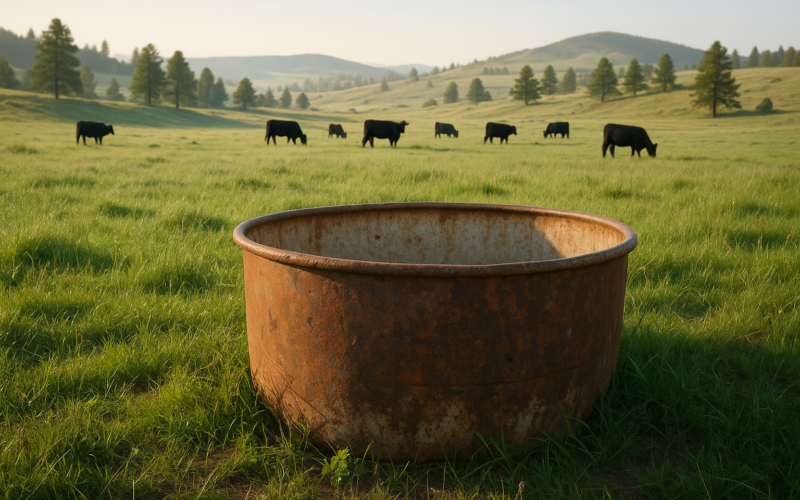
A cow can drink twice as much on a hot day as she does when it’s cool, and she’ll drink it fast. If your tank fills through a small line or a slow float, a bunch of thirsty cattle can suck it dry by mid-afternoon and then stand around waiting. Check that your tanks recover quickly and that there’s enough drinking space that the boss cows aren’t keeping the timid ones off the water. Clean, cool water pulls heat out of an animal better than anything else you can offer.
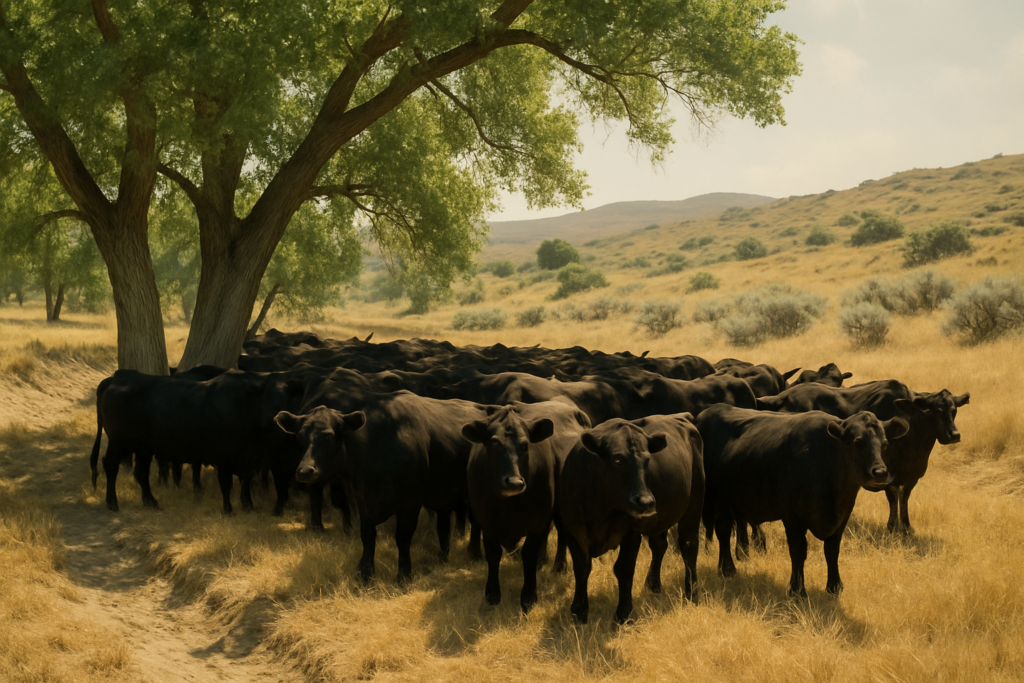
Shade helps, though it’s scarce on a lot of open range. A cottonwood draw or a north-facing slope with some cover gives cattle a place to duck the sun. The catch is that shade concentrates them — they’ll pile up, quit grazing the good grass around it, and pound the ground into dust. If you’ve got portable shade or you’re managing pastures with tree cover, spread the options out so cattle aren’t stacked in one spot breathing each other’s heat.
Work cattle early, or don’t work them
This is the part people get wrong. If you need to gather, sort, haul, or process during a hot stretch, do it at daylight and be done before mid-morning. Cattle carry the day’s heat into the evening, so working them at 6 p.m. after a hot afternoon is worse than it looks — they haven’t cooled off yet, and running them through a chute adds more heat right when they can’t dump it.
Move slow. The stress of hard handling on a hot day compounds fast; a bunch that gets pushed and crowded in a tight corral can be in real trouble in minutes. Give them room, keep the pace easy, and keep working sessions short.
Hauling deserves the same caution. A loaded trailer parked in the sun turns into an oven with no airflow. If you’re shipping in the heat, load at first light, keep moving so air flows through, and don’t leave a loaded trailer sitting at the sale barn or the co-op while you run an errand. Cattle packed in a stopped trailer on a hot afternoon can go down quick.
None of this takes new equipment. It takes paying attention to the forecast, especially the overnight lows and the humidity, and shifting your work around the heat instead of through it. The cattle that come off summer grass in good shape are usually the ones that never got pushed into the red on those first sticky stretches of the season.