Most of the grass a Montana rancher counts on for the whole summer grows in a stretch of maybe six weeks. Bluebunch wheatgrass, needle-and-thread, the bromes and green needlegrass all push hard from about mid-May into early July, then the heat shuts them down. What a plant hasn’t built by then is mostly what you’ve got. That’s the part that gets forgotten when the cows are turned out into knee-high green and everything looks like it’ll last forever.
It won’t. Cattle are lazy grazers with a memory. Turn them into a big pasture in June and they’ll find the best spots, the tender regrowth on the plants they grazed last week, and hit those same plants over and over. A grass plant that gets bitten off, regrows, and gets bitten again before it can rebuild its roots is a plant that’s dying on its feet. By August the good bunchgrass is short and stressed while the coarse stuff and the weeds nobody wants are waist high. You didn’t run out of pasture. You ran out of the pasture worth grazing.
Rest is the whole game
The fix isn’t complicated, but it takes a little discipline in June when it feels least necessary. Graze a pasture, then get off it and let it recover. A grass plant needs time and leaf area to rebuild after it’s grazed, and during the growing season that recovery can happen fast if you give it a chance. Take the cattle off before they’ve grazed a plant twice, move them to fresh feed, and let the first pasture put up new growth before they come back.
How long depends on how the season’s going. In a wet June with soil moisture still in the ground, a pasture can bounce back in a few weeks. In a dry year, or once the July heat sets in, regrowth slows to a crawl and the rest period stretches out. That’s the point: you match the rest to the growing conditions, not to the calendar. When things are growing, move faster and come back sooner. When they quit growing, slow down and plan on those pastures resting a long time.
Continuous grazing—one big pasture, all summer—is the opposite of that. The cattle graze their favorite plants to the dirt while the rank spots go untouched. You end up with the worst of both: overgrazed good grass and wasted bad grass in the same field.
You don’t need a fortune in fence
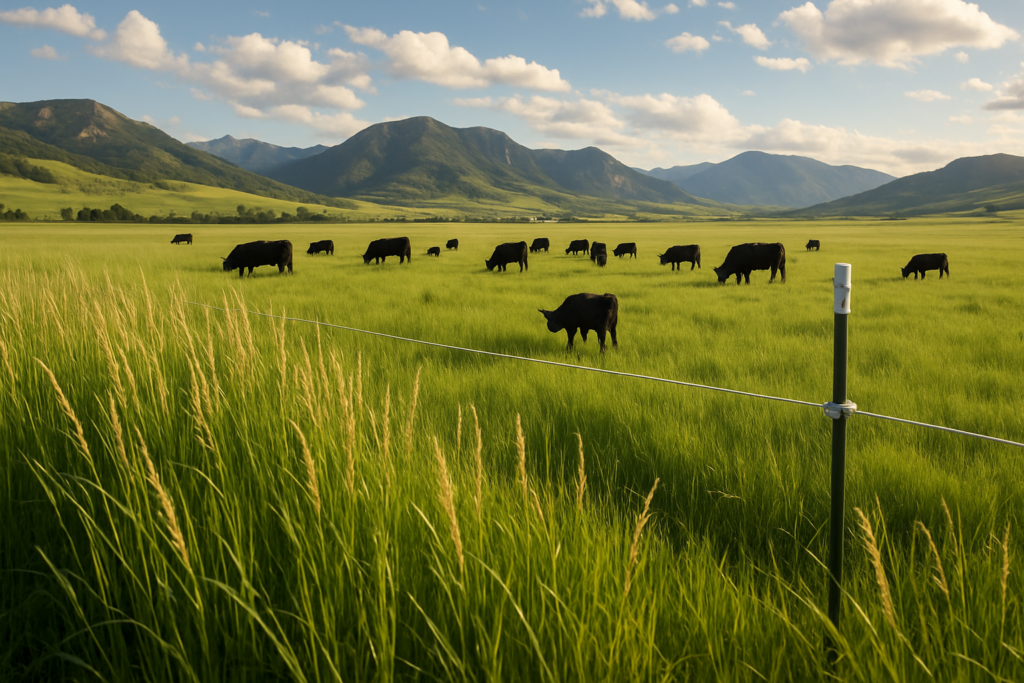
Splitting a big pasture doesn’t mean building permanent barbed wire everywhere. A single strand of polywire on step-in posts and a decent solar or battery energizer will hold pairs that have been trained to it, and you can move a stretch of temporary fence in an afternoon. Break a big flat into two or three chunks, or fence cattle back off a piece of good ground so it can recover, then roll the wire up when the season’s over.
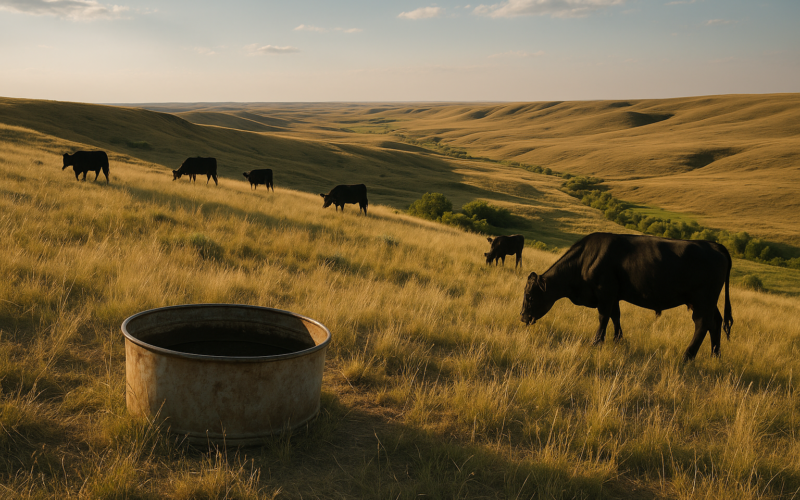
Water is the piece that trips people up. It does no good to fence cattle into a fresh chunk of grass they have to walk a mile back to a creek to drink. If you’re going to subdivide, think through where the water is first. A portable tank tied to a buried line, a temporary poly line off a well, or laying out the rotation so every piece touches a spring or reservoir—whatever you’ve got, the water has to reach the grass or the plan falls apart. Cattle will overgraze the ground near water and ignore the rest, same as always.
Watch the plants, not just the cows
The cattle will always look fine right up until the day they don’t. The grass tells you sooner. Walk a pasture before you turn out and after you pull off. Are the good bunchgrasses getting grazed hard while the coarse stuff stands? Is there leaf left on the plants when the cattle leave, or is it chewed to the crown? Leaving some residual—call it enough to shade the ground and keep a little green on the plant—is what lets it recover and protects the soil from baking.
None of this pays off this week. It pays off in late summer and fall, when the neighbor running one big pasture is hauling hay to cows on short grass and you’ve still got standing feed because you rested it back in June. It pays off over years, too, as the good grass thickens up and crowds out some of the weeds and bare ground. Grass you rest in the growing season is grass that’s still there when you need it.