Every summer a few outfits along the mountain fronts and up the foothill draws lose good cows to larkspur, and it almost never looks like a poisoning. You find a cow dead on her brisket, or down and bloated, in a patch of ground you’ve grazed for years. No sickness ahead of it, no off-feed, nothing. She was fine the day before. That’s how larkspur works, and mid-June through mid-summer is when it does most of its damage in Montana.
Larkspur carries a group of alkaloids that hit the nerves and muscles. In cattle it causes weakness, trembling, a staggering gait, and eventually the animal goes down and can’t get back up. A cow that’s flat out often bloats because she can’t belch, and that finishes the job. Sheep tolerate the plant far better, which is why you’ll see the same range grazed hard by sheep with no trouble and lose cows on it. It’s a cattle problem more than a livestock problem.
The dangerous window isn’t when you’d guess
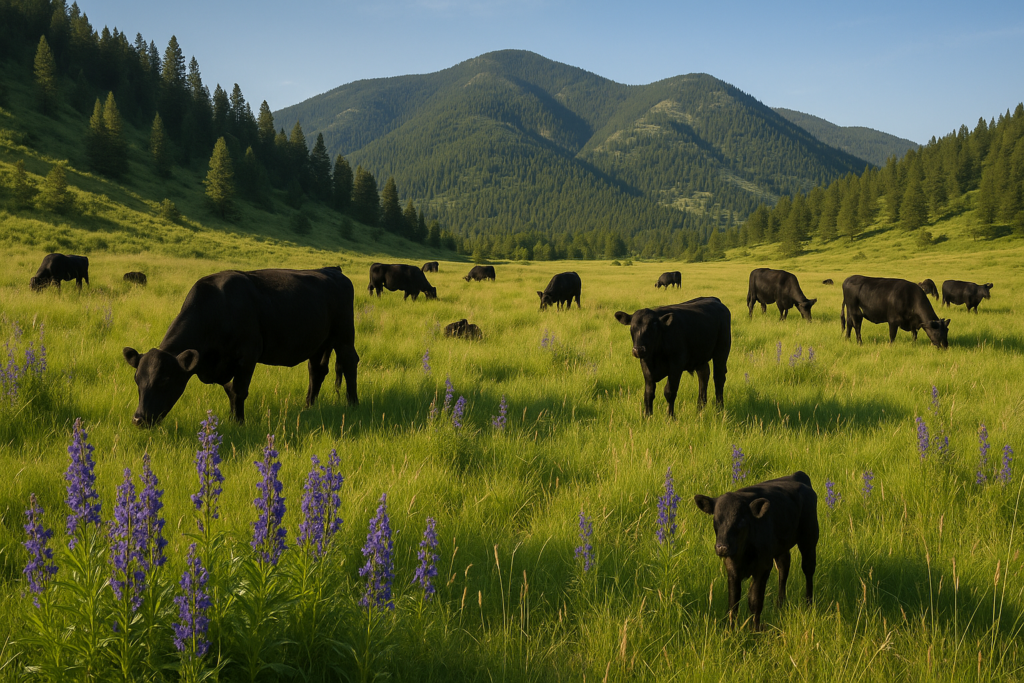
Tall larkspur is the one that catches cows on summer range in the foothills and mountains. It greens up early, but here’s the trap: cattle usually won’t touch much of it when it’s short and leafy. They start eating it in quantity later, once it’s bolted and coming into flower and pod. The purple is beautiful and it’s also a warning. When the plants are flowering and setting seed pods, palatability climbs, cattle load up on it, and that’s when the death losses stack up.
Low larkspur is a different animal. It’s shorter, grows on lower and drier ground, and it does its killing earlier, closer to green-up and into late spring, then dies back and goes away. If you’ve had spring losses on flats and benches, that’s usually the low larkspur. The tall stuff on the higher summer country is what you’re watching now.
The other thing that matters is how much a cow eats at one time and what she does after. A cow can nibble a little larkspur over a few days and handle it. The trouble comes when she takes in a big slug of it fast, and the poisoning shows up a few hours later. That timing is why gathering and trailing cattle right after they’ve been in a larkspur patch is a bad idea.
Handling matters as much as the plant
Exertion is the thing that turns a cow that ate too much larkspur into a dead cow. The alkaloids weaken the muscles, and if you push those cattle to move, sort, or trail while they’ve got a gut full of it, you can drop several head that might otherwise have walked it off. If you know cattle have been grazing larkspur hard, leave them alone. Don’t gather that day. If you have to move them, go slow and quiet, and don’t crowd them up a hill.
Timing your turnout helps you dodge the worst of it. If you can hold cattle off the high larkspur country until the plants are past flowering and the pods have shattered, palatability and risk both fall off. Some outfits graze the patches early and hard, before flowering, when cattle won’t eat much, and get through the dangerous flowering weeks with the cows somewhere else. Either way, the plan is to keep hungry cattle out of dense larkspur when it’s flowering and podding.
A few more practical things worth doing:
- Ride your larkspur patches and know where they are before you turn out. You can’t manage around it if you don’t know which draws and north slopes are loaded.
- Don’t turn hungry cattle straight into a larkspur patch after a long haul or a dry gather. Fill them up on clean grass first so they’re less likely to overload on it.
- Watch weather. A cold, wet stretch that keeps other forage short can push cattle onto larkspur harder than usual.
- Spot-spraying dense patches works, but do it early in the plant’s growth for the best kill, not after it’s flowered.
There’s no antidote you carry in the truck. By the time a cow is down, options are thin, and rolling her up onto her brisket to relieve bloat and keeping her quiet is about all you can do while you wait to see if she comes out of it. The real work is done ahead of time, in where you put cattle and when, and in leaving them be on the days they’ve been in it. Larkspur doesn’t take the weak cows. It takes the ones grazing hardest, which is usually your best ones.