Most of us file pneumonia under weaning. You bring calves off the cows in October, dust and stress hit at the same time, and a few come up snotty and droopy. That’s the version everybody plans for. The version that catches people is the one that shows up in June and July, out on grass, with calves still on their mothers and no obvious reason for it.
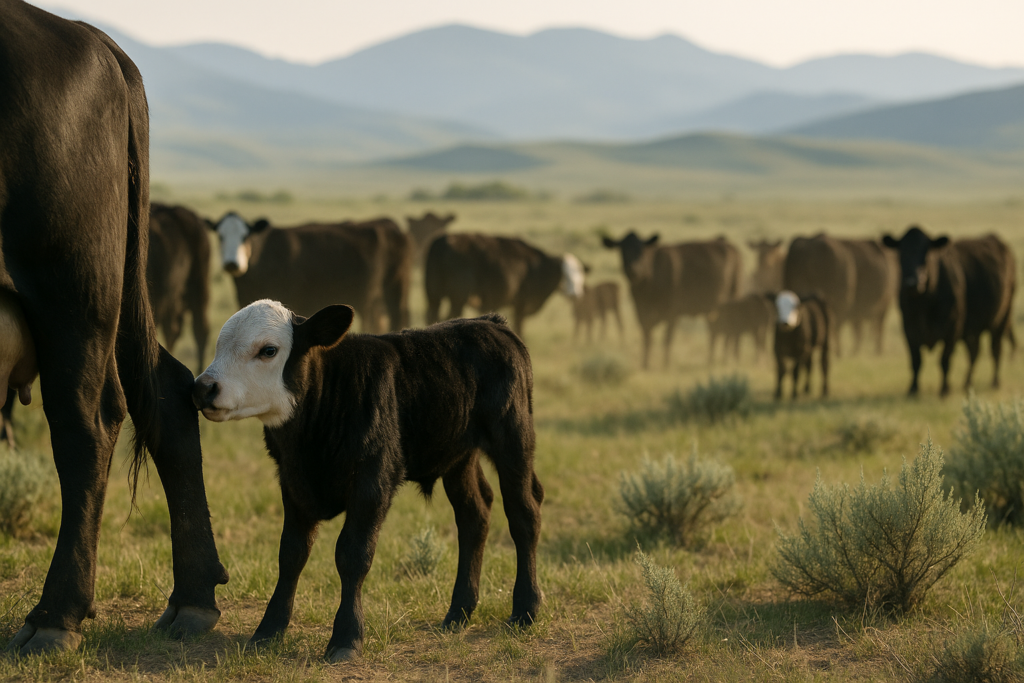
Summer pneumonia in nursing calves is real, and it’s sneaky. The calf is two, three, four months old, running with a healthy cow, and one morning it’s standing off from the bunch with its head down and its ears at half-mast. By then it’s been sick for a day or two. Calves are built to hide it. A prey animal that looks weak gets left behind, so they keep up with the herd until they physically can’t.
Why it hits when things look good
The frustrating part is that summer pneumonia often shows up when the country is in good shape. The calf came out of a live cow, got its colostrum, and grew fine through the spring. What changes is the immunity. That protection a calf gets from the dam’s first milk starts fading somewhere around two to three months of age, right about when their own immune system is still catching up. There’s a window in there where they’re thin on defenses.
Weather does the rest. A hot afternoon followed by a cold, wet night is hard on a calf’s lungs. Big temperature swings, June thunderstorms that soak them down, dusty corrals from a spring branding or a re-vaccination run—any of that gives the bugs already living in a calf’s airway the opening they need. Add flies driving the herd to bunch up in the heat and you’ve got calves breathing each other’s air in a tight knot.
Commingling matters too. If you turned pairs together from more than one source, or hauled a set in, you mixed pathogens that some calves have never seen. The ones that didn’t grow up with a particular bug are the ones that pay.
Catching it before the calf tells you
The whole game with summer pneumonia is early detection, and that’s hard when calves are scattered across a section of rough country. You’re not going to temp every calf. What you can do is ride through the pairs with your eyes open instead of just counting heads.
- Look for the calf that’s off by itself, or lagging when the bunch moves. A healthy calf on grass stays with its mother.
- Watch the breathing. A sick calf breathes faster and harder—you’ll see the flanks working, sometimes an open mouth, sometimes a stretched-out neck trying to get air.
- Droopy ears and a snotty nose are late signs, but they’re still worth catching.
- A cow with a tight, full bag in the middle of the day often means her calf quit sucking. Find that calf.
When you find one, get it and the cow into the corral and take a temperature if you can. A calf running a fever needs an antibiotic, and the earlier you get it in, the better it works. Talk to your vet about what to keep on hand and how to use it—there are good long-acting products, but the label and the withdrawal times matter, and your vet knows what’s been working in your area. A calf you treat on day one usually bounces back. A calf you treat on day three, after the lungs are already scarred, may live but never gain right, and that’s the calf that comes up light and poor at weaning.
Cutting the odds
You can’t weather-proof a calf, but you can stack a few things in your favor. A respiratory vaccine given at branding or a spring turnout works is cheap insurance, and if you’re in a country that sees this every summer, ask your vet about a second round timed to that immunity gap. Keep the mineral and the water clean so calves stay strong. Don’t crowd pairs into a dusty holding trap longer than you have to, and if you’re processing in June heat, do it at daybreak and turn them out before the day cooks.
Mostly, ride the pairs. The rancher who spots the standing-off calf on Tuesday and doctors it saves an animal. The one who finds it Thursday, down and mouth-breathing under a chokecherry, is usually too late.