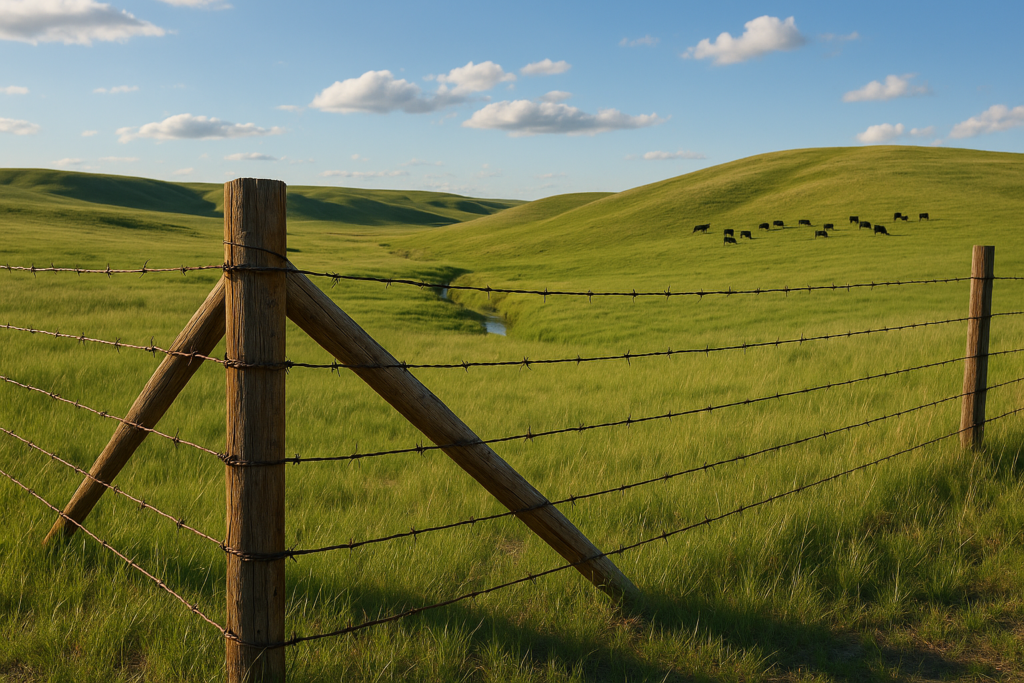
Cattle test a fence hardest right after turnout. They’re on new grass, the calves are old enough to run, and the bunch spreads out looking for the greenest draw. A wire that held yearlings all winter will look fine from the pickup and still let a pair walk through it in the dark. The only way to know is to get out and put your hands on it before the grass is tall enough to hide the low spots.
Most of us know our fences better than we admit, which is the problem. You drive the same two-track, glance at the same stretch, and quit paying attention to the corner that’s been leaning since the Fourth of July two years ago. Winter doesn’t leave anything alone out here. Frost heaves posts, snowdrifts drag the top wire down over a coulee, and a January chinook that melts and refreezes will loosen a brace you’d have sworn was solid.
Where the Trouble Actually Is
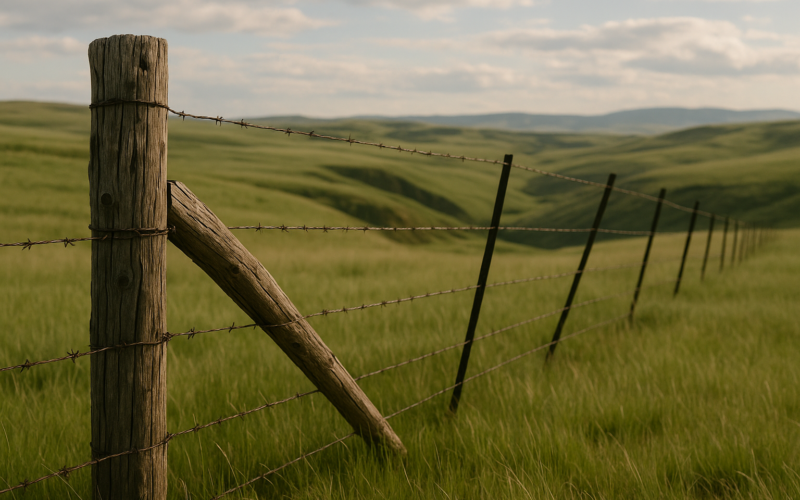
Start at the corners and the braces, because that’s where the whole fence lives or dies. A corner that’s pulled loose lets every wire in both directions go slack, and slack wire is an invitation. Push on the corner post. If it rocks, the brace has failed or the ground let go, and no amount of stretching the line wire fixes that until the anchor is solid again. Same with your gate posts. A gate that drags or won’t latch square is a gate that gets left chained half-shut, and a calf finds that gap by noon.
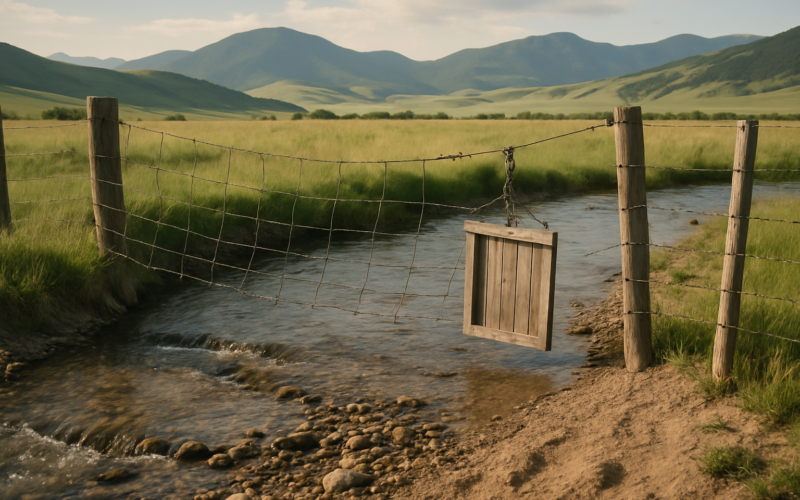
Then walk the low ground. Every fence in Montana crosses a coulee, a creek, or a wet swale somewhere, and that’s where the wire either got dragged down by ice and runoff or got buried in silt. Water gaps are the worst of it. Spring runoff piles brush and old fence into a wad and either tears the gap out or plugs it so the next rain washes a new channel around your end post. Rebuild the water gap so it’ll swing or wash out clean in high water and still turn cattle in between floods. A gap built to hold against a full creek just tears out your good fence when the water comes up.
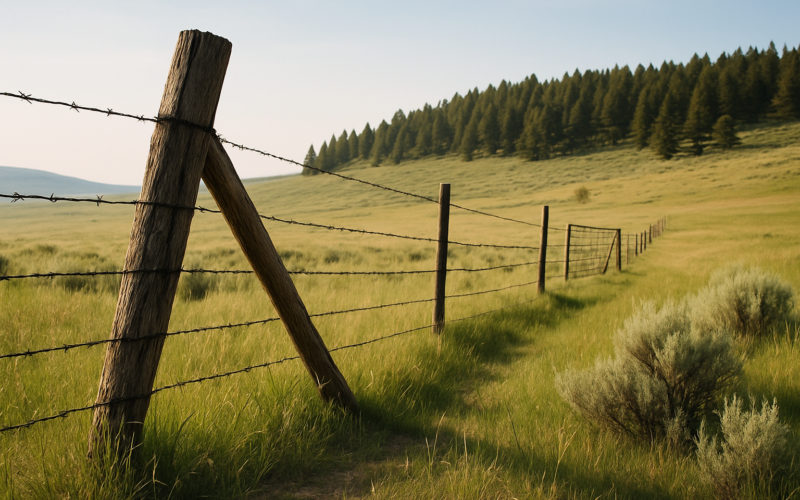
Look at the wire itself on the flats. A splice that’s rusted thin, a staple backed out of a post, a stretch stapled so tight it snapped over the winter — none of that shows from a truck. Where deer and elk cross, the top wire is usually mashed down and the bottom wire pushed up. Cattle read those spots the same way the elk do.
If You’re Running Electric
Electric fence is only as good as its ground, and a hot wire that reads fine on the fencer can be dead a mile out where you can’t see it. Carry a fence tester and check voltage at the far end, not just at the charger. Green-up brings a wall of grass and weeds growing into the bottom wire, and every leaf touching that wire bleeds off charge until the cattle stop respecting it. Spray or mow the fence line, check that your ground rods are driven into soil that still holds some moisture, and walk enough of the line to catch the break before the cows do.
Cross-fences for rotational grazing get the least attention because they’re temporary in your head, but a poly-wire that’s grounding out is worse than no fence at all. Cattle learn fast that it doesn’t bite, and once a bunch decides a hot wire is bluffing, you’ve lost it for the season.
Fix It Now, Not at 2 A.M.
The math on this is simple and everybody who’s done it knows it. An afternoon walking fence with a fencing tool, a bag of staples, a splice or two, and a shovel for the water gap is cheap. A phone call at two in the morning from a neighbor whose alfalfa your cows are standing in is not, and neither is a pair killed on the highway, or the day you lose gathering strays out of somebody else’s summer country.
Get to the far pastures before the cattle do. Once the grass is up past your knees and the coulees are green, the weak spots disappear until something walks through one. Put in the work while you can still see the ground, and the fence does its job quietly all summer, which is the only time a fence is doing its job right.