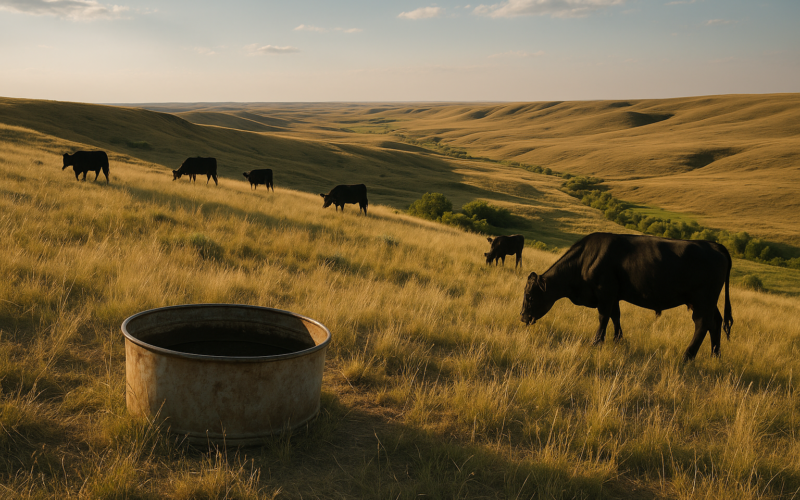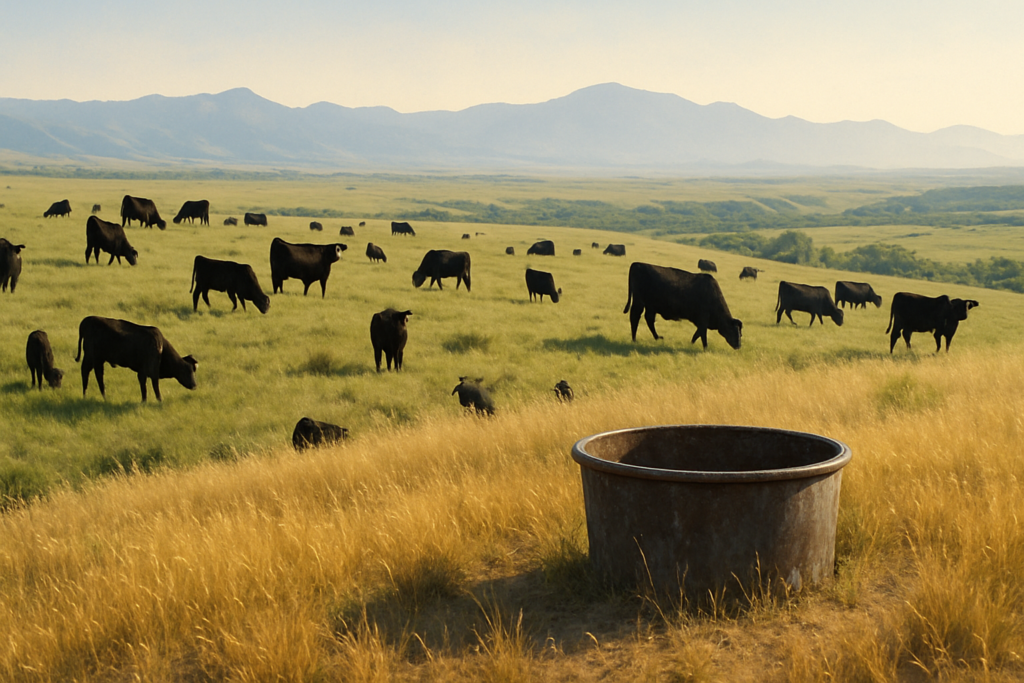
Turn a bunch of cows out on a big summer pasture and watch where they go. They’ll graze the creek bottoms, the shade, and a quarter mile off the water until it’s grazed to the dirt, while grass a half mile up the ridge stands there ungrazed and going to seed. You paid for that ridge grass same as the bottom. The cheapest tool you’ve got to make cows use it is the salt and mineral you’re already hauling.
Most outfits set the salt by the corral or the water tank because that’s easy. That’s exactly the wrong place. Cows come to water anyway. Put the salt there and you’re just concentrating them where they already are, chewing the near ground harder while the far country sits idle.
Salt is a lever, so use it to move cattle
Cattle will travel for salt. Set the mineral tub or the salt block up on a bench, on a ridge, in a draw they aren’t using, or a good ways back from water, and they’ll walk to it and graze on the way there and back. You can pull a herd into country they’d otherwise ignore just by where you drop the salt. Move it every week or two as they clean up an area and the pattern follows.
Rule of thumb that’s worked for a long time: put salt and mineral at least a quarter to a half mile from water, and toward the parts of the pasture that aren’t getting used. On rough country, set it above the cattle. They’ll climb to salt more willingly than you’d think, especially in the cool of the morning and evening. On flatter ground, spread multiple sites so one corner doesn’t get the whole herd.
Don’t set it where you’ll create a new problem. Keep it off the fragile stuff, out of the meadow you’re saving for hay, and away from the pond edge and boggy spots where you’ll churn a mud hole and invite foot rot. A well-drained bench with good footing is ideal.
What actually needs to be in front of them in June and July
Summer grass in Montana runs short on a few things a cow needs, and free-choice mineral covers the gap without you having to guess cow by cow. Salt itself drives intake and does a lot of the work of distribution. Beyond plain salt, most summer programs carry phosphorus, which green grass gets skimpy on as it matures, plus the trace minerals—copper, zinc, selenium, manganese—that back up breeding and immune function right when the bulls are working.
A couple of practical points. Cattle regulate salt intake but they don’t regulate mineral the same way, so if consumption is way off target, look at the salt-to-mineral ratio and the placement before you blame the product. If they’re eating twice what the tag says, the mineral may be too palatable or too close to water; if they won’t touch it, it may be too far or gone hard and weathered in the tub.
Keep it dry. A cheap covered mineral feeder pays for itself. Loose mineral that’s rained on sets up like concrete and cows quit it, and then you’re not getting the trace minerals in them during the exact weeks that matter for a bull settling cows. Check the tubs when you check water and salt—same trip, no extra miles.
Work it into how you already move
You’re riding the pasture anyway to look at water and count pairs. Carry a couple of blocks or a bag of loose mineral in the back of the truck or on the four-wheeler and reset it while you’re out there. It’s a few minutes and it changes where several hundred head spend the next week.
Watch the grazing pattern the way you’d read a weather map. If the bottoms are getting short and the ridges are still rank, your salt is in the wrong place—move it uphill and back. If cows are camping on the salt and beating out a spot, you left it too long; move it on. Over a summer, a herd nudged around this way will graze a big pasture a lot more evenly, and you’ll carry cows longer before you have to think about pulling them.
None of this replaces cross-fencing or hauling water to open new country, and it won’t fix a pasture that’s simply overstocked. But for the price of hauling salt where the grass is instead of where the cattle already stand, it’s about the best return you’ll get out of a five-minute chore all summer.