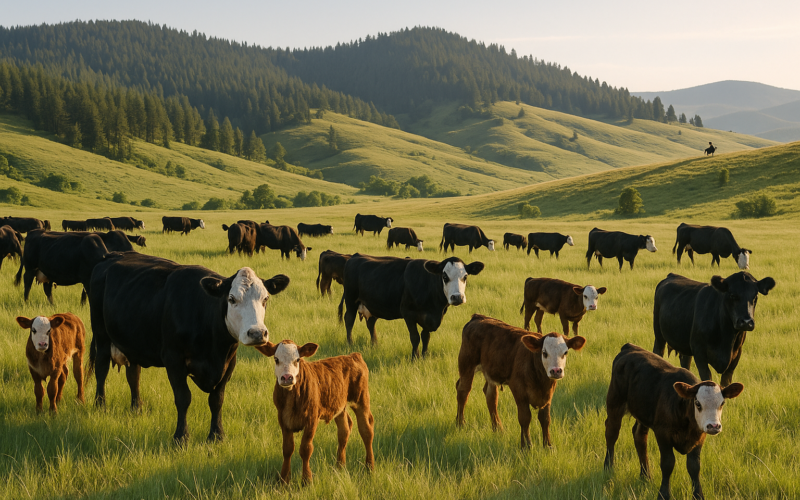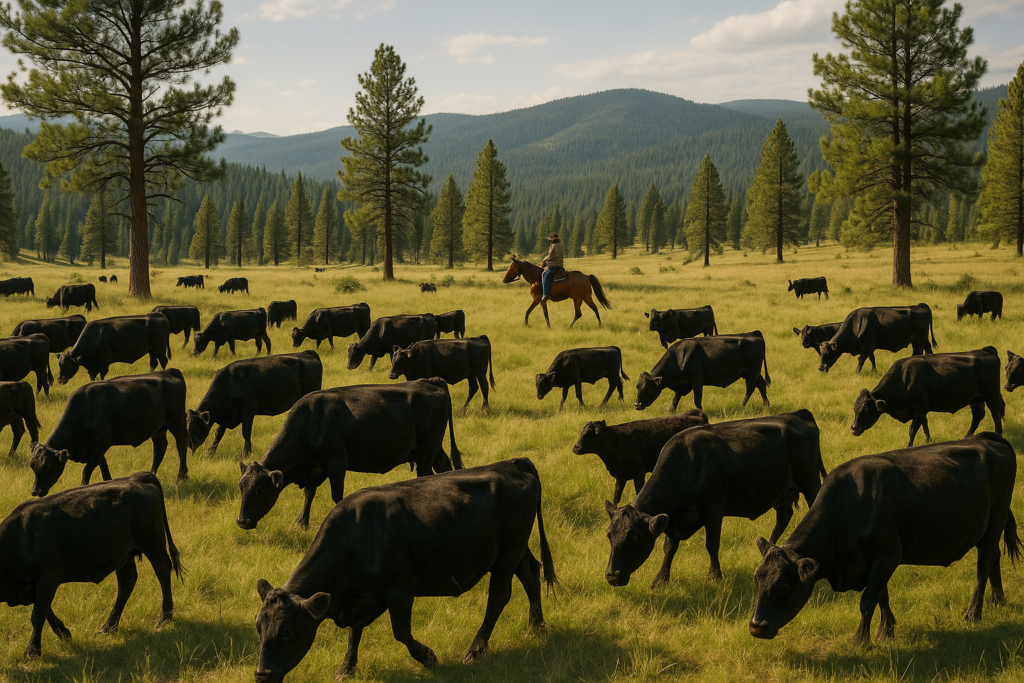
Come mid-June, a lot of Montana cattle are headed up the mountain. Cows that wintered on the home place and calved in the valley get trucked or trailed to Forest Service and BLM allotments from the Absarokas to the Bitterroot to the country north of the Yellowstone. The grass is high, the water is running, and the cows spread out and get to work. That’s the good part. The hard part is that you can’t see them every day, and in a lot of that country you’re sharing the range with wolves and grizzly bears.
A calf that dies on summer range doesn’t send you a bill. It just doesn’t show up when you gather in September or October. You count heads coming off the mountain, come up two or three light, and start guessing. Was it a predator? A poison plant? Did it drown in a bog or fall off a rimrock? You’ll never know for certain on some of them, and that uncertainty is exactly the problem. A carcass you never find is a loss you can’t document, and a loss you can’t document is one nobody’s going to help you cover.
Riding beats guessing
The single best thing you can do on a big summer allotment is put eyes on the cattle regularly. That might be you on a horse a couple times a week, a hired range rider, or a neighbor you split the country with. Riding does more than turn up dead ones. It keeps the herd from scattering into every draw and blowdown, moves them off water and creek bottoms before they hammer the riparian ground, and lets you catch a foot-rot cow or a pinkeye calf before it’s a wreck.
Cattle that get ridden stay bunched, and bunched cattle are harder for wolves to work. A cow-calf pair alone in the timber is a target. Two hundred head grazing a park together, with cows that will turn and face a threat, are a different proposition. You can encourage that bunching by where you put your salt and mineral. Move it every week or two into fresh grass and the cattle follow it and stay grouped instead of stringing out for miles.
When you do find a dead one, look at it before you assume the worst. A predator kill usually shows hemorrhage under the hide where the animal was bitten while it was still alive—bruising in the tissue that scavenging alone won’t produce. Tracks, drag marks, cached carcasses partly buried under dirt and duff, and the pattern of what got eaten all tell a story. Scavengers clean up a lot of animals that died of something else entirely, so a chewed-on carcass isn’t proof of anything by itself.
Document it while it’s fresh
If you think you’ve got a predator kill, get to it fast and treat it like evidence. Photos of the whole animal, the wounds, the tracks, and the surroundings. A pin on your GPS or a note of the location. The sooner a specialist can look at it, the better the odds of a definite call, because carcasses go downhill fast in June heat and the evidence disappears. Know before turnout who you’re supposed to call in your area and how the confirmation and compensation process works, so you’re not figuring it out over a three-day-old carcass.
Keep your own tally, too. A turnout count you actually wrote down, pair by pair if you can manage it, is worth a lot more than a memory when you’re trying to sort out fall losses. Same goes for brands and ear tags—cattle you can identify are cattle you can account for.
Set the herd up before trouble starts
Some of this is decided long before June. Cows that calve in a tight window turn out with calves big enough to keep up and stick with the herd, and a big, healthy calf is a tougher target than a late, light one dragging behind. Older cows that know the country and won’t tolerate a wolf in the bunch are worth keeping around; a herd full of green heifers scatters easier. And getting cattle up to the allotment when there’s grass to hold them, rather than turning them out to wander looking for feed, keeps them where you can find them.
You can’t fence out a grizzly or hire enough riders to watch every calf. But cattle that are bunched, ridden, and counted give you a fighting chance—both at bringing more of them home and at getting some help on the ones you don’t.