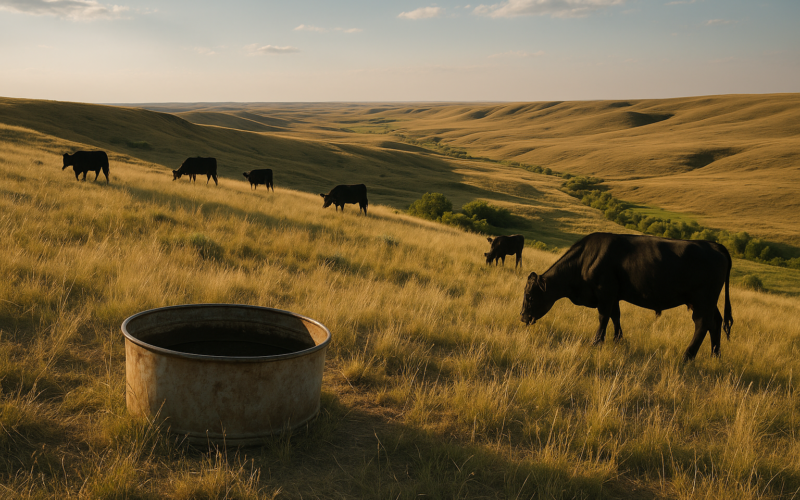
Turn a bunch of cows into a section of rough summer country and watch where they go. Most of them will find the creek, the shade in the bottom draw, and the flat by the gate, and they’ll stay there. By July the bottoms look mowed and the back ridge still has grass standing that nobody’s touched. You paid for all of it. You’re only grazing part of it.
That’s the oldest problem in a big pasture, and it isn’t the cows being lazy so much as them doing exactly what makes sense to them. Water, shade, and level ground pull them in. The steep, dry, sun-baked country a half mile up doesn’t offer any of that, so it sits. The trick isn’t fighting the cattle’s habits. It’s giving them a reason to spend time in the country you want grazed.
Salt is the cheapest herd-mover you own
Cattle will walk to salt. That single fact is a management tool most outfits waste by setting the salt where it’s handy for the pickup instead of where it does some good. Drop it by the water tank or next to the gate and you’ve just given the cows one more reason to hang in the spot they were already overgrazing.
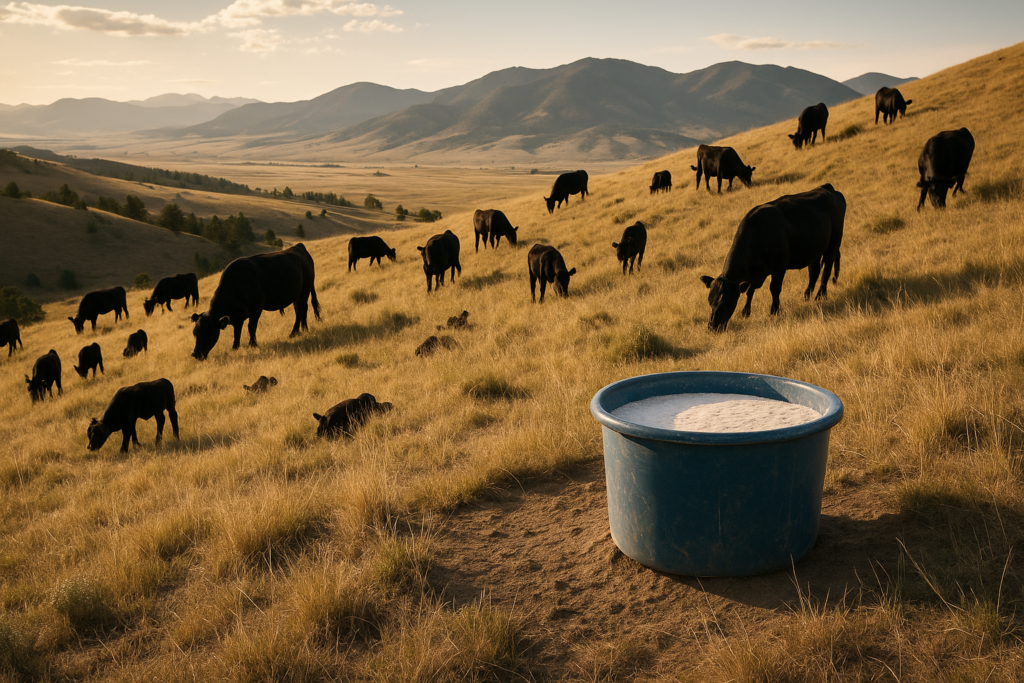
Put the salt and mineral up on the high ground, on the ridges and benches the cows are ignoring, and away from water. Not right at the water — a good ways off. The cows will make the trip, graze on the way up and on the way back, and start bedding in country they used to only pass through. On rough summer allotments in the mountains you can pull cattle a long way uphill with salt set on the far knobs. On dry range you scatter it across the parts of the pasture that green grass has already gone by in the bottoms.
Move it, too. A salt ground left in one place all summer just builds a new bare, trampled spot. Every couple of weeks, pack it to a fresh location, keep working it away from the water and out toward the unused corners. You’re using the salt to write a grazing map on the ground.
Rubbing spots, shade, and where the water sits
Salt isn’t the only thing that anchors a bunch. A mineral tub, an oiler or a rub for fly control, a patch of shade — cattle organize their day around those things. If every one of them sits in the same corner, the cows never leave that corner. Spread them out. Put the fly rub away from the salt, put the mineral somewhere else again, and you’ve given the herd three reasons to cover ground instead of one reason to stand still.
Water is the hard one, because you can’t move a creek. But you can add to it. A stock tank fed by a spring development or a solar pump set up on a dry bench opens grass that was effectively fenced off by thirst. Cattle generally won’t travel much more than a mile to water in rough country, and a lot less in the heat, so a pasture with one water source in the corner has a whole back end the cows barely see. A second water point out in that dead country does more than any amount of salt. It’s more work and more money up front, but it’s grass you already own that you’re currently not grazing at all.
Where you don’t have the water, at least don’t stack everything else against it. If the only water is down in the bottom, that’s all the more reason to run the salt and the rub clear up the hill, so the cows have to leave the water to get to the other things they want.
Ride it and read the ground
You find out whether any of this is working by looking. Ride the pasture and pay attention to the ridges and the far fence lines, not just the trail past the tank. If the high ground is still knee-deep and the bottom’s grazed into the dirt, the herd’s told you the salt’s in the wrong place and the water’s holding them down low. Move the salt further out and see if they follow.
None of this is complicated and none of it is new. It’s the difference between running the number of pairs a pasture will actually carry and running fewer because half the country never gets touched. On a dry year especially, that untouched ridge is grass you’ll wish you’d used before you turned to feeding hay in August. The salt to reach it costs about what it always did. The grass you leave standing behind the creek costs you a lot more.