The first genuine hot stretch usually shows up in Montana sometime in June, right after the grass gets ahead and the cattle are still carrying half a winter coat. Ninety-plus in the afternoon, no wind, and the humidity you’d swear the Highline never has hanging around after a thunderstorm. That combination lands hardest on the animals that came through the winter in the best shape: the deep-bodied, black-hided cows carrying condition, and any bull you turned out fat. They don’t shed heat the way a slick red cow does, and they hold more of it inside than a thin animal.
Heat doesn’t kill nearly as often as it costs. It costs in bulls that quit settling cows, in calves that don’t gain because their mothers stand around panting instead of grazing, and in the general loss of gain you never see on paper. But when a heat wave stacks up wrong “a hot day, a hotter night that never cools off, and cattle worked in the afternoon” it can put animals down fast.
Read the cow, not just the thermometer
A cow cools herself mostly by breathing. Early on you’ll see her breathing pick up, ears working, tail out a little. As it gets worse she’ll open her mouth, drop her head, drool, and eventually stand with her front legs spread, working hard just to move air. By the time a cow is open-mouth breathing with her tongue out, she’s in trouble and every bit of extra stress “a long push to water, a working, a chase” compounds it.
The dangerous part is the night that doesn’t cool down. Cattle unload the day’s heat after dark. If the low never drops much, they start the next day already loaded and never catch up. A single 95-degree afternoon rarely wrecks anything. Two or three days back to back with warm nights is what fills the bone pile.
The animals to watch are the ones least able to dump heat: fat cows, dark hides, anything fighting foot rot or pinkeye or pneumonia already, and cattle that haven’t finished shedding. A cow still holding a dead winter coat in a June hot spell is wearing a blanket she can’t take off.
Water is the first thing that runs short
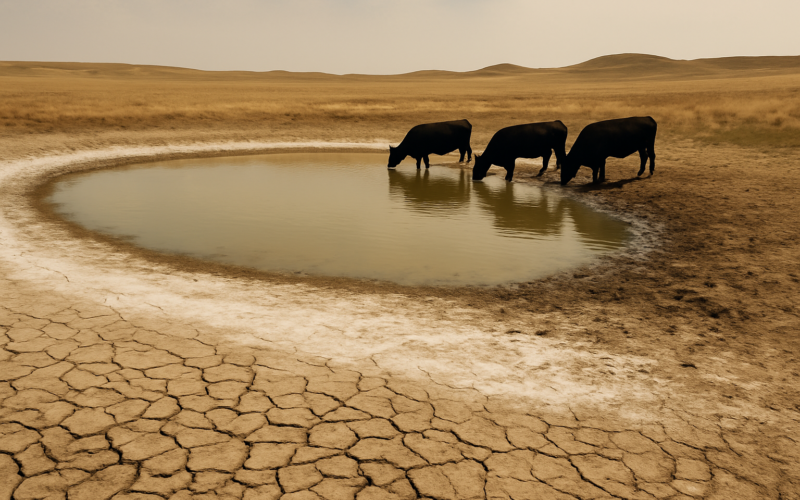
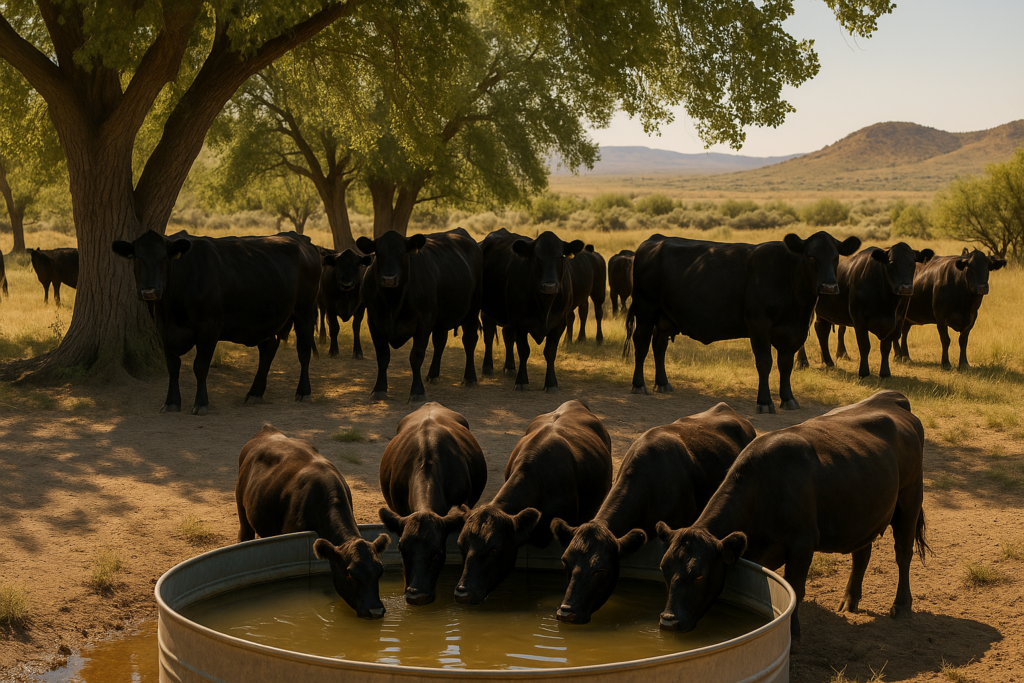
Cattle drink a lot more in heat, and they drink it in a hurry. A pasture that watered fine in May off one tank or one spring can come up short on a hot afternoon when the whole bunch wants to drink at once. It’s not always about total gallons. It’s flow “whether the tank refills fast enough to keep water in front of the last cow in line. Check your recovery rate on a hot day, not a cool one, and watch the low ponds. As they drop and warm, they set up for algae and for sulfates concentrating, and cattle will crowd bad water when the good water is a long walk away.
Clean, cool, and close matters. Cattle that have to travel a long way to water in the heat will hang by the tank, overgraze it into the dirt, and quit going back to the far grass. Spreading water out, even a temporary tank up the hill, keeps them grazing and keeps them from stacking up and heating each other in a mob at the one good spot.
Handle them in the cool, or don’t handle them at all
If you have to gather, sort, haul, or work cattle during a hot stretch, do it at daylight. Cattle carry the previous day’s heat into the morning and shed it overnight, so their coolest point is right around sunup, not late evening the way it feels to us. Working cattle in the afternoon adds the heat of exertion on top of a body that’s already maxed out, and that’s how a routine job turns into a down cow in the alley.
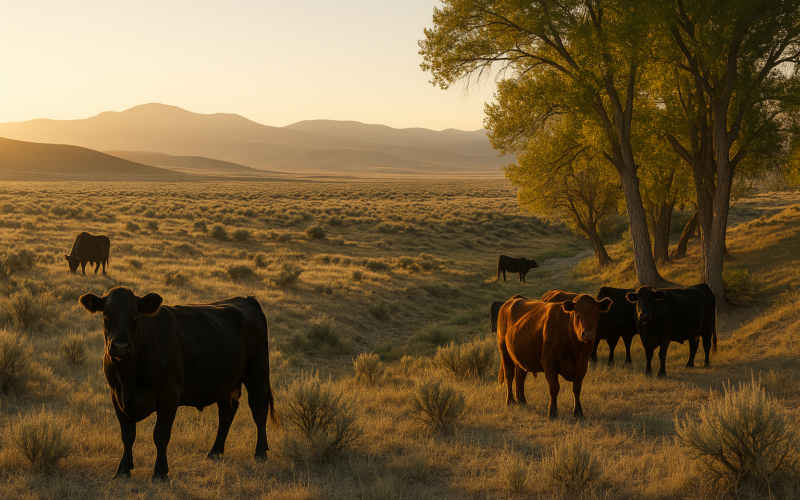
Shade helps, and cattle will use it hard “a coulee, a timber edge, a windbreak, even a stand of tall brush. If your summer country is wide open, keep it in mind when you decide which pasture goes when. Wind moves heat off cattle almost as well as shade, so an exposed ridge with a breeze can beat a dead-still bottom that bakes.
Fly pressure feeds right into it, too. Cattle bunched tight fighting horn flies generate and trap heat in the middle of the group. Keeping flies knocked down keeps cattle spread out and grazing, which is exactly where you want them when it’s hot. None of this is complicated. It’s mostly water that keeps up, shade or wind where you can find it, and the discipline to leave the cattle alone in the heat of the day.