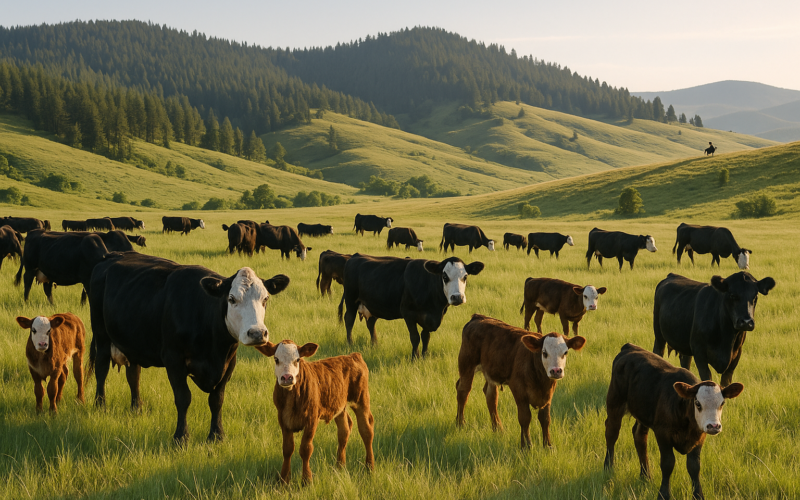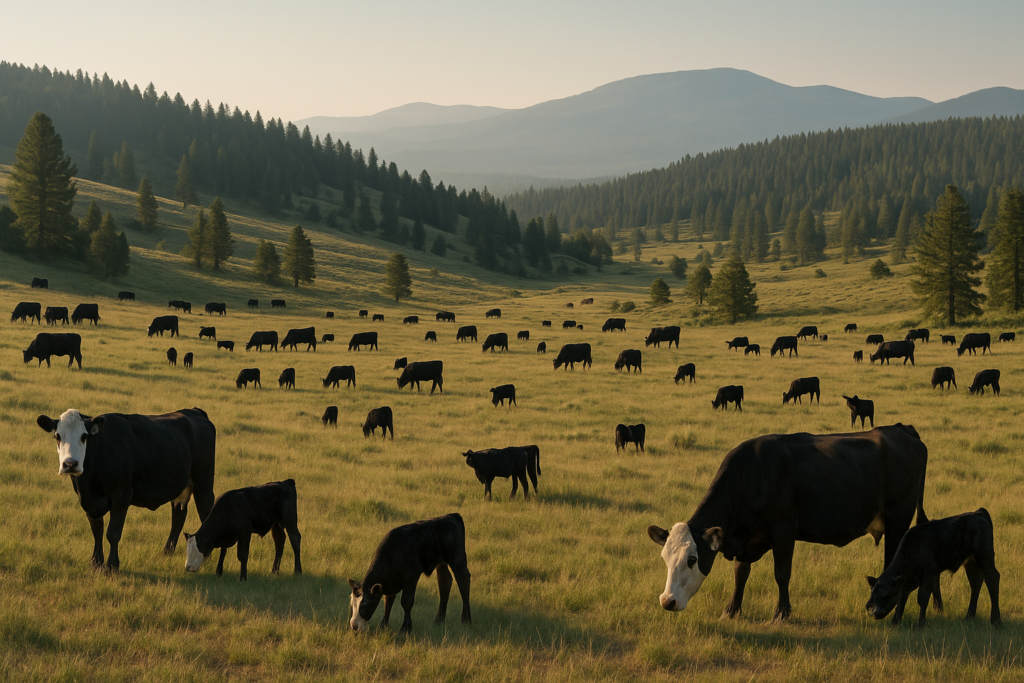
Cattle turned out on a forest allotment or a section of rough deeded ground in the Bitterroot, the Big Belts, or the country east of the Front don’t come to the feed truck anymore. They’re spread across drainages, timbered draws, and ridgelines you can only cover on horseback or a side-by-side. That’s the same country where wolves den and grizzlies range wider every year, and it’s why summer is when depredation quietly eats into a calf crop you thought you already had made.
The frustrating part isn’t just the loss. It’s that a dead calf in a warm June draw stops looking like a kill within a day or two. Coyotes, birds, and bloat go to work fast. By the time you ride up on it, the difference between a calf that died of pneumonia and one a predator pulled down can be hard to read, and harder to prove to anyone else.
Learn what a kill actually looks like
Predators leave a pattern, but you have to get past the obvious mess to see it. The tell isn’t the missing meat or the scavengers on the carcass now. It’s hemorrhage, bruising in the tissue that only happens when the animal was alive when it was bitten. An animal that died first and got fed on later won’t show that.
When you find a suspect carcass, roll it if you can and look for tooth punctures, then look under the hide around them. Wolves tend to attack the hindquarters, flanks, and back legs, and they’ll often open the body cavity and clean it out. A grizzly is heavier-handed: crushed skull or spine, big claw rakes, and they’ll frequently drag a carcass off and cover it with dirt, grass, and debris, then bed nearby to guard it. That cache is worth backing away from. A bear will defend one.
None of this is a substitute for a trained investigator’s call. But knowing the signs tells you whether you’ve got something worth reporting before you disturb it.
Don’t wreck the evidence trying to save it
The instinct is to load the dead calf up and haul it out of the heat, or to drag it away from live cattle. Fight that instinct until it’s been looked at. Moving, gutting, or hanging a carcass destroys the very hemorrhage and bite spacing an investigator needs. Leave it where it lays.
What you can do costs nothing and makes the difference:
- Photograph everything, wide and close. The whole scene, the ground around it, drag marks, tracks, scat, and the bite wounds themselves with something for scale next to them.
- Note the exact location. Drop a pin, mark a GPS point, write down the drainage and the nearest landmark. “Up on the north allotment somewhere” won’t cut it.
- Cover it if you have to buy time. In hot weather a tarp weighted down with rocks slows decomposition and keeps birds off until someone can get there. It won’t stop a determined bear, so use judgment.
- Call it in right away. The longer the carcass sits in June heat, the less anyone can determine, and a confirmed determination is what unlocks a claim.
Montana has a process for reimbursing confirmed wolf and grizzly losses, but it runs on confirmation. A carcass too far gone to investigate usually ends up in the “probable” or “undetermined” pile, and that’s money left on the table for an animal you raised through a hard calving season.
The losses you never find are the real bill
The confirmed kill you photograph is only the part you can see. On big, timbered country, researchers who’ve collared cattle and predators consistently find that for every carcass a rancher locates, more calves simply vanish, and the pairs that survive an attack can still lose weight from the stress and the running. That’s why waiting until fall to tally what’s missing tells you nothing useful. Ride the country. Count pairs when you’re out salting. A cow showing up tight-bagged and bawling with no calf in July is telling you something.
Prevention on open range is limited and imperfect, but a few things move the needle. Pulling and disposing of any dead stock, from any cause, keeps you from baiting predators into the herd. Bunching cattle in more open ground and avoiding leaving them scattered in brushy bottoms during peak conflict helps. In wolf country, a range rider or just more frequent human presence breaks up the routine a pack settles into. And turning out heavier, older calves rather than small ones changes the math for what a predator is willing to take on.
You can’t fence a grizzly out of a forest allotment. What you can control is how fast you find trouble and how well you document it, and in June, both of those clocks run faster than you’d think.