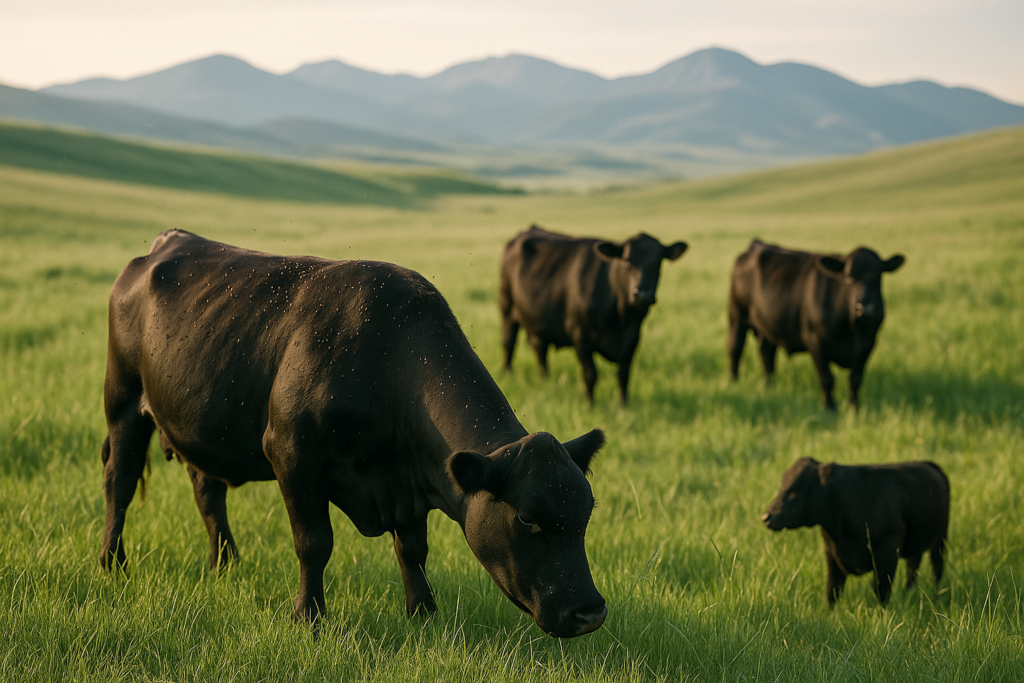
Walk out to a bunch of cows on a still June morning and look at their backs and shoulders. If the flies lift in a gray cloud when the cow shifts, then settle right back down in a matter of seconds, you’re already past the point where they’re costing you something. Horn flies don’t kill cattle outright the way blackleg or bloat does. They bleed a little off every animal, every day, all summer, and you pay for it in the fall when the calves come across the scale lighter than they should and the cows carry a rib or two less than you’d like going into breeding.
The number people throw around is roughly two hundred flies per animal as the economic threshold. That sounds like a lot until you actually count. Two hundred flies is a patch about the size of two open hands on the topline and shoulders. Most Montana herds blow past that by mid-June if nothing’s been done, and a heavily infested cow can carry a thousand or more. Each fly takes twenty or thirty blood meals a day and stays on the animal almost around the clock, which is what makes them different from the face flies and stable flies that come and go.
What they actually cost, and why you don’t see it
The damage is quiet. Cattle bunch up, quit grazing to fight flies, and stand in the water or in whatever shade they can find instead of putting their heads down. A cow spending energy swatting and worrying isn’t putting milk into a calf, and a calf spending the hot part of the day mothered up in a tight bunch isn’t grazing either. The result is spread across the whole herd rather than showing up on one sick animal, so it’s easy to shrug off. The horn fly is also the bug that carries a mess of summer mastitis to first-calf heifers and helps move pinkeye from a weepy eye to the next cow over, so the flies you tolerate cost you in ways that don’t land on the fly line at all.
Horn flies breed in fresh manure and only fresh manure. The female lays eggs in a pat within minutes of it hitting the ground, and the whole cycle from egg to biting adult runs about two weeks in warm weather. That’s why the numbers explode so fast once it warms up, and it’s also the weak point you can attack.
Pick the tool that fits how you handle cattle
There’s no single right answer, and the best program usually stacks a couple of methods. Match it to how often you actually get hands on your cattle.
- Insecticide ear tags are the standard for a lot of outfits because you’re already running cattle through a chute at turnout or branding. Put them in too early and they lose punch by August when fly numbers peak. A general rule is to tag when you start seeing real fly pressure, not weeks ahead of it. Pull the tags in the fall so you’re not leaving a low dose out there breeding resistant flies over winter.
- Pour-ons and sprays knock numbers down fast but don’t last long, so they fit as a mid-summer touch-up or for cattle you can gather easily. On yearlings you’re checking often, a summer pour-on can carry a lot of weight.
- Dust bags and back rubbers hung where cattle have to pass under them, at a gate, a mineral station, or the water, put the chemical on every animal without a gather. Set them so the cows can’t help walking through, keep them charged, and they’ll ride out most of the season.
- Feed-through larvicides in the mineral or a block work on the manure pat instead of the animal, breaking the cycle before flies ever hatch. They only cover cattle that eat enough mineral consistently, and they do nothing about flies drifting in off the neighbor’s herd across the fence, so they work best as one leg of a program rather than the whole thing.
Rotate chemistry or you’ll breed a fly you can’t kill
Horn flies develop resistance, and the fastest way to get there is to hang the same class of insecticide tag in the same cattle year after year. The two main families used in tags are pyrethroids and organophosphates. Flip between them season to season, lean on non-chemical methods where you can, and pull tags on schedule so you’re not running a low-dose selection program for tough flies all fall.
The practical read is simple. Count the backs a couple of times a week once the weather turns. When the flies quit lifting and just crawl, you’ve waited too long. Get ahead of the second and third hatch, not just the first, and the calves you weigh in October will tell you it was worth the trip through the chute.