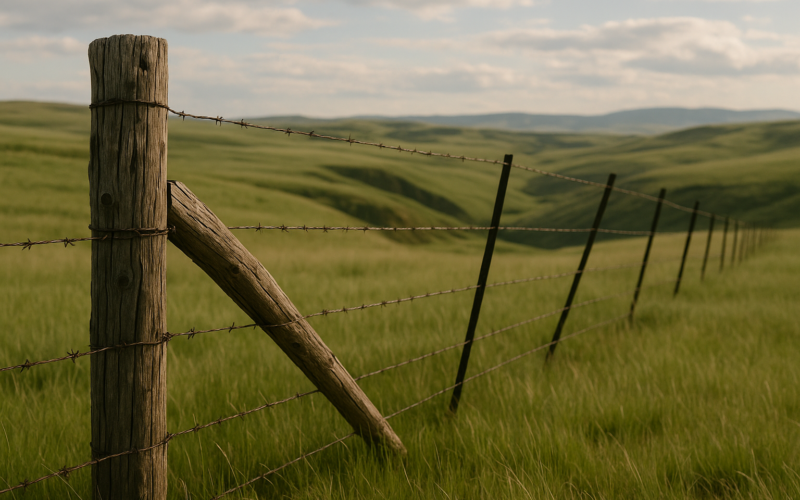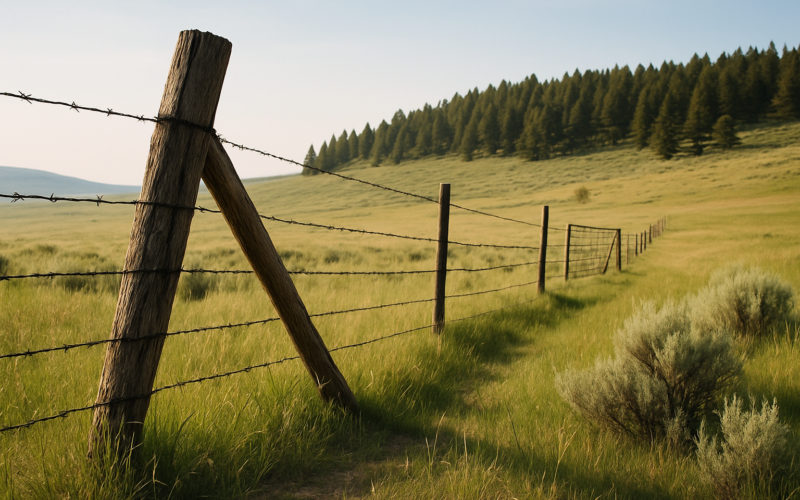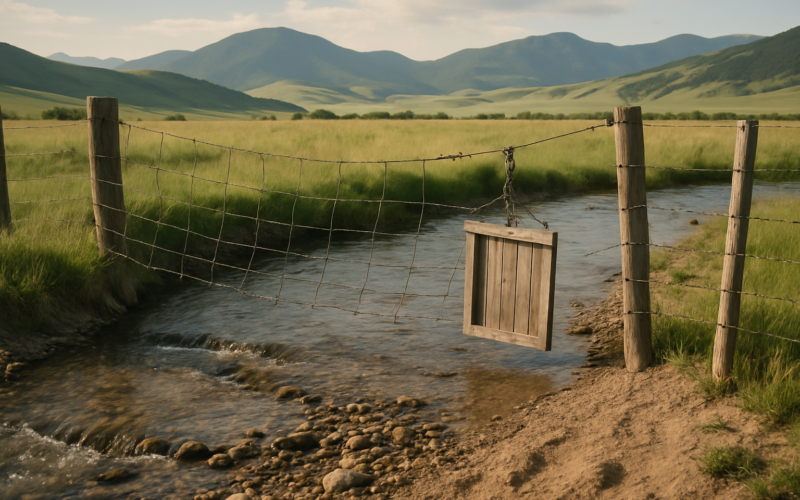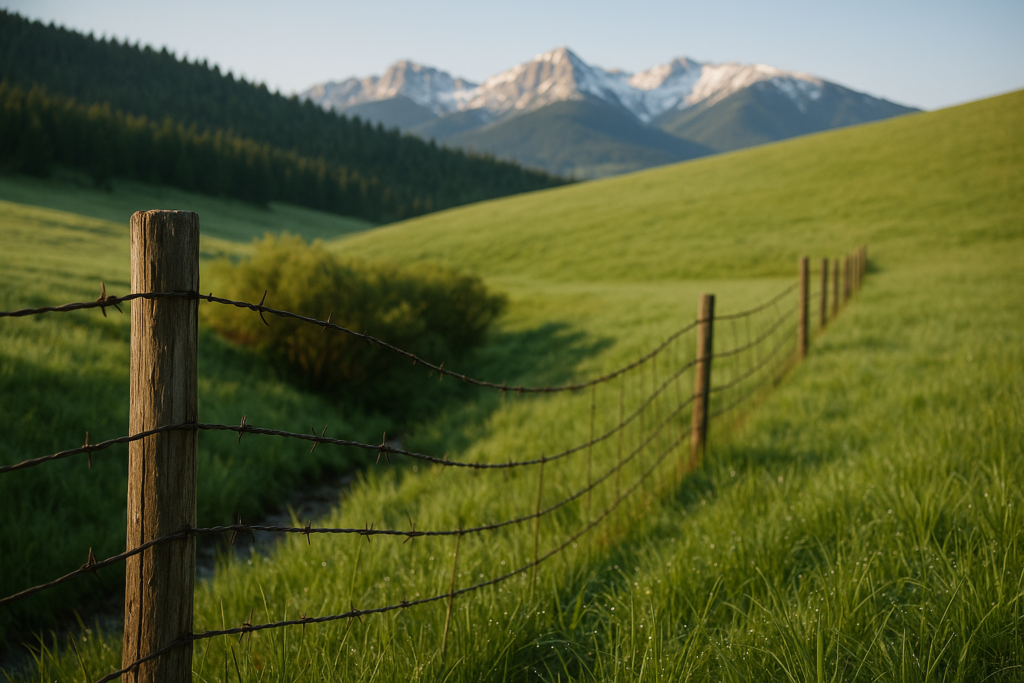
The fence looked fine last fall when you gathered. That doesn’t mean much. Between then and now it carried a winter of snowload, a windstorm or two, and a runoff that came up fast in a wet draw and took a water gap out sideways. Elk crossed it however they pleased. By the time you trail cattle onto summer country in June, a fence you haven’t looked at in eight months is a guess, not a boundary.
The cheapest day of the whole grazing season is the one you spend riding fence before the cows get there. You’ve got no cattle to gather back, no calves mothered up on the wrong side, and no neighbor calling about your bull in his heifers. Once you turn out, every problem the fence has becomes a problem you fix with cows watching.
What winter and runoff actually break
Snow does the quiet damage. A drift that sits on a fenceline all winter pushes wire down and works staples loose, and on a sidehill it can bow a whole stretch downhill by spring. You won’t see it from the road. You see it when you’re standing on it, wire slack enough to step over.
Runoff does the loud damage. Every place a fence crosses a creek, a ditch, or a wet draw is a place the spring melt can pile up brush and tear the crossing out. Water gaps are built to give — that’s the point — but a gap that washed out in May is an open door until you rebuild it. Ride the low spots first. That’s where you’ll find the trouble.
Then there’s wildlife. Elk and deer wintering through a fence lay it over a little at a time, and a fence that’s been jumped all winter is often standing but not tight. On the forest allotments, a windthrown tree across the line takes out two or three panels at once and doesn’t care that it’s your permit boundary.
Ride it with the stuff to fix it
There’s no sense finding a hole you can’t close. Whoever rides fence ought to carry enough to make a repair on the spot — a fencing pliers, a sack of staples, a roll of smooth or barb, a couple of splices or a wire vise, and a hammer. A come-along and a few steel posts in the truck or on a packhorse cover the bigger breaks. Fixing it when you find it beats marking it on a map and hoping you get back before the cows do.
Pay attention to the anchor points, not just the wire. A corner or brace that’s rotted or heaved does you no good no matter how tight the fence between them. A gate that won’t stay latched is the same as a gate left open once a cow leans on it. Cattle guards fill with dirt and gravel over a winter until they’ll walk right across — clean them out before they quit working.
Where your line runs against a neighbor, the fence is usually a shared deal, and it pays to know which stretch is yours to keep up. Sort that out before turnout, not after a bull’s already crossed. Commingled cattle in June mean a summer of watching brands and an argument about whose bull bred whose cows, with the answer showing up next March in a pile of off-color, off-schedule calves.
The bull is the one that finds the hole
Cows will hold on decent grass and stay home. A bull won’t. He’ll walk a mile of good fence to find the one weak spot, especially early in breeding when he’s covering country. The hole you shrugged off because “the cows won’t bother it” is exactly the one that puts your herd sire in the neighbor’s pasture, or his in yours.
That cuts both ways. A neighbor’s bull in your cows scrambles your calving window and can bring in whatever genetics and whatever disease he’s carrying. Trich and a few other problems travel on a fence-crawling bull, and you find out about them the hard way. Tight fence at turnout is bull management as much as it’s boundary management.
Riding fence is slow, unglamorous work, and it’s easy to put off when there’s hay down and cattle to move. Do it anyway. A June morning spent tightening wire and rebuilding one water gap is worth a lot more than the July you’d otherwise spend gathering cattle off ground that was never yours to graze.