The first real thunderstorms of the year build over the mountains in June and slide out across the plains by late afternoon. You know the pattern — dead calm, that green-gray sky, then wind and hail and lightning walking the ridgelines. Most of the time it passes and the grass just gets a good drink. But every summer, somewhere in this state, a producer rides out the next morning and finds three or four cows dead in a heap, no marks on them, no sign of a struggle. They were killed in a second by something they never had a chance to see coming.
Lightning doesn’t kill cattle the way most people picture it. A direct hit on an animal happens, but it’s the exception. Far more cows die from ground current and from the wire and steel we string all over the country.
Why they pile up under the one tree
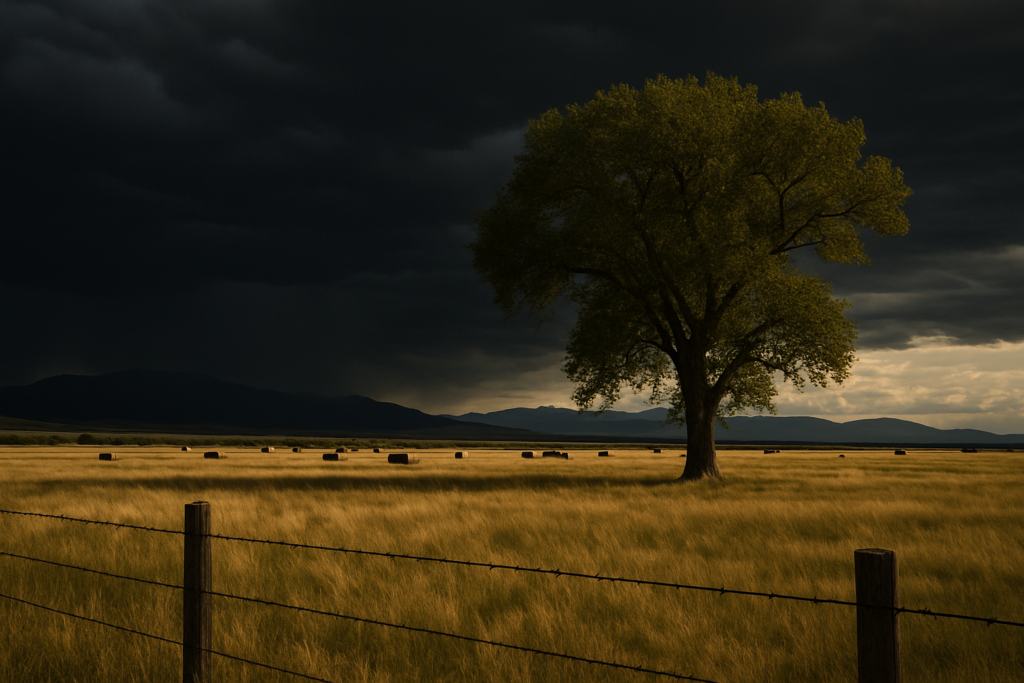
Cattle do exactly the wrong thing in a storm. They quit grazing, drift downwind, and bunch up under whatever cover they can find. Out on open range or a bare pasture, that cover is usually a single tall cottonwood, a pine on a knob, or the corner post where three fence lines meet. Every one of those is a better path to ground than the flat grass around it, which is precisely why the strike goes there.
When lightning hits a lone tree, the charge doesn’t stay in the trunk. It spreads out through the wet ground in a ring. Any animal standing in that ring takes the current up one set of legs and down the other, straight through the heart. The distance between a cow’s front and back feet is enough to create the voltage difference that stops her. That’s why you’ll find several head down in a circle around the tree while the one that happened to be standing thirty feet out walks away fine.
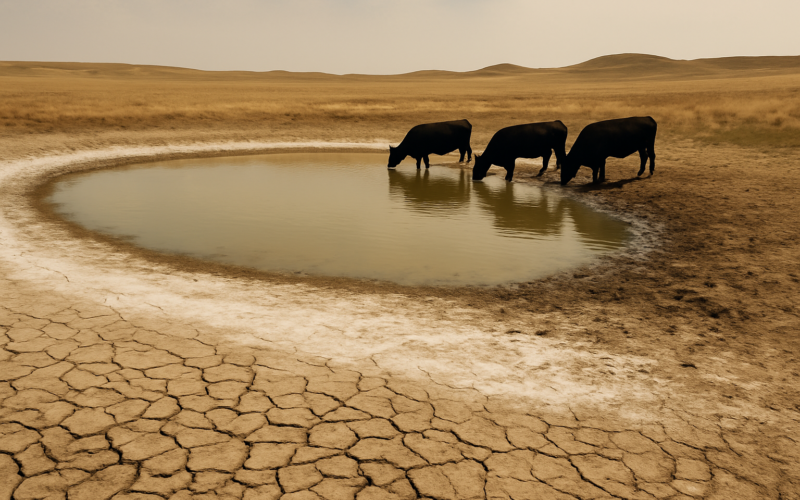
The same thing plays out at water. Cattle crowd a pond or a tank in the heat, standing in mud that conducts beautifully. A strike anywhere near that wet ground can drop the whole bunch that’s packed in tight.
The fence is the part people miss
A barbed wire fence is a mile-long lightning rod laid on its side. When a strike lands on or near a wire fence, the current runs down that wire — sometimes a quarter mile or more — until it finds a place to jump to ground. A cow standing against the fence, scratching on a post, or just grazing the fence line at the wrong moment becomes that ground.
This is the one that fools people. The cows weren’t under a tree. They weren’t bunched at water. They were spread out along a fence, doing nothing, and the strike came in a half mile away. Steel posts make it worse than wood because they carry the charge into the earth right where the animal is standing. If you’ve ever found dead cattle strung out along a fence line after a storm with no tree in sight, that’s what happened.
What actually cuts the odds
You can’t storm-proof a pasture, and nobody’s going to gather cattle every time a cell builds over the Crazies. But a few things stack the deck in your favor over a summer.
- Give cattle a real place to shelter. A pasture with a low draw, a stand of timber, or broken ground lets cattle spread out and get low instead of crowding one tall tree. The dangerous pasture is the flat one with a single landmark.
- Take down the lone hazards where you can. That one dead snag standing in the middle of a grazing pasture isn’t shade worth keeping if it’s the tallest thing for a quarter mile.
- Think about fence grounding on long straight runs, especially electric fence, where a proper ground and lightning arrestors keep a strike from traveling the whole line and frying your energizer along with any cow leaning on the wire.
- Don’t push cattle in an active storm. If you’re horseback and the hair on your arms stands up, you’ve got bigger problems than getting the bunch to the corral. Get off the high ground and off the horse.
When you find them dead
Lightning loss is one of the hardest things to prove after the fact, and if you carry insurance on your cattle, the burden’s on you. The animals usually show little or nothing on the outside — sometimes singed hair on the legs or a burn line, often nothing at all. What tells the story is the situation: several head down together, under or near a tree, along a fence, or at water, with no other explanation and a storm on the record for that day.
Photograph everything before you move a thing — the animals, the tree or post, the ground around them, the burn scar on the bark if there is one. Note the time and the weather. In June heat a carcass goes off fast, so if you want a vet or an adjuster to confirm it, make the call the same day. The evidence you need is gone by the second morning.