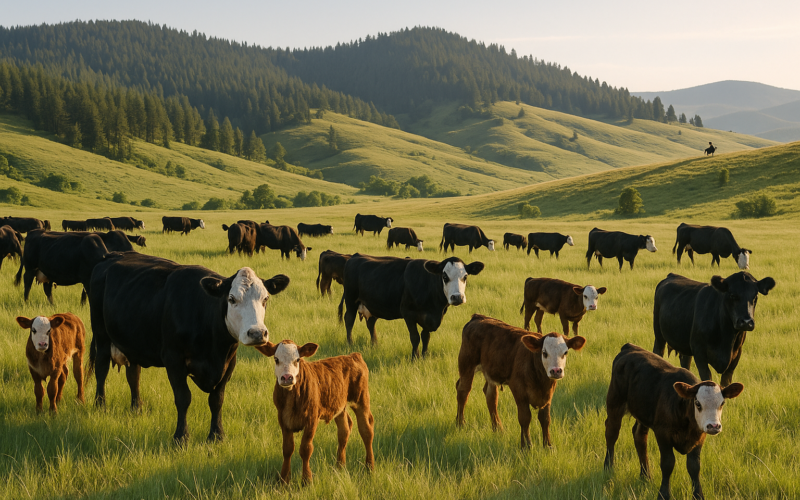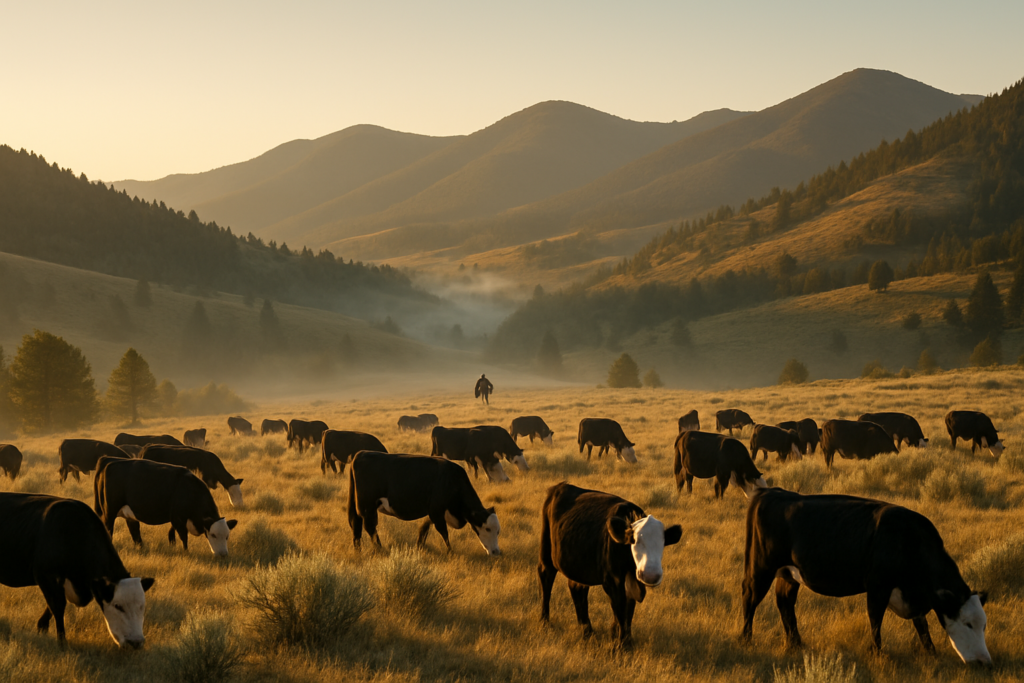
Turnout scatters your cattle across ground you can’t see all at once. On a lot of Montana country now — the Rocky Mountain Front, the country around the Blackfoot, the mountain ranges that feed into the Yellowstone — that ground also holds grizzlies and wolves working farther out onto the flats and into the foothill pastures than a lot of people remember them being. A calf that turns up missing in July doesn’t always mean a busted fence or a bog hole. Sometimes it means something ate it, and the way you handle what’s left decides whether it happens again in the same draw next week.
You won’t stop every loss. What you can do is quit making it easy, quit feeding the problem, and keep good enough records that when you do lose one to a predator, you can prove it.
The carcass is the bait
A dead cow or calf on summer range is a dinner bell. Doesn’t matter if she died of lightning, bloat, or a broken leg in the rocks — a fresh carcass draws bears and wolves in, teaches them your pasture is worth checking, and gives a young grizzly its first taste of beef in a spot where the live cattle are standing a hundred yards off. Once a predator connects your country with an easy meal, it comes back.
So the first job is finding the dead ones before they ripen, and that means covering the country. When you find one, get it away from the live cattle if you can, or at least out of the draws and timber pockets where a predator can feed unseen. Some outfits keep a boneyard well off the good pasture and away from calving ground; some deal with mortalities right where they find them. What you don’t want is a rotting carcass sitting in the middle of the herd, or piled up near a corral or a calving lot where it pulls trouble in close to the buildings.
If the carcass might be a depredation — a kill, not just a death — leave it be and get the right people looking at it before you move or bury anything. More on that below.
Make the country a little harder to work
Predators are lazy the same way we all are. They hit what’s easy. A few things shift the math without costing you a summer’s worth of labor.
- Ride the country, and ride it at odd hours. Human presence moves both wolves and grizzlies. Outfits that run a range rider — or just make a point of showing up early and late instead of the same mid-morning circle every day — tend to see fewer losses, partly from the riding and partly because they find trouble sooner.
- Watch where you bunch the vulnerable stock. Late calves, sick pen cattle, and anything you’re doctoring are the easy targets. Keeping them closer in, or in a pasture with electric fence, takes the softest animals off the menu.
- Clean up attractants around the place — bone piles, afterbirth, spilled grain, the carcass you meant to deal with and didn’t. A grizzly that finds a reward near the corrals starts treating the whole operation as habitat.
Guardian dogs work for some sheep and smaller cattle operations, less so on big scattered cattle country. Electric fence protects a boneyard, a calving lot, or a bee yard far better than it protects a section of open range. None of it is a silver bullet. It’s stacking small odds.
When it’s a kill, document it right
Montana has a process for compensating confirmed livestock losses to grizzlies and wolves, and confirmation is the whole game. A carcass that’s been dragged around, buried, or left to rot for a week usually can’t be confirmed, and a loss that can’t be confirmed doesn’t count for anything — not compensation, not the record that tells wildlife managers a problem animal is working your country.
If you find what looks like a kill, treat it like a scene. Don’t move it more than you have to. Get photos of the carcass, the wounds, the tracks and scat and drag marks around it, and the ground it’s laying on. Then call it in and get an investigator out while it’s fresh. The difference between a confirmed and an unconfirmed kill is often just a day or two of decomposition and whether the evidence around the carcass got trampled.
Keep your own tally too — head turned out, head gathered, the ones you find and the ones that just never show. Predator losses run heavily toward the animals that simply disappear, and the outfit that knows its real death loss is the one that can tell whether it’s got a predator problem or a fence problem. Guessing at the end of the summer helps nobody.
You bought the mountain when you leased or owned country that runs up against bear and wolf ground. That’s the trade for the grass. It doesn’t have to cost you a calf in every draw if you’re on the country, quick on the dead ones, and careful with what you leave laying out.