Most range fires in Montana don’t start back in the timber. They start where a chain drags off a trailer, a hot exhaust parks in tall grass, or a cigarette goes out the truck window along the highway. By mid-June the fine fuels — cheatgrass, last year’s bunchgrass, the weeds in the borrow pit — are cured enough to carry flame even when the green grass underneath is still growing. A fire in that stuff moves with the wind faster than you can drive a two-track, and it’s headed for whatever’s downwind: your hay stack, your corrals, the pasture where the pairs are.
You can’t fireproof a ranch. But you can decide now where a fire will slow down, and you can make sure you’re not scrambling to find a working pump and an open gate the afternoon it happens.
Break up the fuel where a fire is likely to start
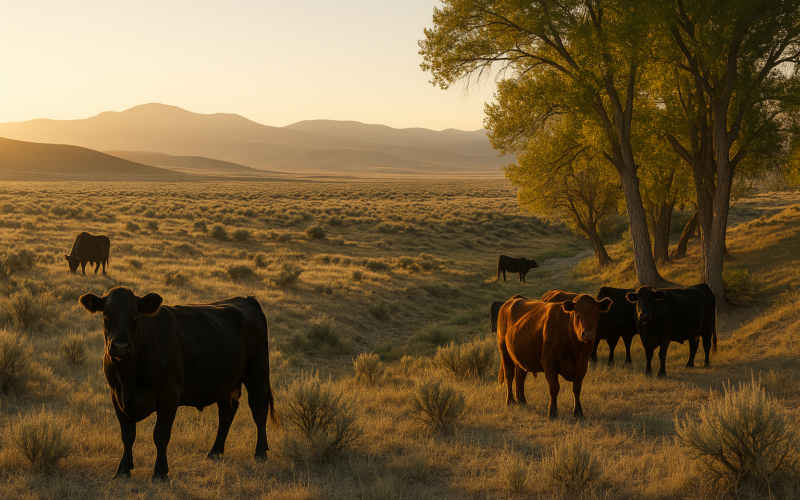
Look at your place the way a fire looks at it — as a run of continuous fuel with the wind behind it. The county road, the two-track along the fence, the railroad grade if you’ve got one: those are where ignitions happen, and the cured grass running off them is the wick.
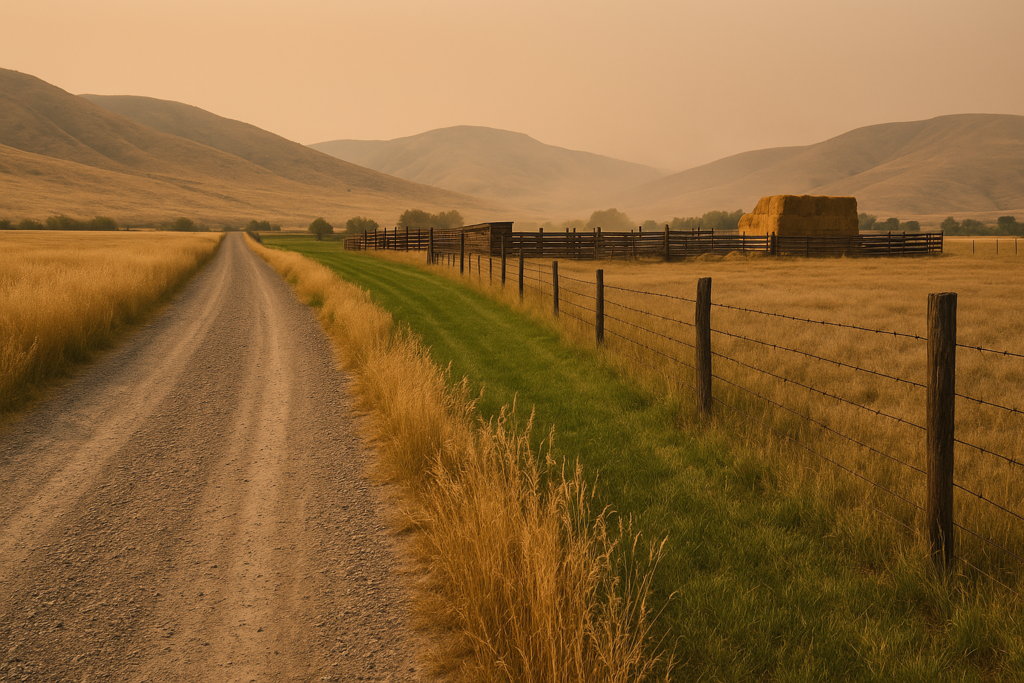
A mowed or grazed strip breaks that wick. It doesn’t have to be a bulldozed scar. A swath mowed short along the road ditch, a fence line disked or bladed down to dirt, a strip you graze hard early so it’s short and green when everything around it cures — any of those give a crew a place to catch a fire before it’s in the standing grass. Put your breaks on the sides that matter: the summer wind here runs mostly out of the west and southwest, so the fuel on the west edge of your buildings is the fuel that carries fire to them.
The ground right around the buildings and stackyards deserves the most attention. Cured grass grown up against a hay stack, tumbleweeds piled on a fence, dead grass under the propane tank — clean that out. A hay stack that catches will burn for days and can’t be saved, and a stack fire throws embers a long way.
Know where the water is and whether you can get it
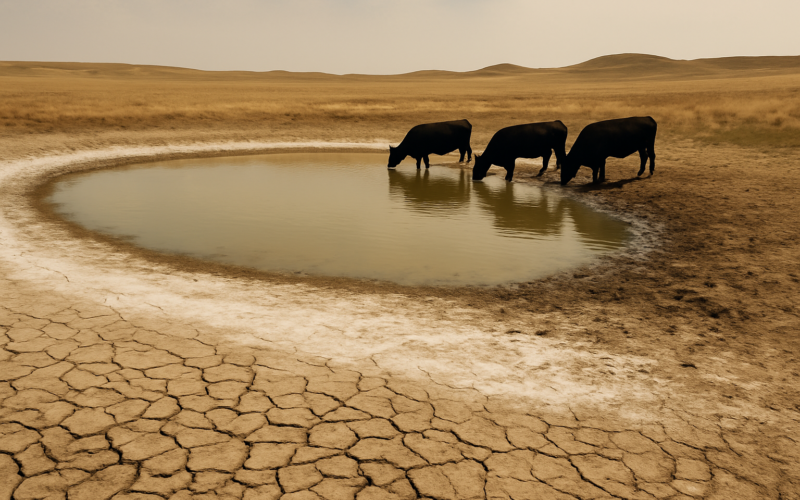
Every stock tank, pond, ditch, and well on the place is a firefighting resource, but only if a truck can reach it and something can move the water. A rural fire department or a DNRC engine will draft out of a pond or a full tank if they can back up to it. Walk the approaches now. A gate that’s chained and the key’s lost, a bridge that won’t hold a loaded engine, a two-track grown over with brush — those cost you the water when you need it.
If you keep a slip tank or a sprayer rig, this is the month to make it work. Fill it, start the pump, run water through the hose, and fix the fitting that leaks before there’s smoke on the hill. A 200- or 300-gallon tank on a flatbed with a decent pump won’t stop a running fire, but it’ll knock down a spot fire in the first few minutes, and the first few minutes are the whole game. Keep a couple of shovels and a wet burlap sack or two with it.
Have a plan for the cattle before you need one
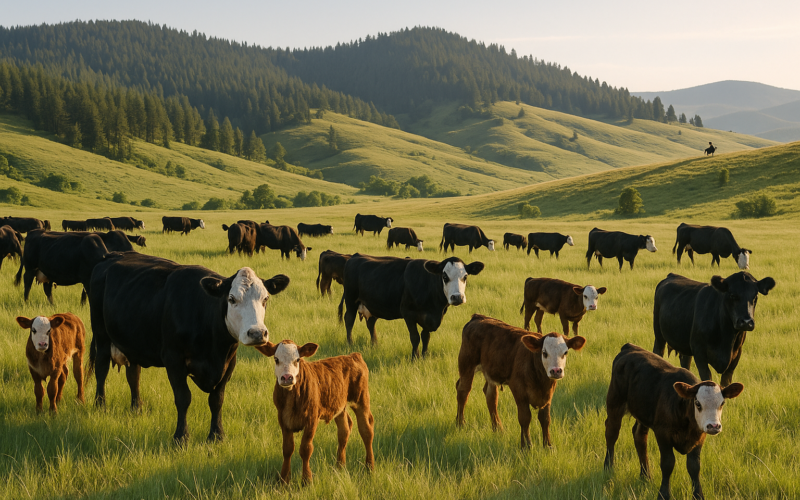
Cattle usually handle grass fire better than people expect — they’ll drift ahead of it or bunch on burned ground — but pairs behind wire in a pasture that burns get hurt or killed. Think through which pastures you’d move stock out of and where you’d take them, before the day comes. A gate opened onto a green hay meadow, a road allowance, or a heavily grazed pasture gives cattle somewhere to go.
Know your gates. Which ones swing, which are wired shut, which one you’d cut to let a bunch out onto the county road if it came to that. Tell whoever helps you run the place the same plan, because the fire may show up on a day you’re two hours away at a branding.
A few practical habits keep small mistakes from becoming the ignition:
- Carry a fire extinguisher and a shovel in the ranch truck and the swather — a baler or swather throwing sparks in dry windrows starts fires every summer.
- Don’t park a hot pickup or four-wheeler in tall grass, and check under it when you do stop.
- Watch the wind and the fire danger rating before you weld, grind, or run equipment in cured grass. Some jobs are worth waiting for morning, when it’s damp and calm.
Put your address and gate locations where you can give them fast, and program the number for your rural fire district or the local sheriff’s dispatch into your phone now. When a fire’s running, the difference between a burned fence line and a burned ranch is often just how many minutes passed before somebody with water showed up.