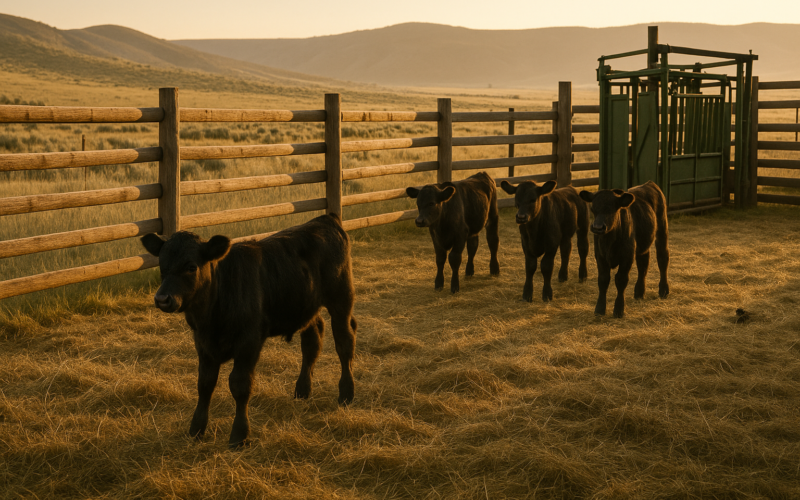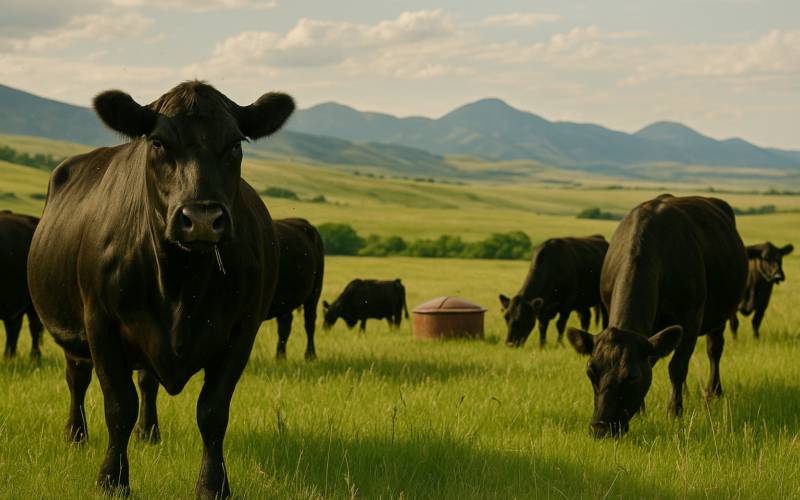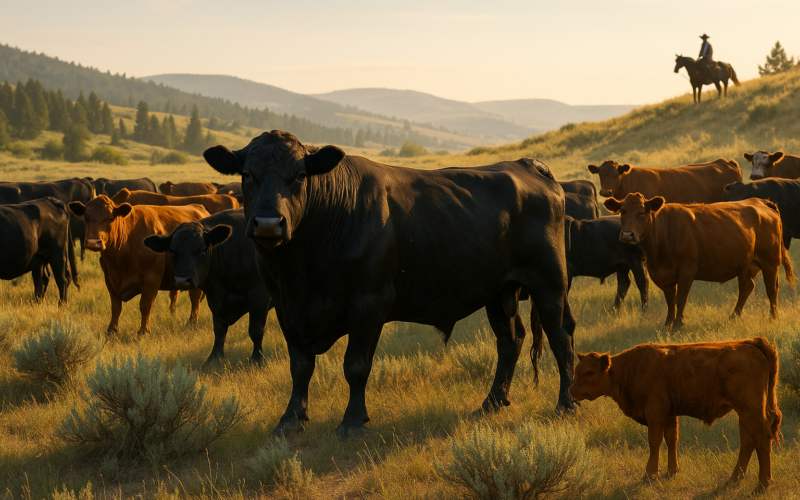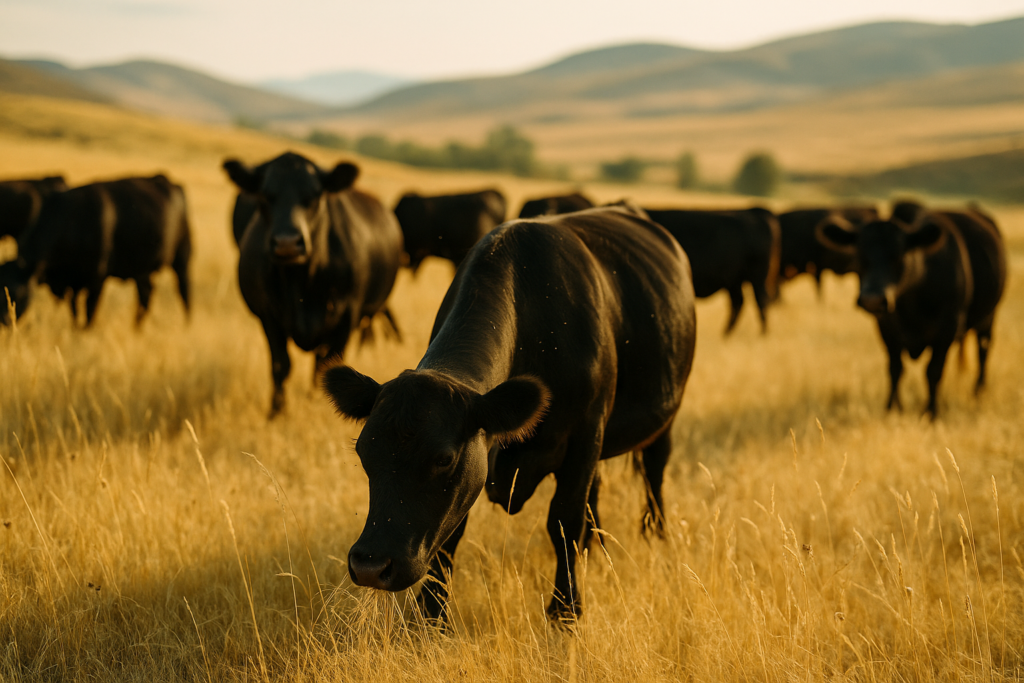
You ride through the bunch on a hot June afternoon and one calf is standing off by itself, head low, one eye squeezed shut and running. Two days ago it looked fine. That’s pinkeye, and if you’ve got face flies working the herd, that one calf is not the last one you’ll see this summer.
Infectious bovine keratoconjunctivitis — nobody calls it that — is one of the more expensive things that happens to a calf crop between branding and weaning. It doesn’t usually kill. It costs you in gain, in the calf that goes partly or fully blind in one eye, in the discount at the sale ring when a buyer sees a scarred white eye across the pens. A calf that can’t see out of one side doesn’t travel to water and grass the way its pen mates do, and it shows up light in the fall.
How it gets from one calf to the next
The bug behind most pinkeye needs help getting into the eye, and in Montana that help usually comes from three things working together: face flies, dust, and anything sharp enough to scratch the surface of the eye. Cheatgrass awns and cured-out foxtail poking a grazing calf in the eye do the scratching. UV off the bright high-country sun irritates it further. Then the face fly lands at the corner of the eye to feed on the tears and moves straight to the next calf carrying the infection on its mouthparts.
Face flies are the difference between one sore eye and a wreck. Unlike horn flies that stay on the animal’s back, face flies spend most of their time off the cow and swarm the head to feed around the eyes and nose. They’re stubborn, they don’t stay put for a back rubber, and a handful of them will service a whole herd. Once you’ve got weepy eyes and flies clustered on faces, the thing is already moving.
Catch it before the eye clouds over
Early pinkeye is easy to miss because the first sign is just a runny eye and a calf that keeps it partly shut against the light. If you catch it there, treatment works well and the eye usually heals clean. Let it run and a small white or gray spot shows up in the center of the eye. That spot spreads, the cornea can ulcerate, and in bad cases the eye ruptures. The clouding you see is scar tissue, and heavy scarring doesn’t fully clear.
The practical move is to look at eyes every time you’re around the cattle in June and July, not just when you happen to notice a bad one. When you find one starting, treat it and get it out of the sun and flies if you can. Standard treatment is a long-acting antibiotic your vet recommends for it — talk to your vet about what’s cleared for pinkeye and the dose, because the products and rules change and it’s not something to guess at. Patching or gluing the eyelid shut on a bad eye keeps light and flies off it and gives it a chance to heal; a lot of ranchers swear by it on the ones that are already ulcerated.
Whatever you use, run a clean needle. You’re already fighting one thing spread by shared blood and fluids in June — no reason to hand pinkeye or anything else a ride on a dirty needle while you’re at it.
The fly is the part you can get ahead of
You can’t stop every awn from scratching an eye, but you can knock the face fly population down, and that’s where the summer is won or lost. Fly tags in both ears put insecticide right where face flies feed, and they’re a fit for calves and cows you’ll be gathering anyway. Rotate the chemical class year to year so the flies don’t build resistance. Dust bags and oilers hung where cattle have to pass under them to get to water or mineral work if the cattle actually use them — set them at a mineral station or a gate they can’t skip. Pour-ons help but wash and wear off, so they’re a shorter-term tool.
Grazing management does some of the work too. A pasture grazed down to dusty dirt with cured grass poking up is a pinkeye factory — dust in the eyes, awns in the eyes, and flies breeding in the manure. Keeping cattle on decent cover and clipping or grazing tall seed heads before they cure sharp takes away two of the three things the bug needs.
None of this is a one-shot deal. Tag early, watch eyes all summer, treat the first ones fast, and keep the flies from turning one sore eye into a dozen scarred ones by shipping time.