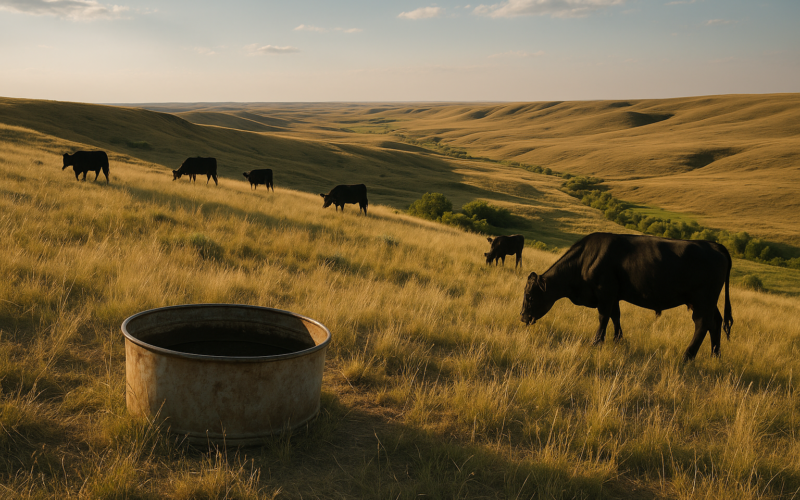
Cool-season grass does most of its living in a narrow window. Bluebunch wheatgrass, needle-and-thread, the crested wheat you seeded years ago — they green up on spring moisture, shoot in May and June, and set seed before the heat clamps down. By the time the thermometer sits in the nineties and the wind turns the hills brown, those plants are done growing for the year, no matter how much it rains in August. What you can see standing in late June is close to the whole crop.
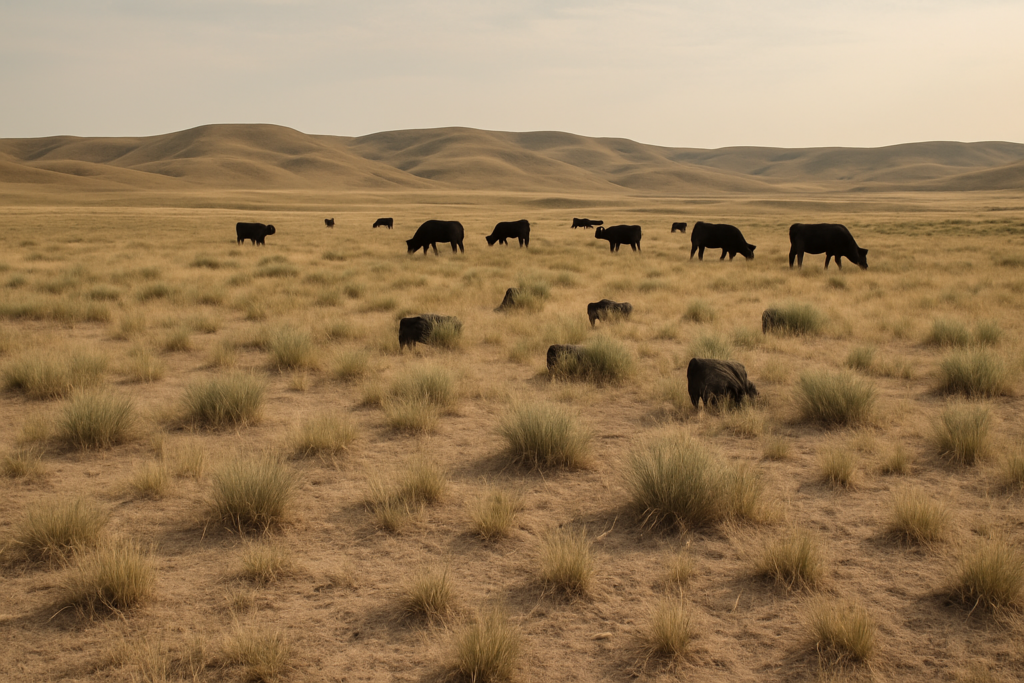
That is the uncomfortable part of a dry spring. A rancher looks at green country in early June and reads it as plenty. But green and abundant are two different things. A short, thin stand can be as green as a lawn and still carry a fraction of the pounds it grew in a wet year. The grass tells you the truth if you get off the pickup and look at it, and June is when you still have room to act on what it says.
Count the grass before you count on it
You do not need a fancy monitoring program to know where you stand. Pick a few spots in each pasture, the same spots you can find again next year, and look hard. How tall is the grass compared to a normal year? Is it in the boot, or has it already headed out short? Are the plants close together, or can you see dirt between them? Old grazing cages — even a scrap of net wire staked over a square yard — will show you what the country grows when a cow’s mouth isn’t on it. Compare inside the cage to outside and you learn two things at once: how much you’re growing and how hard you’re already grazing it.
The number that matters is carrying capacity, and in a short year it drops faster than most people want to believe. Range that ran a cow to fifteen or twenty acres in good times might need twice that when the top growth is half of normal. If you keep the same number of pairs on it, you don’t stretch the grass — you graze it into the ground, take the plant below the level it needs to recover, and set the stand back for two or three years. The cows come off thin either way. The difference is whether the pasture comes back.
Sell into a decision, not a wreck
The hardest thing to do with cattle is sell them before you’re forced to. But the math in a dry year runs one direction. Every cow you carry through a short summer eats grass you don’t have, and if you run out you end up buying hay at July prices or hauling cows to rented pasture you don’t know. The cow you cull in June — the old one, the late breeder, the one with a bad bag or a sour disposition — takes pressure off the whole outfit right when it counts, and she sells into a market before everyone else in the country is dumping the same kind of cow.
Start with the cattle that were leaving anyway. Ship the opens and the culls early instead of hauling them to fall. Wean calves earlier than you planned if the grass gets short — a dry cow eats less and holds condition better than a wet one, and the calf does fine on a good ration. Some outfits pull the older pairs and precondition calves on the best feed they have left. Any of it beats waiting until August, when the grass is gone, the tanks are low, and half the state is selling into the same sale ring.
Write down your triggers now, while you can think straight. Something like: if we don’t get moisture by a certain date, or if the grass in the monitoring spots is below a certain height, we cut numbers by this much. A plan on paper is easier to follow than a gut call made standing in a dusty pasture in the heat, watching cows walk fence looking for something to eat.
Leave something behind
Even in a sell-down, don’t graze the last of it flat. Grass left standing — that residual you’re tempted to feed off in September — is what catches snow, shades the crown, and pushes the first green in the spring. Take the top and leave the base. A pasture grazed too hard in a dry year is slow to come back even when the rain returns, and you’ll be short again the following June before you’ve had a chance to recover.
Nobody likes shipping good cows off dry country. But the outfit that trims early and protects its grass is the one still standing on the same ground in five years, running cows on range that can carry them. The rain will come back on its own schedule. The grass only comes back if you leave it enough root to work with.