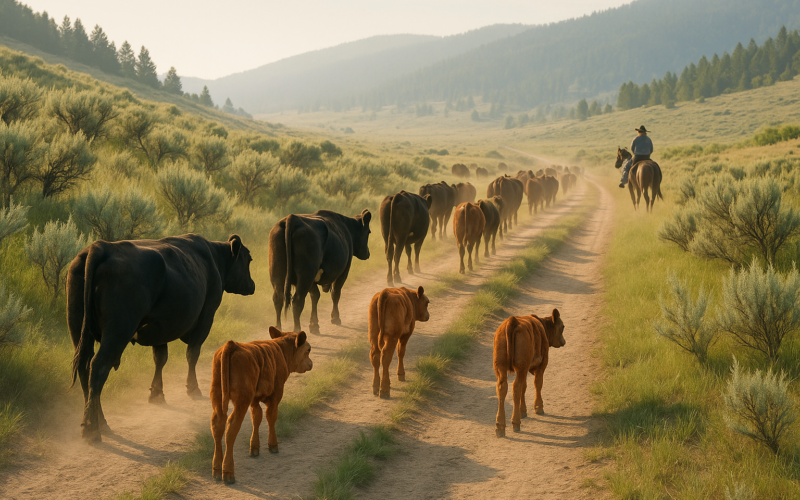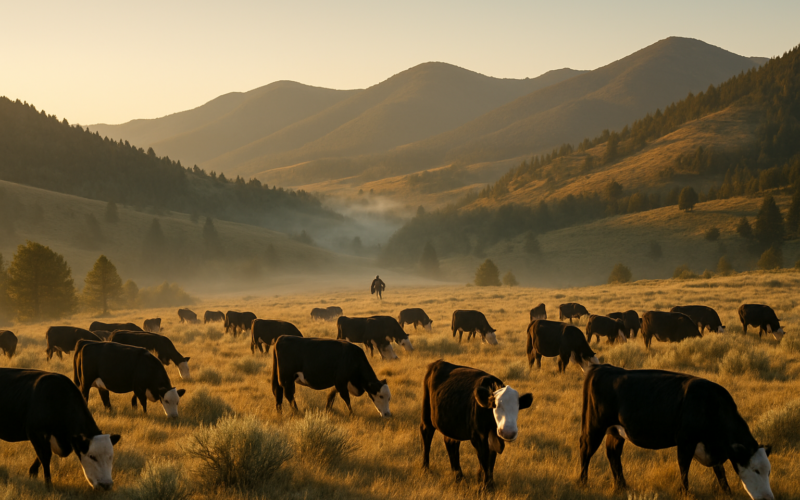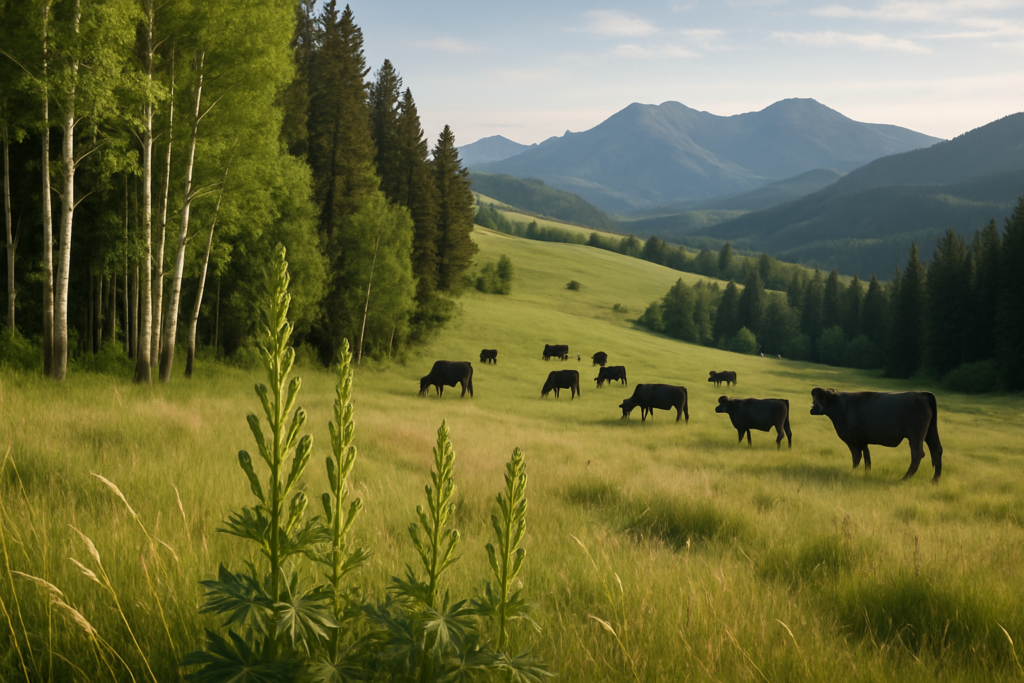
You can lose a good cow to larkspur without ever seeing her eat a bite of it. The classic setup runs like this: pairs go up to the foothill pasture in early June, the grass is coming, and somewhere in the timber edges or the north-slope draws there’s a stand of tall larkspur two feet high and still green. A cow grazes through it, walks a little way, gets wobbly in the hind end, goes down on her brisket, and by the time you find her she’s dead or close to it. No struggle, no fight. The plant shut her breathing down.
Montana carries both the tall larkspurs of the mountains and foothills and the low larkspurs of the plains and open range. Tall larkspur is the one that puts cattle in the dirt across a lot of the state’s summer country. It comes up in the wetter, higher ground first and hangs green long after the surrounding grass has started to dry.
Why June is the dangerous stretch
The trap with larkspur is timing. The plant is most toxic when it’s young and lush, and the poison load drops as it matures and dries. So the stand that looks the most harmless \u2014 short, green, no flowers yet \u2014 is carrying the heaviest punch. By the time it’s in full bloom and going to seed, the toxin per bite has fallen off.
Cattle mostly leave it alone early because there’s better feed around. That changes as the season tightens. Once the grass firms up and cures, larkspur stays green and palatable, and cattle start eating more of it right when they’re covering more country looking for feed. The window where the plant is still fairly toxic and cattle are starting to take it is the one that gets you \u2014 that stretch from turnout through midsummer, depending on elevation and how the spring ran.
The poison hits the connection between nerve and muscle. A cow that’s taken a big dose gets muscle tremors, a staggery gait, weakness in the hindquarters, then goes down. She often ends up on her brisket or her side, bloating because she can’t hold herself up or belch. Death comes from the diaphragm quitting \u2014 she suffocates. How much it takes to kill depends on the cow’s size, how fast she ate it, and how much toxin that particular stand is carrying, which varies from year to year and even patch to patch.
Keeping cattle out of it
The plant grows where it grows, and you’re not going to spray your way out of it across a whole mountain pasture in a hurry. Managing the grazing is what saves cattle.
- Know where your larkspur stands are before you turn out. Ride the pasture, mark the draws and timber edges where it’s thick, and plan turnout so cattle aren’t pushed into that country when the grass elsewhere is short and the larkspur is still green.
- Graze the larkspur pastures early, while there’s plenty of other green feed to keep cattle busy, or hold them off until the plant has flowered and gone to seed and the toxin has dropped. The middle stretch is the worst combination.
- Don’t crowd hungry cattle into larkspur country. Cows that come off a trailer or a hard trail and hit a larkspur patch with an empty gut will eat more of it, faster, than cattle that are settled and full.
- Herbicide has its place on smaller, reachable patches, but treating larkspur can actually raise palatability for a stretch after spraying, so keep cattle off treated ground until the plant has died down.
When you find one down
A larkspured cow is a handling problem. Stress makes it worse \u2014 running or hazing a poisoned animal can be what tips her from wobbly into dead, because the exertion overwhelms muscles that are already failing. If you come onto a cow that’s staggering, leave her be and let her work through it quietly if she can.
A cow that’s gone down on her side will bloat, and rolling her up onto her brisket to relieve the gas can buy time. There’s no quick antidote you’re going to pour into her on the mountain. The real answer is prevention, and part of that is honest bookkeeping: if you lose one, walk the country and figure out what she got into, because the next cows are grazing the same ground.
Larkspur is one of those plains-and-mountain hazards that punishes people who assume last year’s plan is good enough. The stands move a little, the spring runs early or late, and the summer that dries out fast pushes cattle into the green plant sooner than you’d expect. Ride it, mark it, and time your turnout around it.