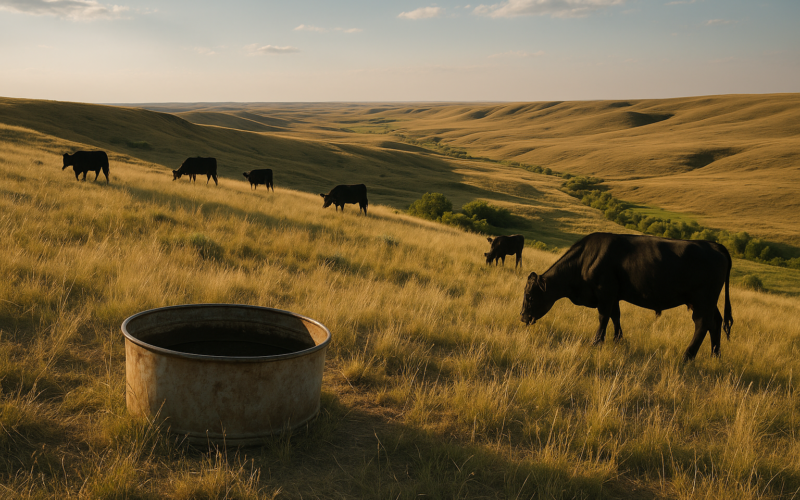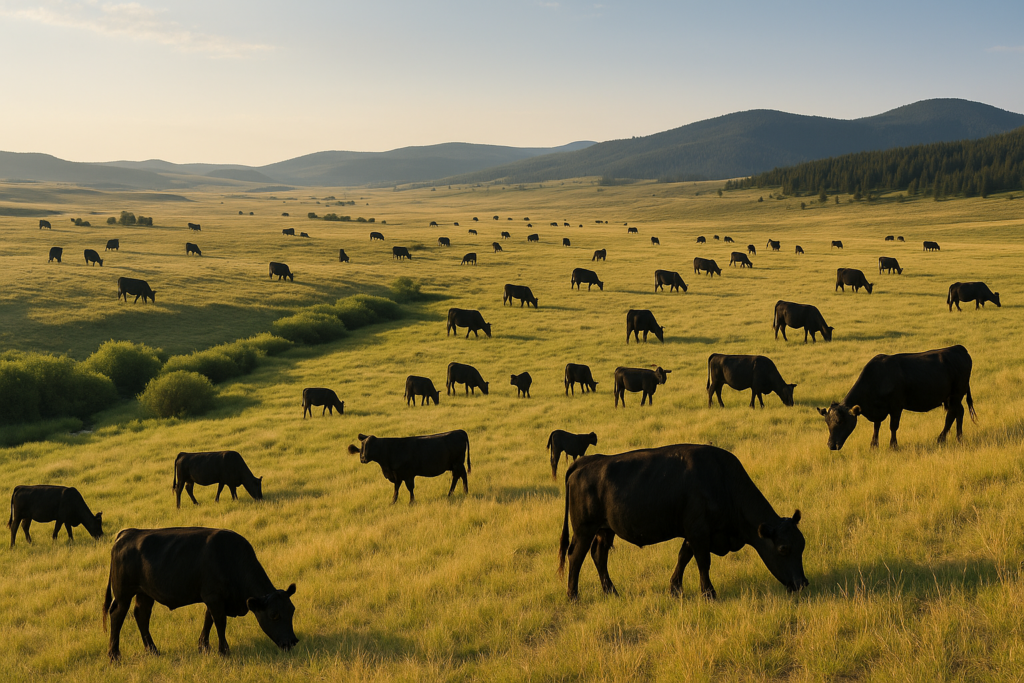
Turn a bunch loose on a section of rough summer country and watch what happens over the next two weeks. They find the creek, the shade, the flattest ground with the best grass, and they stay. By July the bottoms look mowed and pounded, the willows are chewed back, and the ridges a half-mile up sit belly-deep in feed nobody has touched. You didn’t run out of grass. You ran out of grass the cattle were willing to walk to.
This shows up worst on the big, broken pastures — Forest and BLM allotments, deeded ground that runs from a creek up onto benches and timber. A cow is lazy and she’s smart about it. Left alone she’ll graze close to water, close to shade, and downhill. Everything that costs her effort gets skipped. On flat, small pasture it barely matters. On a couple thousand acres of coulees and ridges it’s the difference between using half your feed and most of it.
Salt and mineral are the cheapest cow-mover you own
Cattle will travel for salt, and where you put it is where they’ll go. Set your salt and mineral right by the water and you’ve told the herd to spend the whole summer within sight of the creek. Set it out on the ridges, in the corners, up the draws they’re ignoring, and you pull them into that feed on their own.
Keep it well back from water — a good quarter to half-mile is a reasonable start, farther on gentle country. The point is to make them graze across ground they’d otherwise skip on the walk out and back. Put it in the spots that are getting no use, not the spots that are already grazed. Move it every couple weeks as the use pattern shifts. Loose mineral in a tub or a covered feeder works the same way, and you’re hauling mineral out there anyway, so you might as well aim it.
Watch that you’re not parking salt where it’ll create a new bare, beat-out spot on fragile ground or right above a spring. And don’t set it under the one shade tree on the ridge, or the cattle will stand there instead of grazing out from it.
Water decides how far a cow will graze
The other lever is water, because a cow won’t graze much past about a mile from a drink in rough country and a lot less than that when it’s hot and steep. If your only water is the creek in the bottom, the bottom is where they’ll live no matter how much salt you scatter uphill.
Every reliable water point you add up on the dry side of a pasture opens a new chunk of grass. A stock tank on a ridge fed by a solar pump or a pipeline off a spring can flip a whole hillside from unused to grazed. Even a temporary tank hauled to a dry corner for part of the summer changes the map. Where developing water isn’t in the cards, salt and riding are what you’ve got.
Fence matters too. If you can split a big pasture with a cross-fence, even a single hot poly wire, you can force use on the far end instead of hoping for it. But water and salt do most of the work without a post-hole.
Ride it, don’t just turn it out
The old outfits didn’t fence everything — they had somebody horseback pushing cattle up out of the bottoms and holding them on the high country until they settled and learned it. You don’t have to camp out to do it. A morning ride once a week, drifting the bunch off the creek and up onto the ridges before it gets hot, teaches them where the feed and the new water and salt are. Do it a few times early and they start using that country on their own.
Go look at the ground, not just the cattle. Walk the ridges and the far draws in June and again in July. If half the pasture is grazed to the dirt and half is standing untouched, you’re not overstocked — you’re under-distributed, and that’s a fixable problem. Move the salt, check the water, make a ride. The grass on the ridge is feed you already paid for. Getting a cow to walk up and eat it is the cheapest ton of forage on the ranch.