The first real heat of the summer usually rolls in sometime around mid-June, after the runoff quits and before the wind lets up. It catches people off guard because May was cool and wet, the cattle carry a heavy winter coat that hasn’t fully shed, and nobody’s thinking about heat yet. A calm, muggy afternoon in the high 80s with no breeze can put more stress on a black cow than a dry 95-degree day in August, once she’s acclimated. The animals that die aren’t the ones standing in open pasture. They’re the ones you gathered and stood in a dusty corral through the middle of the day.
Cattle don’t handle heat the way we do. A cow’s core temperature keeps climbing through the afternoon and doesn’t peak until a few hours after the air does. She sheds that load overnight, but only if it cools off enough. String two or three hot days together with warm nights and no wind and she never catches up. The heat stacks. By the third afternoon she’s carrying yesterday’s load on top of today’s, and that’s the day something goes down.
Read the cattle, not just the thermometer
The number on the truck dash doesn’t tell you much by itself. Humidity, wind, and sunlight matter as much as air temperature. A hot day with a stiff Montana wind and low humidity moves heat off cattle fine. A still, hazy afternoon after a thunderstorm, with the ground wet and the air heavy, is the one to watch even if it’s only in the 80s.
Watch the animals. Early heat stress shows up as cattle bunching, crowding into shade or against a fence line, and standing instead of lying down. As it gets worse you’ll see open-mouth breathing, drooling, and a cow standing with her head down and neck stretched out, sides heaving. A tongue hanging out is a late sign and an emergency. Black-hided cattle, heavy-conditioned cows, and anything with a respiratory history run hottest. So do calves that haven’t fully shed.
Work early or don’t work at all
The single biggest thing under your control is when you handle them. Gathering, sorting, hauling, and doctoring all pile heat onto an animal that’s already loading up. On a hot stretch, be done by mid-morning. That means starting the gather at daylight and having cattle turned back out before the afternoon sets in. If you can’t finish by 10 or so, leave the rest for the next cool morning.
Don’t hold cattle standing in a tight corral through the heat of the day waiting on the vet or the trucks. Standing in a dusty pen with no air movement is worse than being out on grass. If you get behind, turn what you’ve worked back out and quit. A load of yearlings sitting on a stopped trailer in the sun is a wreck waiting to happen — keep them moving or get them unloaded.
Water and shade do the heavy lifting
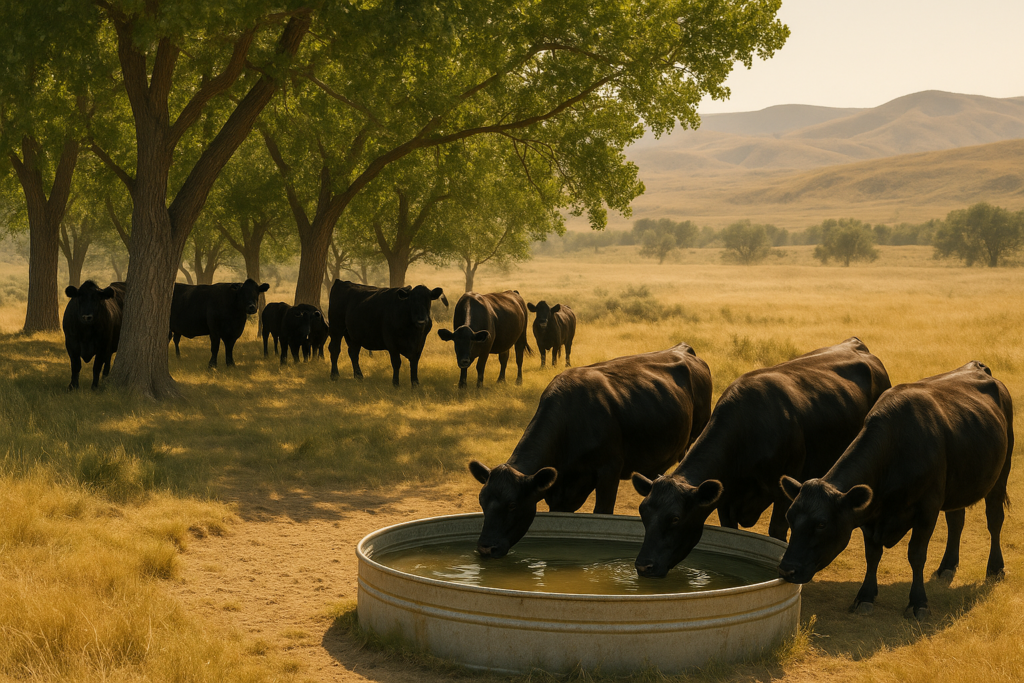
A cow drinks a lot more in heat, and she needs it cold and available. Check that your tanks and floats keep up when the whole bunch comes in to drink at once in the afternoon. A tank that runs dry or backs the herd off water on a hot day undoes everything else. Cattle also drink more if the water’s clean and the tank isn’t fouled.
Shade helps, but only if there’s enough of it that they’re not piling on top of each other. A little strip of shade that draws the whole herd into one sweating knot can do more harm than good. Natural draws, timber, and coulees that catch a breeze beat a single lone tree every time.
Handle everything slower and quieter than usual. Hot cattle don’t have any give in them — push them hard up an alley and you’ll blow one out. Let them walk. If you’ve got a hot forecast and cattle to gather, look at the next few days and pick your morning. The heat isn’t going anywhere, and a cow you leave alone through a bad afternoon is a cow that’s still standing when it cools off.