Fence is the chore nobody wants and everybody puts off. It doesn’t calve, it doesn’t wean, and it doesn’t sell in the fall. But the day your pairs are standing in a neighbor’s alfalfa or bunched on a county road at dusk, you’ll wish you’d spent an afternoon in June walking the line instead of trusting last year’s staples.
Winter is hard on wire in this country. Snow load pulls staples, drifts bend top wires flat, and frost heave lifts posts a couple inches every year until a corner brace is leaning like a drunk. Elk go through a fence like it isn’t there and leave a low spot where the wire never quite recovers. Add spring runoff tearing out a low crossing, and the fence you left tight in October is not the fence you have now.
Ride the whole line, not just the gates
Most of us check the fence we can see from the pickup and call it good. The trouble is always in the spots you don’t drive past. Ride or walk the back side, the timber edge, the coulees where the wire drops out of sight. That’s where a tree came down over winter, or a spring washout left a three-wire fence hanging over open air.
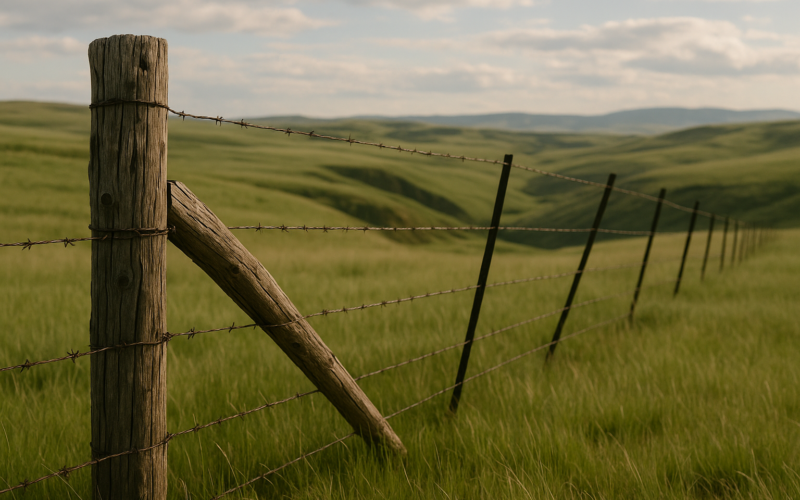
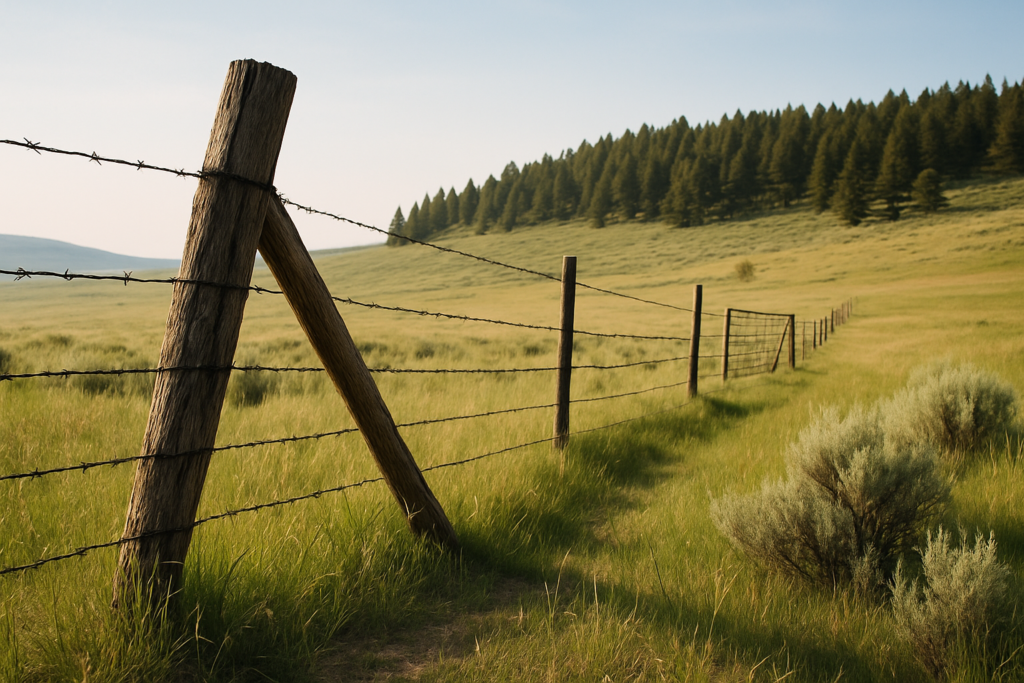
Pay attention to a few things as you go. Corner and brace posts do the real work, so lean on them — if a brace wiggles, the whole stretch between it and the next brace is soft. Look for wire that’s loose enough to step over, staples backed halfway out, and rotted line posts that snap when you push. On steep ground, check where snowslide or a fallen limb has mashed the top wire down to knee height. Cattle read a low spot faster than you do.
Gates get skipped because they look fine hanging open. A wire gate that won’t stay latched, a wood gate dragging in the dirt, a chain somebody wired shut with baling wire two summers ago — those are the ones that come open when a bull leans on them. Fix the latch now, not the third time you hang the gate back up.
Carry what you’ll actually use
You’ll fix ten times more fence if the tools are already in the truck. A roll of smooth wire and a roll of barb, a fence stretcher or a come-along, a bag of staples, a good pair of fencing pliers, a hammer, and a handful of steel posts and a driver. Throw in a chainsaw if you’re anywhere near timber. Half the fence problems on summer range are a tree across the line, and a saw turns a two-hour walk-back into a ten-minute fix.
When you splice, do it right the first time. A hand-twisted wrap that pulls loose in August is worse than no fix, because you’ll trust it. Take the extra minute. If a stretch of posts has gone to punk, don’t nurse it — a few steel posts driven now will hold when the wood ones let go in a windstorm.
Water gaps and the low crossings
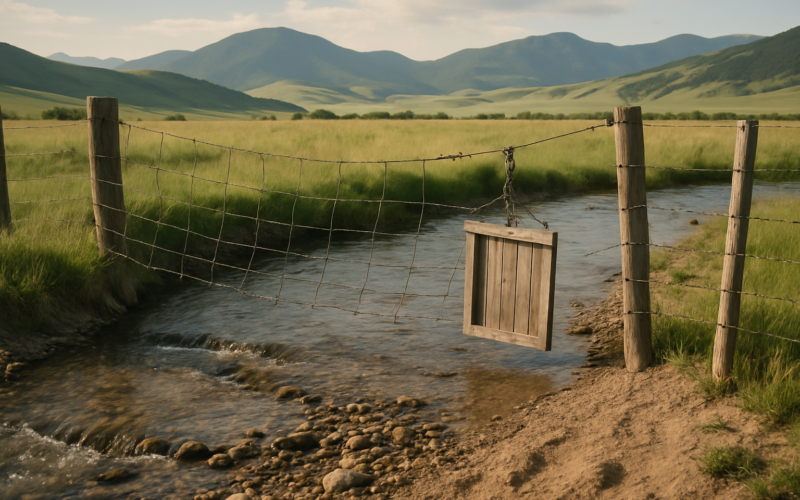
The spot that fails every year is where the fence crosses running water. Runoff peaks in June and tears out whatever you rigged last fall. A rock jack with a hanging gap of loose wire, hinged to swing with high water and drop back down when it falls, will outlast anything you nail solid across a creek. If you build it stiff, the next high water takes it out and your cows walk downstream to find the hole.
Same goes for the low fords where cattle cross to water. Those get pounded to mud and the bottom wire ends up buried or bent flat. Walk them, reset the bottom wire, and make sure a calf can’t crawl under and pull the cow through after it.
None of this is complicated. It’s just miles, and miles take time you’d rather spend somewhere else. But the afternoon you put in now beats the two days you’ll spend gathering scattered pairs off ground you don’t control, sorting brands, and mending the same gap in a hurry with the light going. Ride it before they go out.