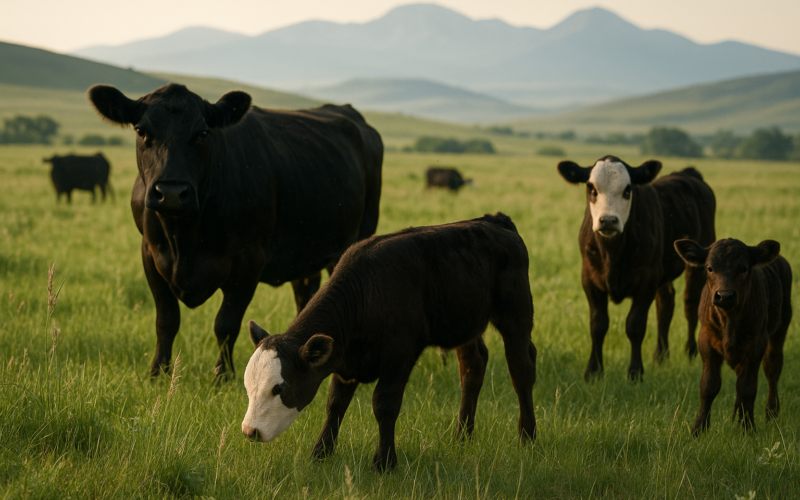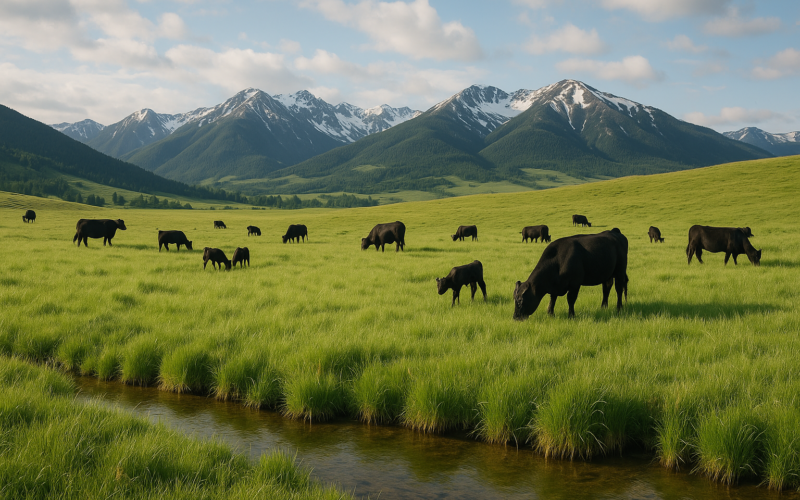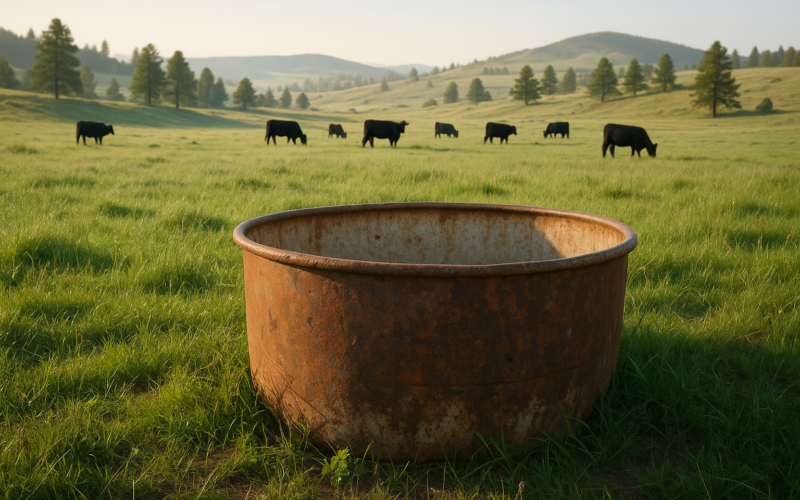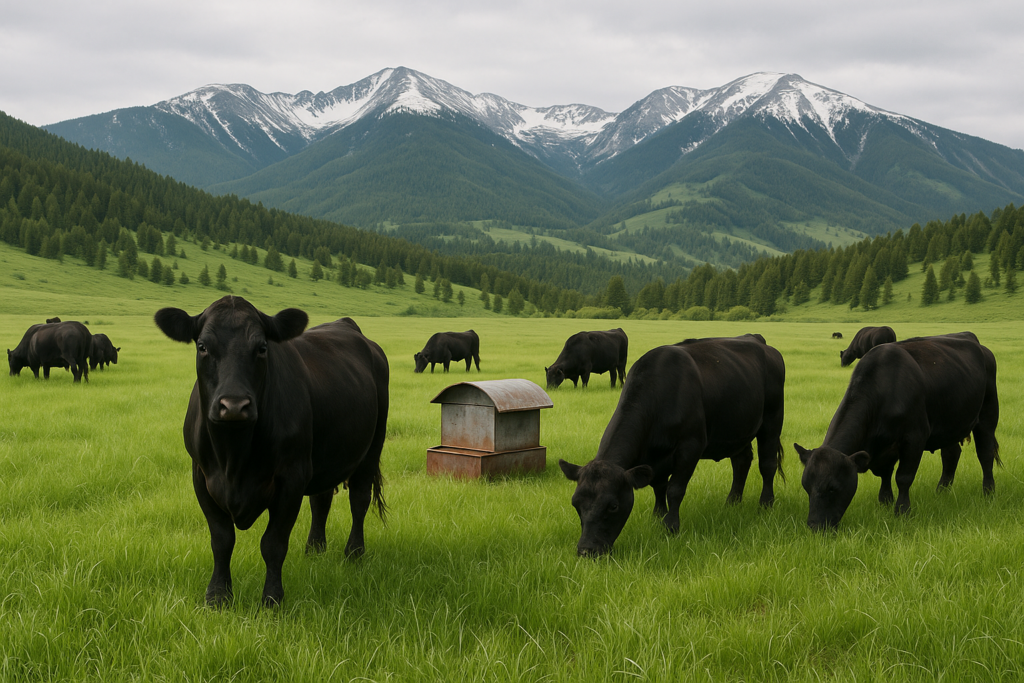
You can walk a cow past a full mineral feeder in June and still lose her to a magnesium problem. Grass tetany doesn’t care that the pasture looks like money. Lush, fast-growing cool-season grass — the same green you were praying for in April — can carry so little available magnesium that a heavy-milking cow burns through her reserves faster than she takes it in. The result is a downer cow in the bottom of a draw with her head craned back and her legs paddling, and by the time you find her you’re usually too late to do much.
It shows up when the grass is growing hardest and the ground is still cool and wet. High-elevation and north-slope pastures that green up late are prime, and a cold snap or a stretch of cloudy weather right after turnout makes it worse. The cattle most at risk are the ones you’d least want to lose: older cows in their third lactation or later, packing a big calf and milking hard. That calf is pulling magnesium out of her every day, and a mature cow can’t mobilize it from her bones fast enough to keep up.
What you’re actually looking at
The classic case moves fast. A cow that grazed fine at daylight is off by herself by mid-morning, jumpy, walking stiff, maybe throwing her head or twitching along her flank and shoulders. Push her and she may spook and run, then stagger and go down. Once she’s flat out you’ll see the paddling and the muscle tremors, and a hard case will convulse. A lot of ranchers never catch the early stage at all — they just find the cow dead, legs stretched out, ground torn up around her where she thrashed.
It gets confused with a few other things. Larkspur puts cows down on their brisket in the same country this time of year, and a bloated cow on wet grass goes down too. The difference with tetany is the nervous look before she drops — the twitchiness, the exaggerated startle, the stiff gait. If you’ve got more than one cow acting spooky and staggery in the same bunch on the same lush grass, magnesium is a good bet.
Getting magnesium in ahead of the problem
The trouble with a plain trace-mineral mix is that magnesium tastes bad and cows don’t store it. They have to eat it every single day during the risk window, and that’s exactly when green grass makes them quit the feeder. That’s why a high-magnesium mineral — the ones people call “hi-mag” — matters more than the tag on the bag. Get one designed to carry a meaningful load of magnesium and start feeding it a couple weeks before you turn out onto that lush grass, not the day you notice a problem.
The hard part is intake. Magnesium oxide is bitter, so you have to trick cattle into eating enough:
- Mix the hi-mag with something they want — dried molasses, ground grain, or a palatable loose mineral — so it goes down easier.
- Set feeders where cattle actually loaf and water, not a half mile off on a ridge they visit twice a week.
- Put out enough feeders for the size of the bunch so a boss cow can’t hog them, and check that they’re eating close to the target amount, not walking by.
- Keep them full and dry. A crusted-over, rained-in feeder isn’t feeding anything.
Some outfits pour magnesium into the stock water instead, which guarantees daily intake as long as that’s the only water. It only works if cows can’t drink out of a pond or creek somewhere else in the pasture.
When you find one down
A cow in a full tetany fit is dangerous and hard to save. Handle her as quiet as you can — noise and rough handling can set off a convulsion that kills her. Treatment is getting magnesium and calcium back into her fast, and that’s a call for your vet on product and dose. If you run country where you lose one most Junes, it’s worth having the supplies and the know-how squared away with your vet before turnout, because the cow you find at eight o’clock won’t wait for a two-hour drive to town.
The cheaper fix is management. If you’ve got a particular late, lush pasture that bites you every year, hold the oldest heavy-milking cows off it until the grass matures a little and the magnesium comes up, and put the drier cows and yearlings on it instead. Grass tetany is one of the few June wrecks you can nearly wipe out just by getting a mineral in front of them a couple weeks early and making sure they eat it.