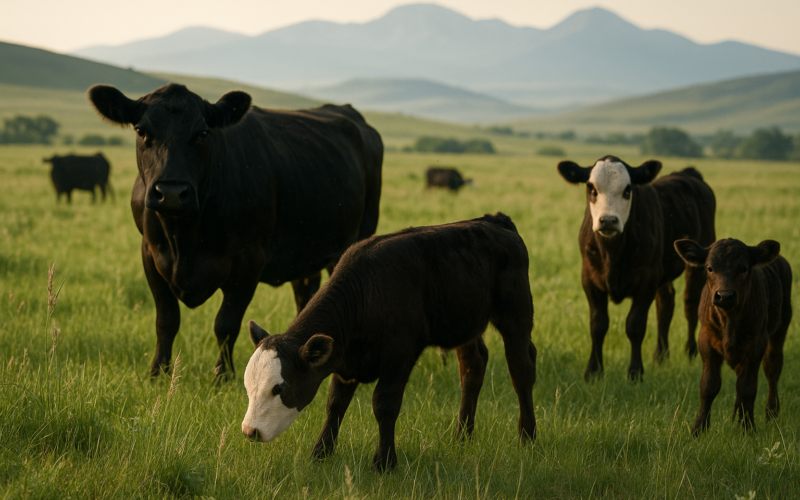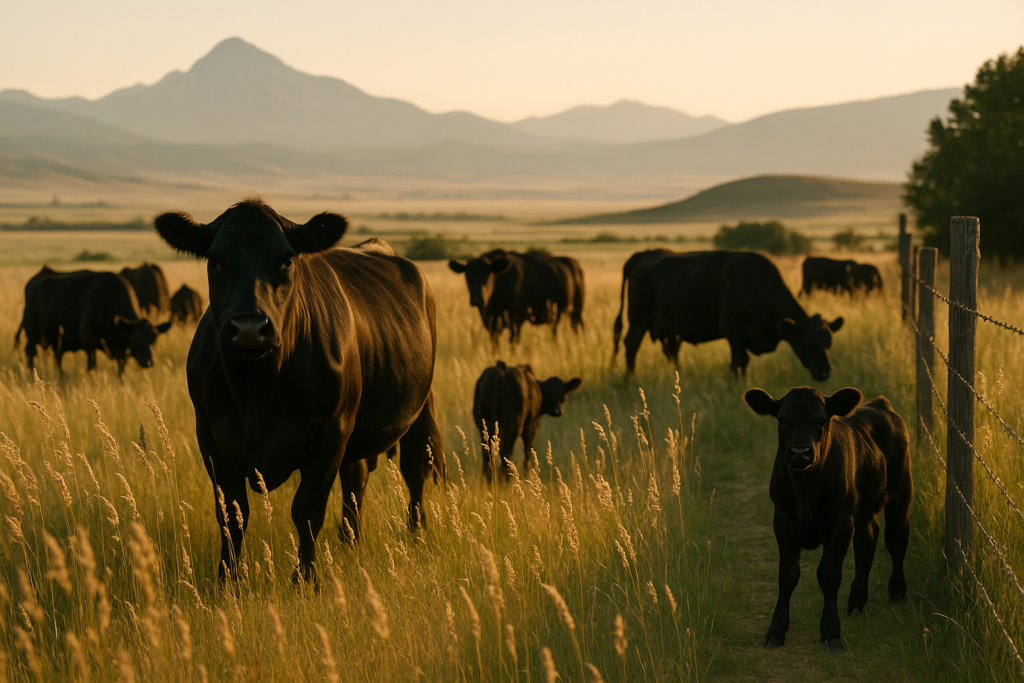
You spot it first as a wet streak down one side of a calf’s face, usually when the bunch is strung out on grass at daylight and won’t hold still. By the time you’ve got them gathered a few days later, that eye is squinted shut, cloudy in the middle, and the calf is hanging back in the shade instead of grazing. That’s pinkeye, and on Montana summer range it can go through a calf crop faster than you’d think possible.
The frustrating part is that it’s rarely just one animal. Pinkeye is contagious, it spreads on flies and on dust and tall seedheads that scratch the eye, and once it takes hold in a bunch of nursing calves it tends to keep working. A calf that goes blind in one eye during July doesn’t graze right, doesn’t gain, and shows up light and off-color in the fall.
Why it hits when it does
Three things line up in early summer and all of them irritate an eye. Face flies feed on the moisture around a calf’s eyes and carry the bacteria from one animal to the next. Grass goes to seed and those sharp heads poke and scratch as calves push through to graze. And the days get long and bright, so ultraviolet glare adds to the irritation. Any scratch or watery eye becomes an open door.
Once the bacteria get established, the eye waters, then clouds, then a white or yellow spot forms in the center as an ulcer develops. Left alone, the ulcer can rupture. Some of those eyes heal to a blue scar and partial sight; some go permanently blind. Either way the calf paid for it in gain long before you sold him.
Catch it early, treat it right
The single biggest thing you can do is not wait. A weepy, squinting eye caught in the first day or two responds far better than a clouded-over one you finally get around to on the weekend. When you ride through, actually look at faces, not just for lameness or a droopy calf.
Work with your vet on what to use — a long-acting injectable antibiotic labeled for pinkeye is the common tool, and your vet can tell you what’s cleared and what withdrawal you’re looking at before fall sale. Beyond the shot, a few things help the individual calf:
- Get it out of the sunlight when you can. An eye patch glued over a bad eye cuts glare and keeps flies off while it heals, and it falls off on its own in a couple weeks.
- Handle affected calves last and don’t run them back through the same alley with clean calves right behind. You can move it on your own hands and equipment.
- Pull the worst ones to a smaller, closer trap if you’ve got one, so you can look at them daily instead of finding them a week later on the far side of a section.
Don’t reach for leftover ointment or home remedies you can’t identify. And don’t assume one shot fixes a herd problem — if you’re treating several calves a week, you’ve got a spread problem to slow down, not just a string of individuals to doctor.
Cut the spread before you’re chasing it
Prevention here is mostly fly control and grass management, and both start before you see the first bad eye. Face flies are the vector, so whatever you’re running for horn flies — tags, pour-ons, a dust bag or oiler where cattle have to use it — helps here too. Fly tags in calves as well as cows make a difference in a bunch that’s prone to it. Rotating classes of insecticide year to year keeps the flies from outrunning your product.
Clipping or grazing down rank, seedy pasture before you turn pairs onto it takes away a lot of the eye scratching that gets things started. If you’ve got fields that always seem to blow up with pinkeye, that tall mature grass is part of the reason. Good mineral with adequate vitamin A and trace minerals keeps the eye’s own defenses up, which matters more than people give it credit for.
There are vaccines, and on outfits that fight pinkeye every summer they can be worth it — but the strains vary, timing matters, and it’s a conversation to have with your vet ahead of the season, not a silver bullet to grab in July.
The calf you catch the morning his eye first runs is one you doctor once and forget. The one you let ride for a week is the blind, light steer that stands out on the truck in October. Riding through and actually looking at faces is cheap. Blind calves aren’t.