Every summer some outfit trails cows onto foothill or mountain range and comes back a few days later to find one dead below a brushy draw, no marks on her, grass in her mouth. If it happened fast and the country holds larkspur, that’s usually your answer. Larkspur kills more cattle on western range than most producers give it credit for, and June is when it does the damage.
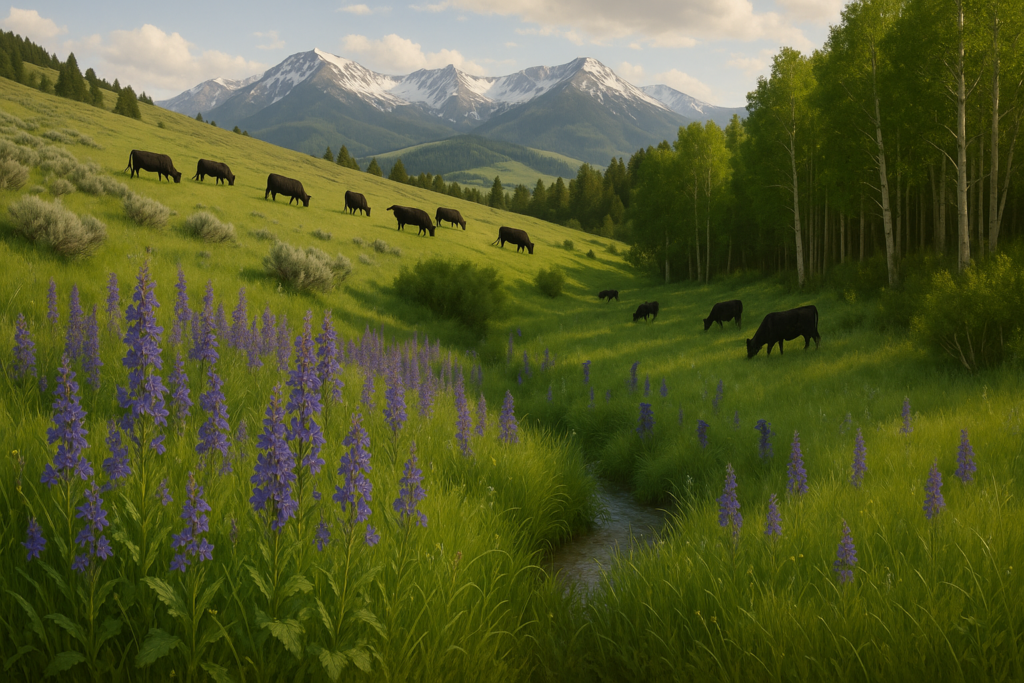
The plant is worst on the transition ground between sagebrush flats and timber — the moist draws, north slopes, and aspen edges where snow lingered and the soil stays damp into summer. Tall larkspur can come up waist-high in a good draw. Low larkspur stays short and hides in the grass on drier benches. Both carry the same alkaloids, and both are most toxic when the plant is young and growing.
Why the timing catches people
The trap with larkspur is that the poison and the palatability don’t line up the way you’d expect. Early in the season the plant is loaded with alkaloids but cattle mostly leave it alone while there’s green grass to eat. The killing window opens later, usually from the time the plant bolts and flowers into the pod stage, when the alkaloid load has dropped some but cattle suddenly find it worth eating. Toxicity per pound is falling, but consumption climbs — and cattle will hammer flowering and podded larkspur, sometimes eating a lethal dose in an afternoon.
That’s why cows can graze a larkspur draw for weeks and then die in late June or July. It isn’t that the plant got more poisonous. It’s that the cattle finally decided to eat it. A cold, wet spring that pushes everything back stacks the deck, because the dangerous stage lands right when you’re moving cows to summer country.
The alkaloids work on the nervous system and shut down the muscles the cow needs to belch. She bloats, gets weak and trembly, staggers, goes down, and often dies from bloat or from inhaling rumen contents. Stress and exertion make it worse — a cow that ate larkspur and then got trailed hard or spooked is the one that piles up. Bigger, mature cows are more likely to eat enough to die than yearlings.
Managing turnout around it
You can’t spray a whole mountain pasture, so most of this comes down to grazing decisions.
- Know where your larkspur is before you turn out. Ride the draws and north slopes and mark the patches. It comes back in the same country year after year.
- Graze the larkspur pastures early, while the plant is short and there’s plenty of grass, then get out before it flowers and pods. The pre-flower period is generally the safer window because cattle aren’t eating much of it yet.
- Hold cattle off, or move them through fast, during the flower-to-pod stage when consumption peaks. If you can rest a bad draw until larkspur dries down in late summer, the risk drops way off — the pods shatter and the plant loses much of its pull.
- Keep cattle from getting hungry on larkspur ground. Turning a hungry bunch into a fresh pasture full of flowering larkspur is asking for a wreck. Fill them up first.
- Don’t push or work cattle hard when they’ve been on larkspur country. A cow carrying a marginal dose can handle it standing still and die if you run her to the corral.
Salt and mineral placement helps pull cattle toward the grass you want grazed and away from the draws, the same as it does for creek-bottom loafers. Set salt out on the ridges and open slopes, not down in the wet pockets where larkspur grows thick.
When you find a sick one
There’s no quick fix in the pasture. A cow showing early signs — trembling, wide-based stance, stumbling — needs to be left absolutely alone. Any push to move her makes the bloat and collapse worse. If she’s down and bloated, relieving the gas can buy time, but many are too far gone. The honest truth is that prevention through grazing timing beats anything you can do once a cow is staggering.
If you’re new to a piece of country, ask the neighbors or whoever ran it before which draws take cattle. Larkspur losses tend to follow the same ground and the same weeks every year, and the outfits that have run those mountains a long time know exactly where not to be caught with a hungry bunch in late June.